


Close Menu
Meteorological Technology International
  • News
    • A-E
      • Agriculture
      • Automated Weather Stations
      • Aviation
      • Climate Measurement
      • Data
      • Developing Countries
      • Digital Applications
      • Early Warning Systems
      • Extreme Weather
    • G-P
      • Hydrology
      • Lidar
      • Lightning Detection
      • New Appointments
      • Nowcasting
      • Numerical Weather Prediction
      • Polar Weather
    • R-S
      • Radar
      • Rainfall
      • Remote Sensing
      • Renewable Energy
      • Satellites
      • Solar
      • Space Weather
      • Supercomputers
    • T-Z
      • Training
      • Transport
      • Weather Instruments
      • Wind
      • World Meteorological Organization
      • Meteorological Technology World Expo
  • Features
  • Online Magazines
    • January 2026
    • April 2025
    • January 2025
    • September 2024
    • April 2024
    • Archive Issues
    • Subscribe Free!
  • Opinion
  • Videos
  • Supplier Spotlight
  • Expo
LinkedIn X (Twitter) Facebook
  • Sign-up for Free Weekly E-Newsletter
  • Meet the Editors
  • Contact Us
  • Media Pack
LinkedIn Facebook
Subscribe
Meteorological Technology International
  • News
      • Agriculture
      • Automated Weather Stations
      • Aviation
      • Climate Measurement
      • Data
      • Developing Countries
      • Digital Applications
      • Early Warning Systems
      • Extreme Weather
      • Hydrology
      • Lidar
      • Lightning Detection
      • New Appointments
      • Nowcasting
      • Numerical Weather Prediction
      • Polar Weather
      • Radar
      • Rainfall
      • Remote Sensing
      • Renewable Energy
      • Satellites
      • Solar
      • Space Weather
      • Supercomputers
      • Training
      • Transport
      • Weather Instruments
      • Wind
      • World Meteorological Organization
      • Meteorological Technology World Expo
  • Features
  • Online Magazines
    1. January 2026
    2. September 2025
    3. April 2025
    4. January 2025
    5. September 2024
    6. April 2024
    7. January 2024
    8. September 2023
    9. April 2023
    10. Archive Issues
    11. Subscribe Free!
    Featured
    November 27, 2025

    In this Issue – January 2026

    By Hazel KingNovember 27, 2025
    Recent

    In this Issue – January 2026

    November 27, 2025

    In this Issue – September 2025

    August 11, 2025

    In this Issue – April 2025

    April 15, 2025
  • Opinion
  • Videos
  • Supplier Spotlight
  • Expo
Facebook LinkedIn
Subscribe
Meteorological Technology International
News

Orbital Micro reveals capabilities of next-gen cubesats

Helen NormanBy Helen NormanApril 1, 20212 Mins Read
Share LinkedIn Facebook Twitter Email
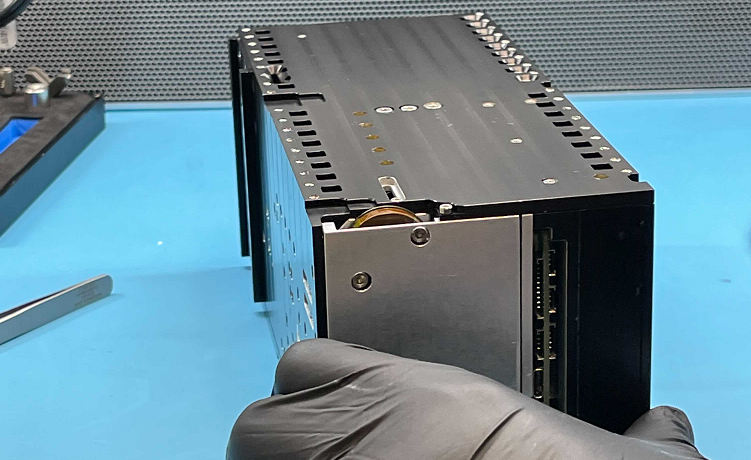
GEMS2
The GEMS2 instrument being readied for satellite integration
Share
LinkedIn Facebook Twitter Email

Orbital Micro Systems (OMS), a provider of advanced instrumentation for earth observation, has unveiled the capabilities of its next-generation Global Environmental Monitoring System (GEMS2) satellites, which are being readied for launch in the second half of 2021.

GEMS2 systems will feature a state-of-the-art microwave radiometer that provides temperature, humidity, and precipitation observations at multiple altitudes from the surface to the mid-stratosphere. According to OMS, the data captured from GEMS2 will specifically benefit insurance, agriculture, and aviation markets through more frequent and precise observations into weather structures and systems.

“GEMS2 builds on the success and lessons learned from the GEMS1 satellite which was launched in 2019 and has provided the highest spatial resolution tropospheric temperature sounding data ever gathered by a satellite mission,” said Michael Hurowitz, chief executive officer of OMS. “GEMS has become a key component of the future weather infrastructure plans for both commercial and government customers around the world. The experiences and knowledge we gained from GEMS1 has helped us create a new generation of instrumentation that will set the standard for collecting high-value Earth observation data for years to come.”

The GEMS2 satellite radiometers are designed to gather Earth observation data across 24 sounding and imaging channels, providing vertically distributed precipitation and temperature data points in a 2,000km-wide swath as each satellite orbits the Earth. The addition of a single GEMS2 radiometer to operational status will increase the global availability of microwave observation data by around 10%. An all-weather observation technology, GEMS2’s passive microwave radiometers operate at frequencies which penetrate clouds and offer internal views of storm systems that are similar to 3D weather radar over land or sea.

In addition, data collected by GEMS2 in 118GHz and 183GHz bands with 16km spatial resolution and cross-track scanning enables enhanced data reliability and precision. Global temperature, precipitation, and humidity profiles from the surface to 45km in altitude will be made available within 15 minutes of downlink, enabling near real-time analysis.

GEMS data collected from all satellites is processed and available for access through the International Centre of Earth Observation (ICED), operated by OMS partner Weather Stream. When aligned and geo-rectified with other datasets in the ICED platform, GEMS data will enhance the ability of governments and commercial users to improve forecast and nowcast services, as well as improve preparation for critical weather events.

Previous ArticleGrupo Climatempo and Somar Meteorologia merge to create largest met company in Southern Hemisphere
Next Article NOAA research enables scientists to better predict meteotsunamis

Read Similar Stories

Space Weather

Northumbria University secures £4m to study Earth’s radiation belts

April 16, 20262 Mins Read
Extreme Weather

AI model improves real-time prediction of wildfire spread

April 16, 20263 Mins Read
Satellites

AI tool uses weather satellite data to map ocean currents in near real time

April 14, 20263 Mins Read
Latest News

WMO signals increasing likelihood of El Niño developing in 2026

April 24, 2026

Alabama partners with Climavision to expand weather radar coverage statewide

April 24, 2026

Extreme heat posing significant risks to ecosystems and agriculture, FAO-WMO report warns

April 22, 2026

Receive breaking stories and features in your inbox each week, for free


Enter your email address:


Supplier Spotlights
  • GAMIC GmbH
Getting in Touch
  • Contact Us / Advertise
  • Meet the Editors
  • Media Pack
  • Free Weekly E-Newsletter
Our Social Channels
  • Facebook
  • LinkedIn
© 2026 UKi Media & Events a division of UKIP Media & Events Ltd
  • Cookie Policy
  • Privacy Policy
  • Terms and Conditions
  • Notice and Takedown Policy

Type above and press Enter to search. Press Esc to cancel.