


Close Menu
Meteorological Technology International
  • News
    • A-E
      • Agriculture
      • Automated Weather Stations
      • Aviation
      • Climate Measurement
      • Data
      • Developing Countries
      • Digital Applications
      • Early Warning Systems
      • Extreme Weather
    • G-P
      • Hydrology
      • Lidar
      • Lightning Detection
      • New Appointments
      • Nowcasting
      • Numerical Weather Prediction
      • Polar Weather
    • R-S
      • Radar
      • Rainfall
      • Remote Sensing
      • Renewable Energy
      • Satellites
      • Solar
      • Space Weather
      • Supercomputers
    • T-Z
      • Training
      • Transport
      • Weather Instruments
      • Wind
      • World Meteorological Organization
      • Meteorological Technology World Expo
  • Features
  • Online Magazines
    • January 2026
    • April 2025
    • January 2025
    • September 2024
    • April 2024
    • Archive Issues
    • Subscribe Free!
  • Opinion
  • Videos
  • Supplier Spotlight
  • Expo
LinkedIn X (Twitter) Facebook
  • Sign-up for Free Weekly E-Newsletter
  • Meet the Editors
  • Contact Us
  • Media Pack
LinkedIn Facebook
Subscribe
Meteorological Technology International
  • News
      • Agriculture
      • Automated Weather Stations
      • Aviation
      • Climate Measurement
      • Data
      • Developing Countries
      • Digital Applications
      • Early Warning Systems
      • Extreme Weather
      • Hydrology
      • Lidar
      • Lightning Detection
      • New Appointments
      • Nowcasting
      • Numerical Weather Prediction
      • Polar Weather
      • Radar
      • Rainfall
      • Remote Sensing
      • Renewable Energy
      • Satellites
      • Solar
      • Space Weather
      • Supercomputers
      • Training
      • Transport
      • Weather Instruments
      • Wind
      • World Meteorological Organization
      • Meteorological Technology World Expo
  • Features
  • Online Magazines
    1. January 2026
    2. September 2025
    3. April 2025
    4. January 2025
    5. September 2024
    6. April 2024
    7. January 2024
    8. September 2023
    9. April 2023
    10. Archive Issues
    11. Subscribe Free!
    Featured
    November 27, 2025

    In this Issue – January 2026

    By Hazel KingNovember 27, 2025
    Recent

    In this Issue – January 2026

    November 27, 2025

    In this Issue – September 2025

    August 11, 2025

    In this Issue – April 2025

    April 15, 2025
  • Opinion
  • Videos
  • Supplier Spotlight
  • Expo
Facebook LinkedIn
Subscribe
Meteorological Technology International
Polar Weather

Study predicts ice-free summers in the Arctic by the mid-century

Dan SymondsBy Dan SymondsMarch 11, 20223 Mins Read
Share LinkedIn Facebook Twitter Email
Credit: Pixabay
Share
LinkedIn Facebook Twitter Email

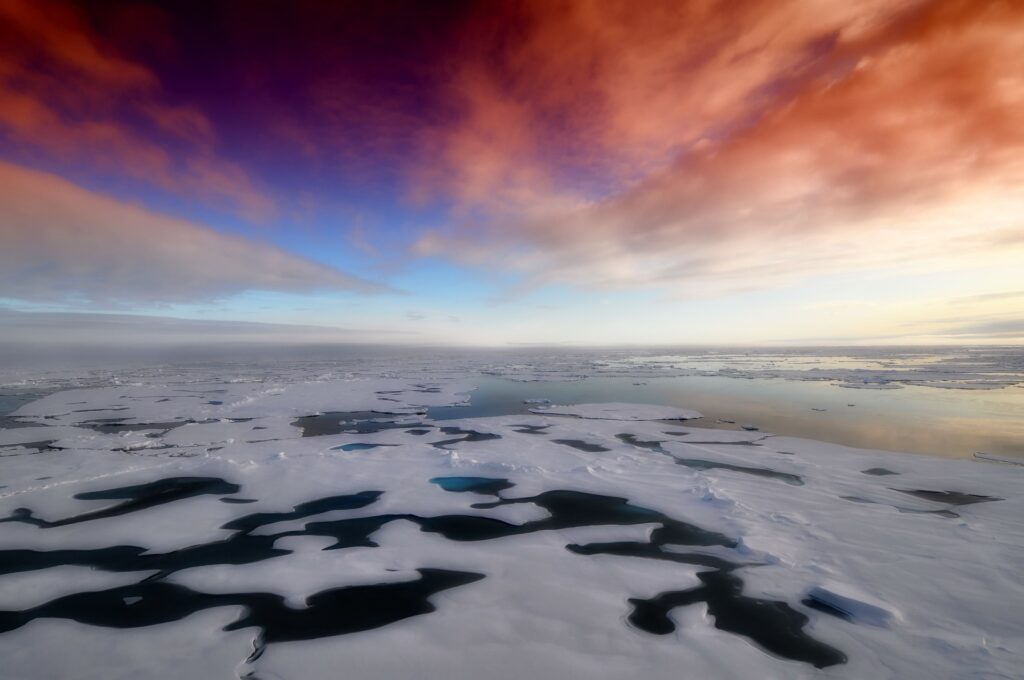
Seasonal sea ice, which melts completely each summer rather than accumulating over years, is replacing thicker, multiyear ice and driving sea ice thinning trends, according to new research.

Over the past two decades, the Arctic has lost about one third of its winter sea ice volume, largely due to a decline in sea ice that persists over several years, called multiyear ice. The study also found sea ice is likely thinner than previous estimates.

According to the researchers, this was the first time Arctic sea ice snow depth has been estimated using a combination of lidar (ICESat-2) and radar (CryoSat-2) data. Using these estimates of snow depth and the height of sea ice exposed above water, the study found multiyear Arctic sea ice has lost 16% of its winter volume, or approximately half a meter (1.5ft) of thickness, in the three years since the launch of ICESat-2, part of NASA’s Earth Observing System.

Sahra Kacimi, lead study author and a polar scientist at the California Institute of Technology’s Jet Propulsion Laboratory, said, “We weren’t really expecting to see this decline, for the ice to be this much thinner in just three short years.”

Scientists make satellite estimates of sea-ice thickness using snow depth and the height of the floating ice above the sea surface. Snow can weigh ice down, changing how ice floats in the ocean. The new study compared ice thickness using new snow depths from satellite radar and lidar to previous ice thickness and snow depth estimates from climate records. The researchers found using climatology-based estimates of snow depth can result in overestimating sea-ice thickness by up to 20%, or up to 0.2m (0.7ft).

Ron Kwok, study co-author and a polar scientist at the University of Washington’s Applied Physics Laboratory, said, “Arctic snow depth, sea ice thickness and volume are three very challenging measurements to obtain. The key takeaway for me is the remarkable loss of Arctic winter sea ice volume — one-third of the winter ice volume lost over just 18 years — that accompanied a widely reported loss of old, thick Arctic sea ice and decline in end-of-summer ice extent.”

The study used an 18-year record of sea-ice observations from ICESat and the newer ICESat-2 and CryoSat-2 satellites to capture monthly changes in Arctic sea-ice thickness and volume, to provide context for sea ice thickness estimates from 2018 to 2021. The 18-year record showed a loss of about 6,000km3 of winter ice volume, largely driven by the switch from predominantly multiyear ice to thinner, seasonal sea ice.

Older, multiyear ice tends to be thicker and therefore more resistant to melting. As that “reservoir” of old Arctic sea ice is depleted and seasonal ice becomes the norm, the overall thickness and volume of Arctic sea ice is expected to decline. “Current models predict that by the mid-century we can expect ice-free summers in the Arctic, when the older ice, thick enough to survive the melt season is gone,” Kacimi said.

“This is really old ice we’re losing at quite a frightening rate,” said Robbie Mallett, a polar ice researcher at University College London, who was not involved in the study.

To view the complete study published in the AGU journal Geophysical Research Letters, click here.

Previous ArticleBoM extends strategic agreement with Hydro Tasmania
Next Article Vaisala partners in study to assess highway ice formation and mitigation

Read Similar Stories

Data

Atmospheric G2 secures Japan weather forecasting license

April 21, 20262 Mins Read
Climate Measurement

China completes Antarctic meteorological research mission with Xuelong icebreaker

April 21, 20262 Mins Read
Radar

EWR Radar Systems wins US Air Force contract for portable Doppler radar support

April 20, 20262 Mins Read
Latest News

Extreme heat posing significant risks to ecosystems and agriculture, FAO-WMO report warns

April 22, 2026

Atmospheric G2 secures Japan weather forecasting license

April 21, 2026

China completes Antarctic meteorological research mission with Xuelong icebreaker

April 21, 2026

Receive breaking stories and features in your inbox each week, for free


Enter your email address:


Supplier Spotlights
  • ROTRONIC AG
Getting in Touch
  • Contact Us / Advertise
  • Meet the Editors
  • Media Pack
  • Free Weekly E-Newsletter
Our Social Channels
  • Facebook
  • LinkedIn
© 2026 UKi Media & Events a division of UKIP Media & Events Ltd
  • Cookie Policy
  • Privacy Policy
  • Terms and Conditions
  • Notice and Takedown Policy

Type above and press Enter to search. Press Esc to cancel.