


Close Menu
Meteorological Technology International
  • News
    • A-E
      • Agriculture
      • Automated Weather Stations
      • Aviation
      • Climate Measurement
      • Data
      • Developing Countries
      • Digital Applications
      • Early Warning Systems
      • Extreme Weather
    • G-P
      • Hydrology
      • Lidar
      • Lightning Detection
      • New Appointments
      • Nowcasting
      • Numerical Weather Prediction
      • Polar Weather
    • R-S
      • Radar
      • Rainfall
      • Remote Sensing
      • Renewable Energy
      • Satellites
      • Solar
      • Space Weather
      • Supercomputers
    • T-Z
      • Training
      • Transport
      • Weather Instruments
      • Wind
      • World Meteorological Organization
      • Meteorological Technology World Expo
  • Features
  • Online Magazines
    • January 2026
    • April 2025
    • January 2025
    • September 2024
    • April 2024
    • Archive Issues
    • Subscribe Free!
  • Opinion
  • Videos
  • Supplier Spotlight
  • Expo
LinkedIn X (Twitter) Facebook
  • Sign-up for Free Weekly E-Newsletter
  • Meet the Editors
  • Contact Us
  • Media Pack
LinkedIn Facebook
Subscribe
Meteorological Technology International
  • News
      • Agriculture
      • Automated Weather Stations
      • Aviation
      • Climate Measurement
      • Data
      • Developing Countries
      • Digital Applications
      • Early Warning Systems
      • Extreme Weather
      • Hydrology
      • Lidar
      • Lightning Detection
      • New Appointments
      • Nowcasting
      • Numerical Weather Prediction
      • Polar Weather
      • Radar
      • Rainfall
      • Remote Sensing
      • Renewable Energy
      • Satellites
      • Solar
      • Space Weather
      • Supercomputers
      • Training
      • Transport
      • Weather Instruments
      • Wind
      • World Meteorological Organization
      • Meteorological Technology World Expo
  • Features
  • Online Magazines
    1. January 2026
    2. September 2025
    3. April 2025
    4. January 2025
    5. September 2024
    6. April 2024
    7. January 2024
    8. September 2023
    9. April 2023
    10. Archive Issues
    11. Subscribe Free!
    Featured
    November 27, 2025

    In this Issue – January 2026

    By Hazel KingNovember 27, 2025
    Recent

    In this Issue – January 2026

    November 27, 2025

    In this Issue – September 2025

    August 11, 2025

    In this Issue – April 2025

    April 15, 2025
  • Opinion
  • Videos
  • Supplier Spotlight
  • Expo
Facebook LinkedIn
Subscribe
Meteorological Technology International
Radar

Baron launches clutter mitigation technology to improve weather radar performance

Dan SymondsBy Dan SymondsApril 19, 20222 Mins Read
Share LinkedIn Facebook Twitter Email
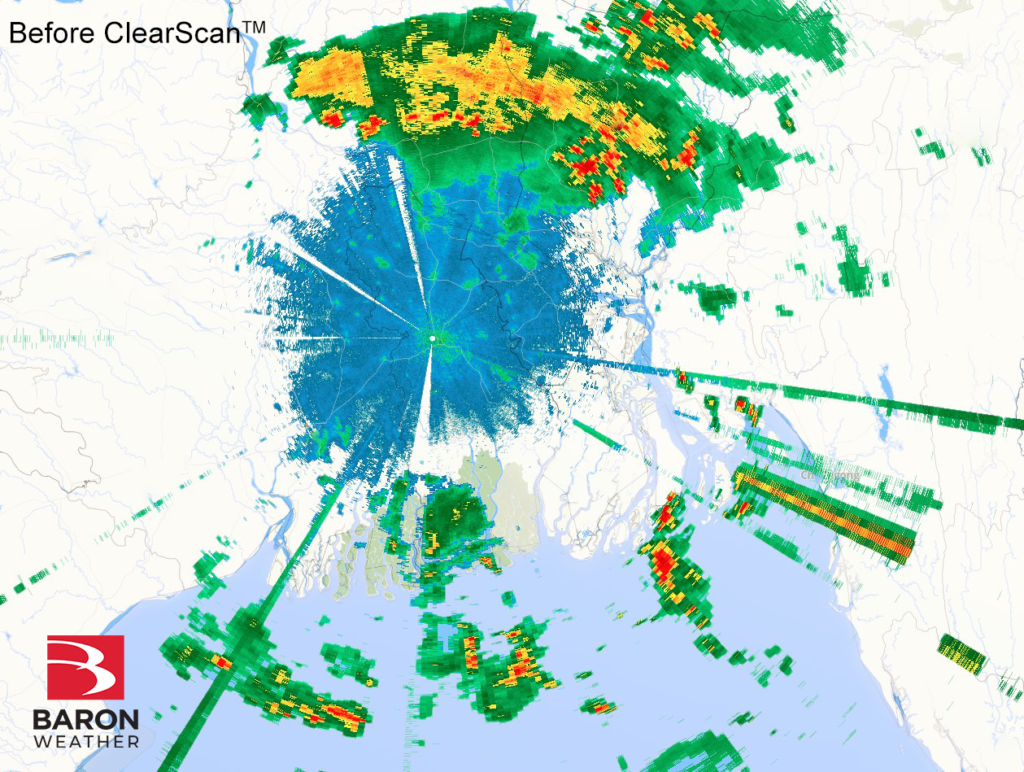
Radar scan before use of Baron ClearScan - credit: Baron
Share
LinkedIn Facebook Twitter Email

Weather intelligence provider Baron has developed innovative new radar processing technology that will make dual-polarization radars even more powerful tools for solving weather and climate problems.

The Baron ClearScan radar clutter mitigation technology provides the user with clear current precipitation data. Using machine learning algorithms supported by human intervention, the Baron ClearScan learns to recognize data from actual weather targets versus radio frequency interference (RF) or anomalous propagation (AP). RF interference is caused by other electronic devices and is a growing concern as new technologies like 5G cellular signals increase the potential interference with weather radars.
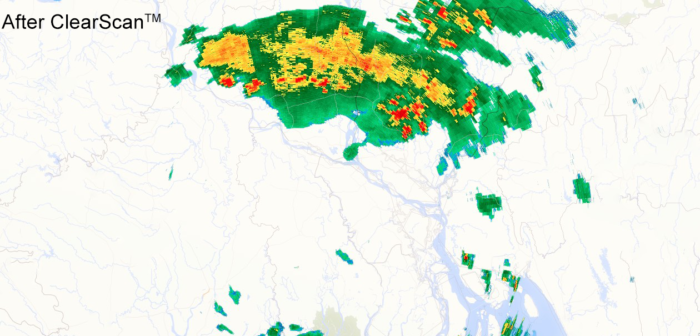
Radar scan after use of Baron ClearScan – credit: Baron

Bob Dreisewerd, CEO of Baron, said, “The Baron ClearScan is another example of Baron innovation solving an issue for our customers by leveraging machine learning technology to automatically remove non-precipitation radar returns due to RF interference, wind farms, and other anomalous phenomena, ultimately improving the quality of weather radar data.”

The exclusive ClearScan technology examines reflectivity, velocity and dual-polarization data to decipher between quality radar data and anomalous propagation or radio frequency interference. The Baron ClearScan offers a hyper-local solution that can recognize AP or RF and remove it from a dual-polarization radar data display in real time.

The Baron ClearScan works well with other signal processing technology, such as Clean-AP, which specifically targets ground clutter for removal. Baron offers Clean-AP through an exclusive agreement with the University of Oklahoma. With ClearScan the removal of noise and interference takes place at the end of the signal processing, opposed to Clean-AP which happens at the signal processor. The two technologies working together provide highly effective clutter suppression.

In addition, Baron’s new Staggered Pulse Repetition Frequency (PRF) mode detects wind movement inside a storm with greater precision. This technology provides visibility of velocity couplets that cannot be seen in Dual PRF mode. The feature works well with twisting and straight-line winds, making it valuable during a tornadic event, convective thunderstorms, and tropical events.

“The implementation of Staggered PRF within the Baron radar processing ecosystem further improves the quality of radar velocity data and the ability of our customers to detect and relay critical early warning information,” Dreisewerd said.

Previous ArticleWMO reaccredited as Adaptation Fund partner organization
Next Article Wildfires altering pollution patterns across North America, finds NCAR

Read Similar Stories

Radar

EWR Radar Systems wins US Air Force contract for portable Doppler radar support

April 20, 20262 Mins Read
Extreme Weather

AI model improves real-time prediction of wildfire spread

April 16, 20263 Mins Read
Climate Measurement

Study identifies atmospheric trigger behind flash droughts in Puerto Rico

April 15, 20263 Mins Read
Latest News

Extreme heat posing significant risks to ecosystems and agriculture, FAO-WMO report warns

April 22, 2026

Atmospheric G2 secures Japan weather forecasting license

April 21, 2026

China completes Antarctic meteorological research mission with Xuelong icebreaker

April 21, 2026

Receive breaking stories and features in your inbox each week, for free


Enter your email address:


Supplier Spotlights
  • Meteorage
Getting in Touch
  • Contact Us / Advertise
  • Meet the Editors
  • Media Pack
  • Free Weekly E-Newsletter
Our Social Channels
  • Facebook
  • LinkedIn
© 2026 UKi Media & Events a division of UKIP Media & Events Ltd
  • Cookie Policy
  • Privacy Policy
  • Terms and Conditions
  • Notice and Takedown Policy

Type above and press Enter to search. Press Esc to cancel.