


Close Menu
Meteorological Technology International
  • News
    • A-E
      • Agriculture
      • Automated Weather Stations
      • Aviation
      • Climate Measurement
      • Data
      • Developing Countries
      • Digital Applications
      • Early Warning Systems
      • Extreme Weather
    • G-P
      • Hydrology
      • Lidar
      • Lightning Detection
      • New Appointments
      • Nowcasting
      • Numerical Weather Prediction
      • Polar Weather
    • R-S
      • Radar
      • Rainfall
      • Remote Sensing
      • Renewable Energy
      • Satellites
      • Solar
      • Space Weather
      • Supercomputers
    • T-Z
      • Training
      • Transport
      • Weather Instruments
      • Wind
      • World Meteorological Organization
      • Meteorological Technology World Expo
  • Features
  • Online Magazines
    • January 2026
    • April 2025
    • January 2025
    • September 2024
    • April 2024
    • Archive Issues
    • Subscribe Free!
  • Opinion
  • Videos
  • Supplier Spotlight
  • Expo
LinkedIn X (Twitter) Facebook
  • Sign-up for Free Weekly E-Newsletter
  • Meet the Editors
  • Contact Us
  • Media Pack
LinkedIn Facebook
Subscribe
Meteorological Technology International
  • News
      • Agriculture
      • Automated Weather Stations
      • Aviation
      • Climate Measurement
      • Data
      • Developing Countries
      • Digital Applications
      • Early Warning Systems
      • Extreme Weather
      • Hydrology
      • Lidar
      • Lightning Detection
      • New Appointments
      • Nowcasting
      • Numerical Weather Prediction
      • Polar Weather
      • Radar
      • Rainfall
      • Remote Sensing
      • Renewable Energy
      • Satellites
      • Solar
      • Space Weather
      • Supercomputers
      • Training
      • Transport
      • Weather Instruments
      • Wind
      • World Meteorological Organization
      • Meteorological Technology World Expo
  • Features
  • Online Magazines
    1. April 2026
    2. January 2026
    3. September 2025
    4. April 2025
    5. January 2025
    6. September 2024
    7. April 2024
    8. January 2024
    9. Archive Issues
    10. Subscribe Free!
    Featured
    May 5, 2026

    In this Issue – April 2026

    By Web TeamMay 5, 2026
    Recent

    In this Issue – April 2026

    May 5, 2026

    In this Issue – January 2026

    November 27, 2025

    In this Issue – September 2025

    August 11, 2025
  • Opinion
  • Videos
  • Supplier Spotlight
  • Expo
Facebook LinkedIn
Subscribe
Meteorological Technology International
Developing Countries

EUMETSAT installs receiving stations for Kenya’s Meteosat Third Generation geostationary satellites

Elizabeth BakerBy Elizabeth BakerAugust 28, 20243 Mins Read
Share LinkedIn Facebook Twitter Email
The European Organisation for the Exploitation of Meteorological Satellites (EUMETSAT) has installed the first of a series of PUMA-2025 receiving stations to capture data provided by Meteosat Third Generation (MTG) geostationary satellites in Nairobi, Kenya.
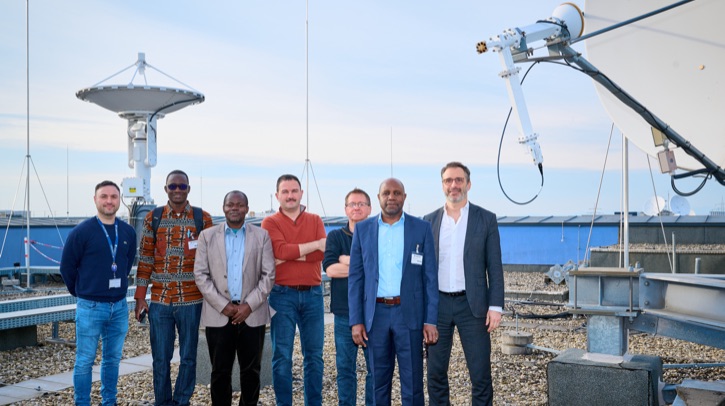
The African Union Commission (AUC) team coordinating the deployment of the new PUMA station for the EU-funded ClimSA project, visited by EUMETSAT. From left to right: Paolo Sidoli, EUMETSAT, Ulrich Diasso, AUC, Jolly Wasambo, AUC, Erdem Erdi, EUMETSAT, Gordon Smith, EUMETSAT, Harsen Nyambe, AUC, Vincent Gabaglio, EUMETSAT. Credit: EUMETSAT
Share
LinkedIn Facebook Twitter Email

The European Organisation for the Exploitation of Meteorological Satellites (EUMETSAT) has installed the first of a series of PUMA-2025 receiving stations to capture data provided by Meteosat Third Generation (MTG) geostationary satellites in Nairobi, Kenya.

Next-generation weather satellites

These stations are to ensure that Kenyan meteorologists can use the most accurate and frequent data from the MTG satellites to support the sustainable development of local communities and protect lives and livelihoods.

EUMETSAT supports the African Union Commission’s effort to set up a network of similar stations in several national weather and climate services across the entire continent in the following months. This is to empower African meteorologists and scientists with the most recent technology to receive and use MTG data.

According to the organization, EUMETSAT’s Meteosat satellites are the only Earth observation satellites that have a constant view of Africa. MTG will provide higher-resolution images of Africa than is possible now, and will do so more frequently, that is, every 10 minutes.

“The African Union and EUMETSAT signed an agreement in 2022 to ensure that the right infrastructure would be implemented to empower African users with data from MTG,” explained Phil Evans, EUMETSAT director-general. “The milestone we just passed ensures continuity of satellite data reception across the continent, enabling more efficient early warnings for all, more accurate forecasting of extreme weather events and better protection for all.”

Upgrading early warning infrastructure

The first PUMA station was installed almost 20 years ago, in February 2004, to receive Meteosat Second Generation (MSG) data within the framework of the Preparation for Use of Meteosat in Africa (PUMA) project. Until now, thanks to the support of various EU-funded programs in Africa (such as PUMA, African Monitoring of the Environment for Sustainable Development and the Monitoring of Environment and Security in Africa program) this infrastructure enabled African weather and climate services across the entire continent to receive data from the Meteosat geostationary satellites in a timely and efficient way, to forecast and monitor extreme weather events. The current installations will upgrade the infrastructure for MTG, and will provide relevant training to maximize benefits for meteorologists and enable local maintenance.

Upcoming installations include a station in Cotonou, Benin, where the 16th EUMETSAT User Forum in Africa will take place this September. The event will provide a platform for African meteorologists to share knowledge and best practices on the use of Meteosat data and discuss perspectives to improve early warning systems.

In related news, EUMETSAT recently awarded a launch service contract to SpaceX for the launch of the Meteosat Third Generation-Sounder 1 (MTG-S1) satellite on a Falcon 9 rocket in 2025. Click here to read the full story.

Previous ArticleSOFF invests US$7.8m to help Mozambique achieve Early Warnings for All by 2028
Next Article EXCLUSIVE FEATURE: How are meteorological researchers improving clear-air turbulence predictions?

Read Similar Stories

Oceans

VIDEO: Sentinel-6 satellite detects El Niño precursor in Pacific

June 4, 20262 Mins Read
Solar

New forecasting framework targets solar-limb flare blind spot

June 4, 20262 Mins Read
Nowcasting

Colorado State University and Nvidia partner to extend severe storm prediction lead times

June 2, 20262 Mins Read
Latest News

VIDEO: Sentinel-6 satellite detects El Niño precursor in Pacific

June 4, 2026

New forecasting framework targets solar-limb flare blind spot

June 4, 2026

Colorado State University and Nvidia partner to extend severe storm prediction lead times

June 2, 2026

Receive breaking stories and features in your inbox each week, for free


Enter your email address:


Supplier Spotlights
  • Sommer GmbH
Getting in Touch
  • Contact Us / Advertise
  • Meet the Editors
  • Media Pack
  • Free Weekly E-Newsletter
Our Social Channels
  • Facebook
  • LinkedIn
© 2026 UKi Media & Events a division of UKIP Media & Events Ltd
  • Cookie Policy
  • Privacy Policy
  • Terms and Conditions
  • Notice and Takedown Policy

Type above and press Enter to search. Press Esc to cancel.