


Close Menu
Meteorological Technology International
  • News
    • A-E
      • Agriculture
      • Automated Weather Stations
      • Aviation
      • Climate Measurement
      • Data
      • Developing Countries
      • Digital Applications
      • Early Warning Systems
      • Extreme Weather
    • G-P
      • Hydrology
      • Lidar
      • Lightning Detection
      • New Appointments
      • Nowcasting
      • Numerical Weather Prediction
      • Polar Weather
    • R-S
      • Radar
      • Rainfall
      • Remote Sensing
      • Renewable Energy
      • Satellites
      • Solar
      • Space Weather
      • Supercomputers
    • T-Z
      • Training
      • Transport
      • Weather Instruments
      • Wind
      • World Meteorological Organization
      • Meteorological Technology World Expo
  • Features
  • Online Magazines
    • January 2026
    • April 2025
    • January 2025
    • September 2024
    • April 2024
    • Archive Issues
    • Subscribe Free!
  • Opinion
  • Videos
  • Supplier Spotlight
  • Expo
LinkedIn X (Twitter) Facebook
  • Sign-up for Free Weekly E-Newsletter
  • Meet the Editors
  • Contact Us
  • Media Pack
LinkedIn Facebook
Subscribe
Meteorological Technology International
  • News
      • Agriculture
      • Automated Weather Stations
      • Aviation
      • Climate Measurement
      • Data
      • Developing Countries
      • Digital Applications
      • Early Warning Systems
      • Extreme Weather
      • Hydrology
      • Lidar
      • Lightning Detection
      • New Appointments
      • Nowcasting
      • Numerical Weather Prediction
      • Polar Weather
      • Radar
      • Rainfall
      • Remote Sensing
      • Renewable Energy
      • Satellites
      • Solar
      • Space Weather
      • Supercomputers
      • Training
      • Transport
      • Weather Instruments
      • Wind
      • World Meteorological Organization
      • Meteorological Technology World Expo
  • Features
  • Online Magazines
    1. April 2026
    2. January 2026
    3. September 2025
    4. April 2025
    5. January 2025
    6. September 2024
    7. April 2024
    8. January 2024
    9. Archive Issues
    10. Subscribe Free!
    Featured
    May 5, 2026

    In this Issue – April 2026

    By Web TeamMay 5, 2026
    Recent

    In this Issue – April 2026

    May 5, 2026

    In this Issue – January 2026

    November 27, 2025

    In this Issue – September 2025

    August 11, 2025
  • Opinion
  • Videos
  • Supplier Spotlight
  • Expo
Facebook LinkedIn
Subscribe
Meteorological Technology International
Satellites

EUMETSAT’s first Meteosat Third Generation satellite becomes operational

Elizabeth BakerBy Elizabeth BakerDecember 10, 20243 Mins Read
Share LinkedIn Facebook Twitter Email
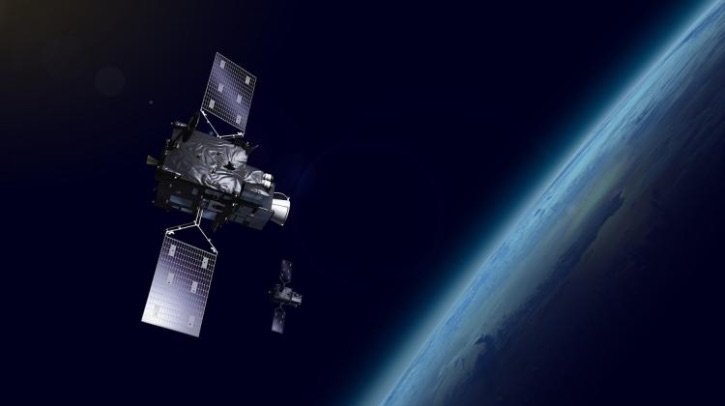
The first of EUMETSAT’s Meteosat Third Generation (MTG) satellites is now fully operational and disseminating high-resolution, accurate data for predicting severe weather events.
Share
LinkedIn Facebook Twitter Email

The first of EUMETSAT’s Meteosat Third Generation (MTG) satellites is now fully operational and disseminating high-resolution, accurate data for predicting severe weather events. MTG-Imager 1 has also received a new name – Meteosat-12 – to mark the occasion.

Satellite data instruments

The are two main instruments on board Meteosat-12, the flexible combined imager (FCI) and the lightning imager (LI). In addition to the FCI and LI, Meteosat-12 also carries the data collection and retransmission service (DCS) and the geostationary search and rescue relay (GEOSAR) transponder.

The DCS acquires observations and environmental data from ground-based meteorological platforms in its field of view and then transmits them to the MTG ground segment. The GEOSAR transponder acquires signals from distress beacons in its field of view and transmits them to rescue services.

Severe weather forecasting

The data from Meteosat-12’s instruments are being disseminated to national meteorological services and others for operational use and are expected to have a significant impact on weather forecasting and understanding of Earth’s climate.

“MTG is one of the most innovative and complex meteorological satellite systems ever built,” EUMETSAT director-general Phil Evans said. “We have been working with our member states’ meteorological services to ensure they can make the best use of the data, which is essential for one of the main challenges they face – the rapid detection and forecasting of severe weather so that citizenry, civil authorities and first responders receive timely warnings. When the full constellation of MTG is in place, it will be possible, for the first time, to observe the full lifecycle of a convective storm, from before clouds begin to form through to detection of lightning strikes.”

According to the organization, efficient and impactful use of this new data will also be central to the EU-funded Space for Early Warnings in Africa project, which is implemented with the African Union Commission. The council has approved EUMETSAT’s involvement via an agreement with the European Commission. Starting in January 2025, the project will enhance African capacity to access and process Earth observation data, strengthening early warning systems (EWS) and resilience to severe weather.

Delayed commissioning

An anomaly in a module of the Flexible Combined Imager meant its commissioning phase lasted longer than anticipated when the spacecraft was launched in mid-December 2022.

“A great deal of hard work, dedication and ingenuity went in to overcoming the anomaly while the satellite was already in orbit 36,000km above the Earth,” Evans said. “I pay tribute to the EUMETSAT teams, supported by ESA and the industry, that achieved that feat and enabled us to reach this important milestone today where we are confident of the quality and reliability of the data we are providing to those who need it.”

In related news, the Bureau of Meteorology in Australia and the Japan Meteorological Agency (JMA) recently signed a strategic relationship arrangement to enhance their longstanding collaboration on satellite meteorology and create more accurate and reliable forecasts and warnings. Click here to read the full story.

Previous ArticleVaisala launches robust ultrasonic wind sensor for wind turbines and maritime applications
Next Article FAMU-FSU College of Engineering creates new research method for extreme weather predictions

Read Similar Stories

Climate Measurement

Cambridge AI tool converts satellite archives into accessible Earth intelligence

June 10, 20262 Mins Read
Oceans

VIDEO: Sentinel-6 satellite detects El Niño precursor in Pacific

June 4, 20262 Mins Read
Solar

New forecasting framework targets solar-limb flare blind spot

June 4, 20262 Mins Read
Latest News

Global warming reached 1.37°C in 2025 as heat accumulation hits record rate

June 12, 2026

NSF NCAR researchers develop advanced model for neighborhood-scale low-altitude wind prediction

June 11, 2026

Cambridge AI tool converts satellite archives into accessible Earth intelligence

June 10, 2026

Receive breaking stories and features in your inbox each week, for free


Enter your email address:


Supplier Spotlights
  • Campbell Scientific
Getting in Touch
  • Contact Us / Advertise
  • Meet the Editors
  • Media Pack
  • Free Weekly E-Newsletter
Our Social Channels
  • Facebook
  • LinkedIn
© 2026 UKi Media & Events a division of UKIP Media & Events Ltd
  • Cookie Policy
  • Privacy Policy
  • Terms and Conditions
  • Notice and Takedown Policy

Type above and press Enter to search. Press Esc to cancel.