


Researchers from Cardiff University plan to use drone technology to detect and monitor wildfires and support emergency response services.
The team will use uncrewed aerial vehicles (UAVs) equipped with advanced sensing capabilities to survey large areas that are difficult to access quickly and safely.
According to the researchers, onboard thermal and optical imaging would help authorities identify hot spots that are not easily visible from the ground.
Artificial intelligence (AI) analysis of the data in near real time could also help identify vegetation changes, heat patterns and other indicators of increased fire risk.
It is hoped that combining the aerial information with weather, terrain and environmental data will enable the team to develop predictive tools capable of highlighting high-risk areas and supporting decisions before and during a wildfire.
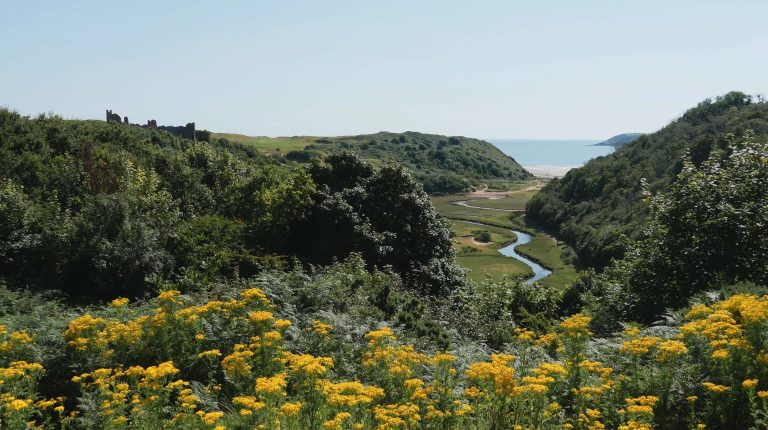
The project, led by Cardiff University and Swansea Airport Stakeholders’ Alliance, will run a one-year pilot study in the Gower Peninsula in Wales from October 2026. Wildfires have become a growing concern in the area and place pressure on fire and rescue services while threatening communities, wildlife, infrastructure and environmentally sensitive landscapes.
Project lead Dr Rukshan Navaratne, a reader in power and propulsion at Cardiff University’s School of Engineering, said, “Aerospace research is not only about developing the next generation of aircraft. Technologies being developed for aviation – from autonomous systems and advanced sensors to artificial intelligence and aerial platforms – can help address major challenges facing society.”
He added, “Wildfires are extremely dynamic events where we think this technology can make a big difference. In these events, conditions can change rapidly, while some areas firefighters need to reach can be difficult or dangerous to access. Providing accurate information from the air could give emergency responders a clearer understanding of how a fire is developing and where resources are most urgently needed.”
The Gower Peninsula – designated an area of outstanding natural beauty in England and Wales – is home to important habitats and rich archaeological and historical assets, reflecting human activity from prehistoric times onward.
Bob Oliver MBE, chairman of Swansea Airport Stakeholders’ Alliance, said, “Swansea Airport sits at the heart of the Gower community, and we recognize the importance of protecting this extraordinary landscape for future generations. The airport has the potential to provide a valuable operational base for developing and demonstrating aerial wildfire monitoring technologies.”
In related news, WMO bulletin warns rising wildfire and heat wave pollution threatens air quality gains