


Close Menu
Meteorological Technology International
  • News
    • A-E
      • Agriculture
      • Automated Weather Stations
      • Aviation
      • Climate Measurement
      • Data
      • Developing Countries
      • Digital Applications
      • Early Warning Systems
      • Extreme Weather
    • G-P
      • Hydrology
      • Lidar
      • Lightning Detection
      • New Appointments
      • Nowcasting
      • Numerical Weather Prediction
      • Polar Weather
    • R-S
      • Radar
      • Rainfall
      • Remote Sensing
      • Renewable Energy
      • Satellites
      • Solar
      • Space Weather
      • Supercomputers
    • T-Z
      • Training
      • Transport
      • Weather Instruments
      • Wind
      • World Meteorological Organization
      • Meteorological Technology World Expo
  • Features
  • Online Magazines
    • January 2026
    • April 2025
    • January 2025
    • September 2024
    • April 2024
    • Archive Issues
    • Subscribe Free!
  • Opinion
  • Videos
  • Supplier Spotlight
  • Expo
LinkedIn X (Twitter) Facebook
  • Sign-up for Free Weekly E-Newsletter
  • Meet the Editors
  • Contact Us
  • Media Pack
LinkedIn Facebook
Subscribe
Meteorological Technology International
  • News
      • Agriculture
      • Automated Weather Stations
      • Aviation
      • Climate Measurement
      • Data
      • Developing Countries
      • Digital Applications
      • Early Warning Systems
      • Extreme Weather
      • Hydrology
      • Lidar
      • Lightning Detection
      • New Appointments
      • Nowcasting
      • Numerical Weather Prediction
      • Polar Weather
      • Radar
      • Rainfall
      • Remote Sensing
      • Renewable Energy
      • Satellites
      • Solar
      • Space Weather
      • Supercomputers
      • Training
      • Transport
      • Weather Instruments
      • Wind
      • World Meteorological Organization
      • Meteorological Technology World Expo
  • Features
  • Online Magazines
    1. January 2026
    2. September 2025
    3. April 2025
    4. January 2025
    5. September 2024
    6. April 2024
    7. January 2024
    8. September 2023
    9. April 2023
    10. Archive Issues
    11. Subscribe Free!
    Featured
    November 27, 2025

    In this Issue – January 2026

    By Hazel KingNovember 27, 2025
    Recent

    In this Issue – January 2026

    November 27, 2025

    In this Issue – September 2025

    August 11, 2025

    In this Issue – April 2025

    April 15, 2025
  • Opinion
  • Videos
  • Supplier Spotlight
  • Expo
Facebook LinkedIn
Subscribe
Meteorological Technology International
Data

NASA awards JPSS instrument refurbishment contract to Northrop Grumman

Dan SymondsBy Dan SymondsDecember 20, 20222 Mins Read
Share LinkedIn Facebook Twitter Email
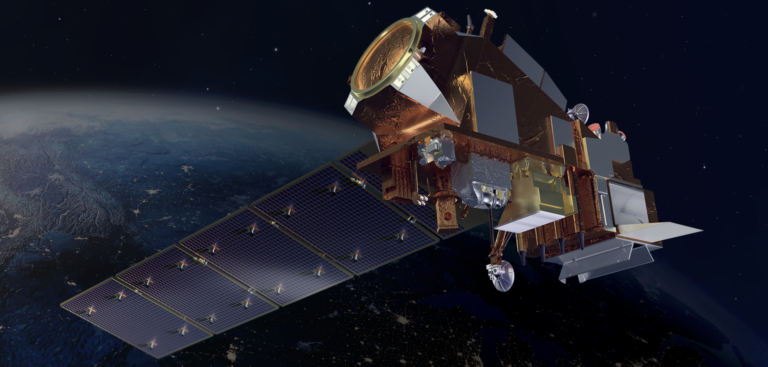
Rendering of JPSS-2 - credit: NOAA-NASA
Share
LinkedIn Facebook Twitter Email

US space agency NASA has contracted aerospace and defense technology developer Northrop Grumman to refurbish the NOAA’s Joint Polar Satellite System (JPSS) Advanced Technology Microwave Sounder (ATMS) Engineering Development Unit (EDU) to support a future mission.

This is a cost-plus, fixed-fee contract modification in the amount of US$13,261,772, and increases the total contract value to US$579,770,626.

The principal purpose is to refurbish the JPSS ATMS EDU as a flight instrument for the QuickSounder project, which will support the NOAA’s next-generation satellite architecture for its future Low-Earth Orbit Earth Observations System (LEOS) program.

The QuickSounder project is a NOAA risk-reduction mission to evaluate streamlined acquisition processes and determine the utility of commercial small satellites, launch services, mission operations and data routing in a disaggregated constellation for the next generation of LEO weather satellites.

ATMS is a passive microwave instrument that provides high spatial resolution microwave temperature and humidity sounding data in all conditions, including cloud cover. The NOAA’s National Weather Service (NWS) forecasters use this data in computer models to improve global and regional predictions of weather patterns, storm tracks and precipitation. More than 90% of the data used in NWS models comes from satellite data and ATMS is fundamental to the accuracy and precision of the model output. This information significantly improves short- and long-term weather forecasting.

The NOAA and NASA oversee the development, launch, testing and operation of all the satellites in the JPSS program. The NOAA funds and manages the program, operations and data products. On the NOAA’s behalf, NASA and its commercial partners develop and build the instruments, spacecraft and ground systems, and launch the satellites.

Previous ArticleResearchers warn of compounding impacts of warming temperatures and natural ocean oscillations
Next Article Hunga volcanic eruption led to highest concentration of lightning ever detected, finds report

Read Similar Stories

Data

Atmospheric G2 secures Japan weather forecasting license

April 21, 20262 Mins Read
Climate Measurement

China completes Antarctic meteorological research mission with Xuelong icebreaker

April 21, 20262 Mins Read
Space Weather

Northumbria University secures £4m to study Earth’s radiation belts

April 16, 20262 Mins Read
Latest News

Atmospheric G2 secures Japan weather forecasting license

April 21, 2026

China completes Antarctic meteorological research mission with Xuelong icebreaker

April 21, 2026

EWR Radar Systems wins US Air Force contract for portable Doppler radar support

April 20, 2026

Receive breaking stories and features in your inbox each week, for free


Enter your email address:


Supplier Spotlights
  • Sommer GmbH
Getting in Touch
  • Contact Us / Advertise
  • Meet the Editors
  • Media Pack
  • Free Weekly E-Newsletter
Our Social Channels
  • Facebook
  • LinkedIn
© 2026 UKi Media & Events a division of UKIP Media & Events Ltd
  • Cookie Policy
  • Privacy Policy
  • Terms and Conditions
  • Notice and Takedown Policy

Type above and press Enter to search. Press Esc to cancel.