


Close Menu
Meteorological Technology International
  • News
    • A-E
      • Agriculture
      • Automated Weather Stations
      • Aviation
      • Climate Measurement
      • Data
      • Developing Countries
      • Digital Applications
      • Early Warning Systems
      • Extreme Weather
    • G-P
      • Hydrology
      • Lidar
      • Lightning Detection
      • New Appointments
      • Nowcasting
      • Numerical Weather Prediction
      • Polar Weather
    • R-S
      • Radar
      • Rainfall
      • Remote Sensing
      • Renewable Energy
      • Satellites
      • Solar
      • Space Weather
      • Supercomputers
    • T-Z
      • Training
      • Transport
      • Weather Instruments
      • Wind
      • World Meteorological Organization
      • Meteorological Technology World Expo
  • Features
  • Online Magazines
    • January 2026
    • April 2025
    • January 2025
    • September 2024
    • April 2024
    • Archive Issues
    • Subscribe Free!
  • Opinion
  • Videos
  • Supplier Spotlight
  • Expo
LinkedIn X (Twitter) Facebook
  • Sign-up for Free Weekly E-Newsletter
  • Meet the Editors
  • Contact Us
  • Media Pack
LinkedIn Facebook
Subscribe
Meteorological Technology International
  • News
      • Agriculture
      • Automated Weather Stations
      • Aviation
      • Climate Measurement
      • Data
      • Developing Countries
      • Digital Applications
      • Early Warning Systems
      • Extreme Weather
      • Hydrology
      • Lidar
      • Lightning Detection
      • New Appointments
      • Nowcasting
      • Numerical Weather Prediction
      • Polar Weather
      • Radar
      • Rainfall
      • Remote Sensing
      • Renewable Energy
      • Satellites
      • Solar
      • Space Weather
      • Supercomputers
      • Training
      • Transport
      • Weather Instruments
      • Wind
      • World Meteorological Organization
      • Meteorological Technology World Expo
  • Features
  • Online Magazines
    1. April 2026
    2. January 2026
    3. September 2025
    4. April 2025
    5. January 2025
    6. September 2024
    7. April 2024
    8. January 2024
    9. Archive Issues
    10. Subscribe Free!
    Featured
    May 5, 2026

    In this Issue – April 2026

    By Web TeamMay 5, 2026
    Recent

    In this Issue – April 2026

    May 5, 2026

    In this Issue – January 2026

    November 27, 2025

    In this Issue – September 2025

    August 11, 2025
  • Opinion
  • Videos
  • Supplier Spotlight
  • Expo
Facebook LinkedIn
Subscribe
Meteorological Technology International
Climate Measurement

NASA awards US$1.23m grant to improve satellite weather forecasting with AI

Hazel KingBy Hazel KingJanuary 8, 20252 Mins Read
Share LinkedIn Facebook Twitter Email
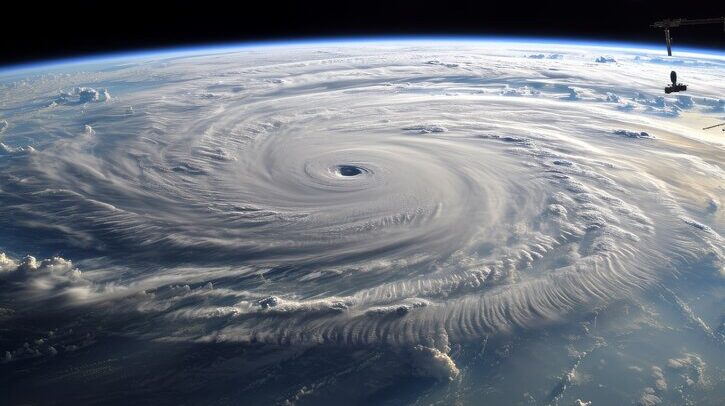
Satellite View of a Hurricane From Space, Tropical hurricane viewed from space, AI Generated
Share
LinkedIn Facebook Twitter Email

NASA has awarded a two-year, US$1.23m grant to a team led by Penn State College of Information Sciences and Technology (IST) to improve atmosphere and ocean forecasts by incorporating artificial intelligence (AI) and satellite data into current forecasting models.

The research team – which includes Romit Maulik, assistant professor in the College of IST; Steven Greybush, associate professor of meteorology in the Penn State College of Earth and Mineral Sciences; and scientists from Argonne National Laboratory,  NASA Goddard Space Flight Center, the National Oceanic and Atmospheric Administration and the University of Chicago – plans to introduce various sources of data, such as satellite images, to build on past weather forecasting that used transformer-based AI algorithms and machine learning models.

“Typically, forecasts of the atmosphere and oceans require data assimilation – combining different sources of information about the weather to obtain a more accurate result,” said Maulik. “However, that data assimilation can slow down the forecast time significantly. We plan to use computer vision to dramatically accelerate this process.”

Computer vision is a form of artificial intelligence that uses machine learning and neural networks to teach computers to understand and interpret visual information data and to learn from that data to improve their performance.

“The work will involve retraining some portions of our model to take these new datasets as inputs and improve predictions,” Maulik said. “Then, we will integrate these improved algorithms into the NASA Goddard Earth Observing System so it can rapidly incorporate satellite system observations into its operational data assimilation workflows.”

Previous ArticleChina Meteorological Administration accepts data from commercial meteorological small satellites for first time
Next Article Green Marine UK and NOC deploy advanced underwater gliders to support ocean and weather forecasting in the North Sea

Read Similar Stories

Oceans

VIDEO: Sentinel-6 satellite detects El Niño precursor in Pacific

June 4, 20262 Mins Read
Solar

New forecasting framework targets solar-limb flare blind spot

June 4, 20262 Mins Read
Nowcasting

Colorado State University and Nvidia partner to extend severe storm prediction lead times

June 2, 20262 Mins Read
Latest News

VIDEO: Sentinel-6 satellite detects El Niño precursor in Pacific

June 4, 2026

New forecasting framework targets solar-limb flare blind spot

June 4, 2026

Colorado State University and Nvidia partner to extend severe storm prediction lead times

June 2, 2026

Receive breaking stories and features in your inbox each week, for free


Enter your email address:


Supplier Spotlights
  • REMTECH
Getting in Touch
  • Contact Us / Advertise
  • Meet the Editors
  • Media Pack
  • Free Weekly E-Newsletter
Our Social Channels
  • Facebook
  • LinkedIn
© 2026 UKi Media & Events a division of UKIP Media & Events Ltd
  • Cookie Policy
  • Privacy Policy
  • Terms and Conditions
  • Notice and Takedown Policy

Type above and press Enter to search. Press Esc to cancel.