


Close Menu
Meteorological Technology International
  • News
    • A-E
      • Agriculture
      • Artificial Intelligence
      • Automated Weather Stations
      • Aviation
      • Climate Measurement
      • Data
      • Developing Countries
      • Digital Applications
      • Early Warning Systems
      • Extreme Weather
    • G-P
      • Hydrology
      • Lidar
      • Lightning Detection
      • New Appointments
      • Nowcasting
      • Numerical Weather Prediction
      • Polar Weather
    • R-S
      • Radar
      • Rainfall
      • Remote Sensing
      • Renewable Energy
      • Satellites
      • Solar
      • Space Weather
      • Supercomputers
    • T-Z
      • Training
      • Transport
      • Weather Instruments
      • Wind
      • World Meteorological Organization
      • Meteorological Technology World Expo
  • Features
  • Online Magazines
    • September 2026
    • January 2026
    • April 2025
    • January 2025
    • September 2024
    • April 2024
    • Archive Issues
    • Subscribe Free!
  • Opinion
  • Videos
  • Supplier Spotlight
  • Expo
LinkedIn X (Twitter) Facebook
  • Sign-up for Free Weekly E-Newsletter
  • Meet the Editors
  • Contact Us
  • Media Pack
LinkedIn Facebook
Subscribe
Meteorological Technology International
  • News
      • Agriculture
      • Artificial Intelligence
      • Automated Weather Stations
      • Aviation
      • Climate Measurement
      • Data
      • Developing Countries
      • Digital Applications
      • Early Warning Systems
      • Extreme Weather
      • Hydrology
      • Lidar
      • Lightning Detection
      • New Appointments
      • Nowcasting
      • Numerical Weather Prediction
      • Polar Weather
      • Radar
      • Rainfall
      • Remote Sensing
      • Renewable Energy
      • Satellites
      • Solar
      • Space Weather
      • Supercomputers
      • Training
      • Transport
      • Weather Instruments
      • Wind
      • World Meteorological Organization
      • Meteorological Technology World Expo
  • Features
  • Online Magazines
    1. September 2026
    2. April 2026
    3. January 2026
    4. September 2025
    5. April 2025
    6. January 2025
    7. September 2024
    8. April 2024
    9. January 2024
    10. Archive Issues
    11. Subscribe Free!
    Featured
    August 4, 2026

    In this Issue – September 2026

    By Web TeamAugust 4, 2026
    Recent

    In this Issue – September 2026

    August 4, 2026

    In this Issue – April 2026

    May 5, 2026

    In this Issue – January 2026

    November 27, 2025
  • Opinion
  • Videos
  • Supplier Spotlight
  • Expo
Facebook LinkedIn
Subscribe
Meteorological Technology International
Weather Instruments

FAAM Air Lab invests in electric ground support to reduce carbon emissions

Dan SymondsBy Dan SymondsMarch 30, 20232 Mins Read
Share LinkedIn Facebook Twitter Email
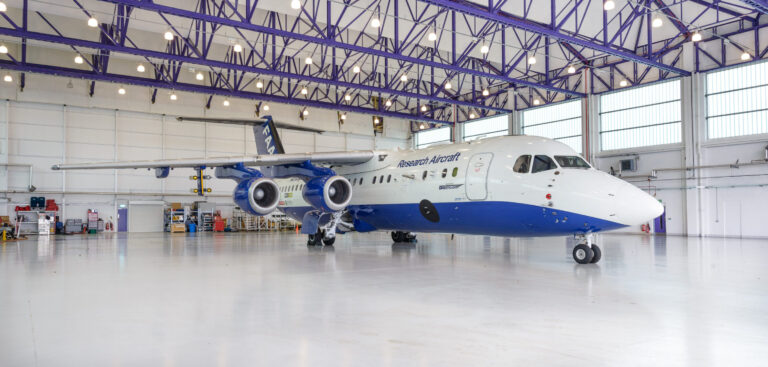
Credit - NCAS
Share
LinkedIn Facebook Twitter Email

The UK’s FAAM Airborne Laboratory has invested in an electric-powered ground power unit and aircraft tug to help reduce carbon emissions from its research operations.

Operated by the National Centre for Atmospheric Science (NCAS), the FAAM Airborne Laboratory’s research aircraft, a specially adapted BAE-146 aircraft, is owned by UK Research and Innovation and the Natural Environmental Research Council (NERC) – which has committed to achieving net zero by 2040.

Alan Woolley, head of the FAAM Airborne Laboratory, said, “By changing the way we power and move the aircraft on the ground, alongside adopting other sustainable practices, we will be able to take action on reducing our emissions as a research facility. The FAAM Airborne Laboratory is taking important steps toward net-zero goals, while continuing to make world-class measurements of the atmosphere.”

A mobile ground power unit is required for when the aircraft’s engines are off and equipment on board needs electricity, for preflight setup and postflight shutdown, and calibration tests while in the hangar or out on the airport apron. On a typical flying day, a ground power unit will be running for up to five hours.

The FAAM Airborne Laboratory currently uses a diesel ground power unit, which emits carbon dioxide, as well as nitrogen oxides, particulates and other exhaust pollutants that are detrimental to local air quality and contribute to climate change.

Recently the facility successfully tested an electric ground power unit, and found it was capable of replacing the existing diesel unit. The new electric ground power unit – which the facility is awaiting delivery of later this year – will not produce any local air pollution or greenhouse gas emissions, will reduce contamination of sensitive scientific measurement equipment on board the aircraft, and will also cut down noise disturbance.

The research facility has also procured an electric-powered tug that is capable of transporting the aircraft and its ground power unit over short distances. As well as moving to electric powered ground power units and towing equipment, the FAAM Airborne Laboratory has recently flown with sustainable aviation fuel for the first time, and has imminent plans for a ready supply and storage at its Cranfield Airport base. The hangar facilities will start to use a local solar energy supply, which means the supply of electricity to the new ground power unit and tug will also be more sustainable.

Previous ArticleData, collaboration and innovation key to future of US forecasting, hears Congress
Next Article WMO Hurricane Committee retires Fiona and Ian

Read Similar Stories

Data

NOAA expands Mesonet contract to improve forecasting capabilities

September 7, 20263 Mins Read
Weather Instruments

LSI Lastem launches PRTHL thermo-hygro-barometer for environmental monitoring

July 27, 20262 Mins Read
Early Warning Systems

NOAA and SpectraRep to evaluate broadcast datacasting for weather radio resiliency

July 23, 20262 Mins Read
Latest News

Cardiff University to use drone technology to strengthen wildfire monitoring and response

September 15, 2026

Tomorrow.io reveals five-instrument design for DeepSky weather satellites

September 11, 2026

Climavision opens radar network and forecasting platform to AI data centers ahead of 2027 grid deadline

September 10, 2026

Receive breaking stories and features in your inbox each week, for free


Enter your email address:


Supplier Spotlights
  • Synoptic Data PBC
Getting in Touch
  • Contact Us / Advertise
  • Meet the Editors
  • Media Pack
  • Free Weekly E-Newsletter
Our Social Channels
  • Facebook
  • LinkedIn
© 2026 UKi Media & Events a division of UKIP Media & Events Ltd
  • Cookie Policy
  • Privacy Policy
  • Terms and Conditions
  • Notice and Takedown Policy

Type above and press Enter to search. Press Esc to cancel.