


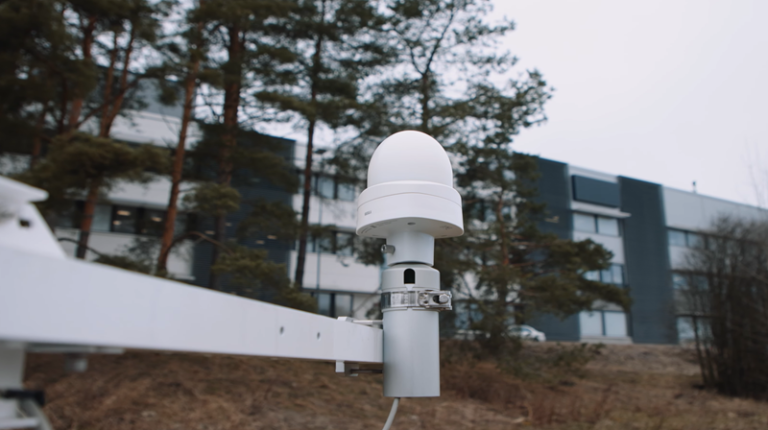
Vaisala’s Precicap Radar Precipitation Sensor RM60 is designed to address long-standing accuracy and coverage issues in rainfall measurement. It uses radar technology to measure precipitation as it falls, rather than relying on traditional collection methods. According to the company, this approach avoids losses caused by wind, evaporation and freezing – factors that have historically led to undermeasurement in conventional gauges.
Research published in Weather, the journal of the Royal Meteorological Society, found that precipitation losses can range from a few percent in favorable conditions to nearly 50% in more challenging environments. In some cases, particularly for snow or exposed sites, recorded levels may fall below one-third of actual precipitation.
Anne Jalkala, EVP of weather, energy and environment at Vaisala, said, “For over a century, precipitation gauges have measured too low. Not because of how networks were designed or operated, but because of a physical limitation built into the technology itself.”
She added, “Our engineers thought differently, and proved it with RM60.”
Unlike conventional tipping-bucket gauges, which require regular maintenance and physical collection of rainfall, the RM60 measures individual raindrops, snowflakes and hailstones as they pass through the air. This enables it to capture additional data, including precipitation intensity, type and drop size distribution.
The sensor is designed to operate without routine maintenance, calibration or cleaning, and can be deployed in remote or exposed locations using a solar panel and battery. Vaisala said this could help expand monitoring coverage in areas such as mountain slopes and catchments that are currently difficult or costly to equip.
The RM60 has been in field deployment since 2020, with more than 700,000 hours of operational data collected across a range of environments, including subarctic, tropical and high-wind conditions.
According to Vaisala, the sensor can provide improved input for weather radar systems, forecasting models and hydrological simulations, as well as more accurate ground-level data for flood warnings and water resource management.
The company has also reported that the total cost of ownership is lower than traditional systems due to the elimination of maintenance visits and supporting infrastructure, with conventional gauges typically requiring multiple service visits each year.
The RM60 is intended for use across meteorology, hydrology, hydropower and solar energy applications.