

Close Menu
Meteorological Technology International
  • News
    • A-E
      • Agriculture
      • Automated Weather Stations
      • Aviation
      • Climate Measurement
      • Data
      • Developing Countries
      • Digital Applications
      • Early Warning Systems
      • Extreme Weather
    • G-P
      • Hydrology
      • Lidar
      • Lightning Detection
      • New Appointments
      • Nowcasting
      • Numerical Weather Prediction
      • Polar Weather
    • R-S
      • Radar
      • Rainfall
      • Remote Sensing
      • Renewable Energy
      • Satellites
      • Solar
      • Space Weather
      • Supercomputers
    • T-Z
      • Training
      • Transport
      • Weather Instruments
      • Wind
      • World Meteorological Organization
      • Meteorological Technology World Expo
  • Features
  • Online Magazines
    • January 2026
    • April 2025
    • January 2025
    • September 2024
    • April 2024
    • Archive Issues
    • Subscribe Free!
  • Opinion
  • Videos
  • Supplier Spotlight
  • Expo
LinkedIn X (Twitter) Facebook
  • Sign-up for Free Weekly E-Newsletter
  • Meet the Editors
  • Contact Us
  • Media Pack
LinkedIn Facebook
Subscribe
Meteorological Technology International
  • News
      • Agriculture
      • Automated Weather Stations
      • Aviation
      • Climate Measurement
      • Data
      • Developing Countries
      • Digital Applications
      • Early Warning Systems
      • Extreme Weather
      • Hydrology
      • Lidar
      • Lightning Detection
      • New Appointments
      • Nowcasting
      • Numerical Weather Prediction
      • Polar Weather
      • Radar
      • Rainfall
      • Remote Sensing
      • Renewable Energy
      • Satellites
      • Solar
      • Space Weather
      • Supercomputers
      • Training
      • Transport
      • Weather Instruments
      • Wind
      • World Meteorological Organization
      • Meteorological Technology World Expo
  • Features
  • Online Magazines
    1. January 2026
    2. September 2025
    3. April 2025
    4. January 2025
    5. September 2024
    6. April 2024
    7. January 2024
    8. September 2023
    9. April 2023
    10. Archive Issues
    11. Subscribe Free!
    Featured
    November 27, 2025

    In this Issue – January 2026

    By Hazel KingNovember 27, 2025
    Recent

    In this Issue – January 2026

    November 27, 2025

    In this Issue – September 2025

    August 11, 2025

    In this Issue – April 2025

    April 15, 2025
  • Opinion
  • Videos
  • Supplier Spotlight
  • Expo
Facebook LinkedIn
Subscribe
Meteorological Technology International
Features

Geomar to cooperate with adventurer Arved Fuchs and the Ocean Change 2021 expedition

Geomar Helmholtz Centre for Ocean Research KielBy Geomar Helmholtz Centre for Ocean Research KielJune 23, 20213 Mins Read
Share LinkedIn Facebook Twitter Email
Geomar
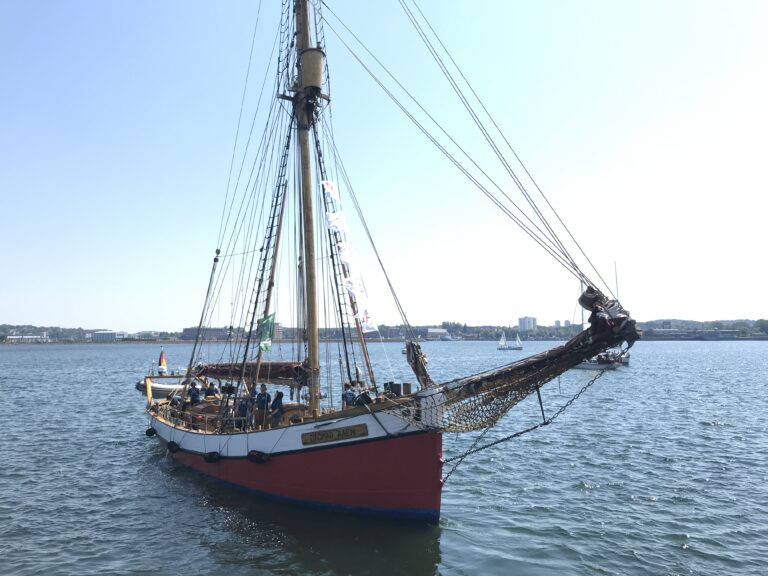
The Dagmar Aaen sailing ship. Image: A Villwock, Geomar
Share
LinkedIn Facebook Twitter Email

Marine research is closely linked with adventure, because there is still a lot to discover about the world’s oceans. The famous German adventurer Arved Fuchs is combining adventure and research in his Ocean Change 2021 expedition in a very special way.

On June 17, Fuchs, the 68-year-old adventurer, headed off from Kiel, Germany, with his sailing ship Dagmar Aaen, for the northern North Atlantic. During his three-month expedition, with which Fuchs wants to draw attention to climate change in particular, he will continuously carry out measurements for Geomar Helmholtz Centre for Ocean Research Kiel. The expedition, but also the observational data, can be followed live via the BELUGA online platform developed at Geomar.

The Dagmar Aaen does not look like a typical research vessel. The shark cutter, built in 1931 in Esbjerg, Denmark, is not really thought to be able to navigate the rough North Atlantic. But that is what it was built for, and it has been used for his expeditions for more than 30 years. As part of his Ocean Change 2021 expedition, Fuchs wants to draw attention to the impact of global warming on our ocean.

“The North Atlantic is one of the very critical regions with respect to global warming,” said professor Dr Katja Matthes, director of Geomar. “Here, further warming can quickly lead to changes in ocean currents, especially in the Gulf Stream, one of the tipping elements of the climate system,” Matthes added.

In order to detect warming signals and to understand the underlying processes to ultimately help better predictions for the future, more ocean observations are required and the Ocean Change 2021 is one contribution.

“At Geomar, we are focusing our expeditions in particular on the Labrador Sea between Canada and Greenland, where we have been conducting long-term observations since the mid 1990s,” explained Dr Johannes Karstensen, oceanographer at Geomar, who is coordinating the cooperation with Arved Fuchs within the framework of Ocean Change 2021.

“Fuchs and his team will carry out measurements along the entire route from Kiel via the Faroe Islands, Iceland, Greenland to Newfoundland, which will then be available to us in real time,” Karstensen continues.

Geomar is particularly interested in temperature and salinity to characterize warming and freshening of surface water but also the gas exchange for oxygen and carbon dioxide. Most data is collected at the surface but at dedicated stops Fuchs’ crew will acquire a vertical profile to greater water depths. The instruments in use on the Dagmar Aaen are similar to those operated on racing yachts such as Boris Hermann’s Malizia.

“We are also supporting the expedition by using an extension of our communication platform BELUGA. This is a software product developed by Geomar, which combines observational data from different instruments into one stream, visualizes it and presents it in the context of the route of the expedition. This enables viewers to grasp the current and past conditions in and over the ocean during the Ocean Change 2021 expedition at a glance and to link them with other content such as information about life on board, natural phenomena or scientific topics,” explained Dr Karstensen.

“We wish Arved Fuchs all the best, much success and a healthy return and look forward to exciting voyage reports from en route and, of course, the data for our research,” said Matthes.

Previous ArticleWMO HydroHub reflects on key achievements in phase one of project
Next Article UK Met Office launches new climate science program ahead of COP26

Read Similar Stories

Features

FEATURE: How the Arctic oscillation fueled widespread winter storms

April 9, 20265 Mins Read
Features

EXCLUSIVE INTERVIEW: Chris Hyde, energy lead at Meteomatics

March 19, 20264 Mins Read
Features

EXCLUSIVE INTERVIEW: Mausumi Dikpati, NSF NCAR senior scientist

March 5, 20265 Mins Read
Latest News

Researchers investigate links between air pollution, extreme weather and climate

May 1, 2026

China expands MAZU early warning system for developing countries

April 30, 2026

Météo-France begins construction of France’s tallest weather radar tower in Sembadel

April 29, 2026

Receive breaking stories and features in your inbox each week, for free


Enter your email address:


Supplier Spotlights
  • Reuniwatt
Getting in Touch
  • Contact Us / Advertise
  • Meet the Editors
  • Media Pack
  • Free Weekly E-Newsletter
Our Social Channels
  • Facebook
  • LinkedIn
© 2026 UKi Media & Events a division of UKIP Media & Events Ltd
  • Cookie Policy
  • Privacy Policy
  • Terms and Conditions
  • Notice and Takedown Policy

Type above and press Enter to search. Press Esc to cancel.