

Close Menu
Meteorological Technology International
  • News
    • A-E
      • Agriculture
      • Automated Weather Stations
      • Aviation
      • Climate Measurement
      • Data
      • Developing Countries
      • Digital Applications
      • Early Warning Systems
      • Extreme Weather
    • G-P
      • Hydrology
      • Lidar
      • Lightning Detection
      • New Appointments
      • Nowcasting
      • Numerical Weather Prediction
      • Polar Weather
    • R-S
      • Radar
      • Rainfall
      • Remote Sensing
      • Renewable Energy
      • Satellites
      • Solar
      • Space Weather
      • Supercomputers
    • T-Z
      • Training
      • Transport
      • Weather Instruments
      • Wind
      • World Meteorological Organization
      • Meteorological Technology World Expo
  • Features
  • Online Magazines
    • January 2026
    • April 2025
    • January 2025
    • September 2024
    • April 2024
    • Archive Issues
    • Subscribe Free!
  • Opinion
  • Videos
  • Supplier Spotlight
  • Expo
LinkedIn X (Twitter) Facebook
  • Sign-up for Free Weekly E-Newsletter
  • Meet the Editors
  • Contact Us
  • Media Pack
LinkedIn Facebook
Subscribe
Meteorological Technology International
  • News
      • Agriculture
      • Automated Weather Stations
      • Aviation
      • Climate Measurement
      • Data
      • Developing Countries
      • Digital Applications
      • Early Warning Systems
      • Extreme Weather
      • Hydrology
      • Lidar
      • Lightning Detection
      • New Appointments
      • Nowcasting
      • Numerical Weather Prediction
      • Polar Weather
      • Radar
      • Rainfall
      • Remote Sensing
      • Renewable Energy
      • Satellites
      • Solar
      • Space Weather
      • Supercomputers
      • Training
      • Transport
      • Weather Instruments
      • Wind
      • World Meteorological Organization
      • Meteorological Technology World Expo
  • Features
  • Online Magazines
    1. January 2026
    2. September 2025
    3. April 2025
    4. January 2025
    5. September 2024
    6. April 2024
    7. January 2024
    8. September 2023
    9. April 2023
    10. Archive Issues
    11. Subscribe Free!
    Featured
    November 27, 2025

    In this Issue – January 2026

    By Hazel KingNovember 27, 2025
    Recent

    In this Issue – January 2026

    November 27, 2025

    In this Issue – September 2025

    August 11, 2025

    In this Issue – April 2025

    April 15, 2025
  • Opinion
  • Videos
  • Supplier Spotlight
  • Expo
Facebook LinkedIn
Subscribe
Meteorological Technology International
Features

How 5G is ushering in a new era of disaster response

John Saw, executive vice president of advanced and emerging technologies, T-Mobile USBy John Saw, executive vice president of advanced and emerging technologies, T-Mobile USFebruary 14, 20233 Mins Read
Share LinkedIn Facebook Twitter Email
Share
LinkedIn Facebook Twitter Email

Every year, the USA is hit by a myriad of extreme weather events. In 2022 alone, the country experienced nearly 50 major disasters. From hurricanes and massive winter storms to extreme droughts and wildfires, organizations and government agencies are trying to mitigate the effects these natural disasters have on the environment and the people living in them.

In fact, 2022 was one of the worst wildfire years on record, not only in the USA but also across Europe, and data shows that these fires are getting worse as time goes on, due to more severe winds and increasingly dry conditions. As a long-time Pacific Northwest resident, I am well experienced in how quickly a small brush fire can turn into a devastating catastrophe.

At T-Mobile, we recognize the growing danger that wildfires present, which is why we’ve been evaluating how our 5G network can help reduce wildfire destruction and aid in preventing extensive damage while giving advanced warnings, so people have more time to safely evacuate.

5G technology powers critical early detection
With fast speeds, large bandwidth and low latency, T-Mobile’s 5G is proving its ability to provide enhanced situational awareness and help bring better information to the front lines, notably, America’s rural West, where wildfires are increasing in frequency and severity.

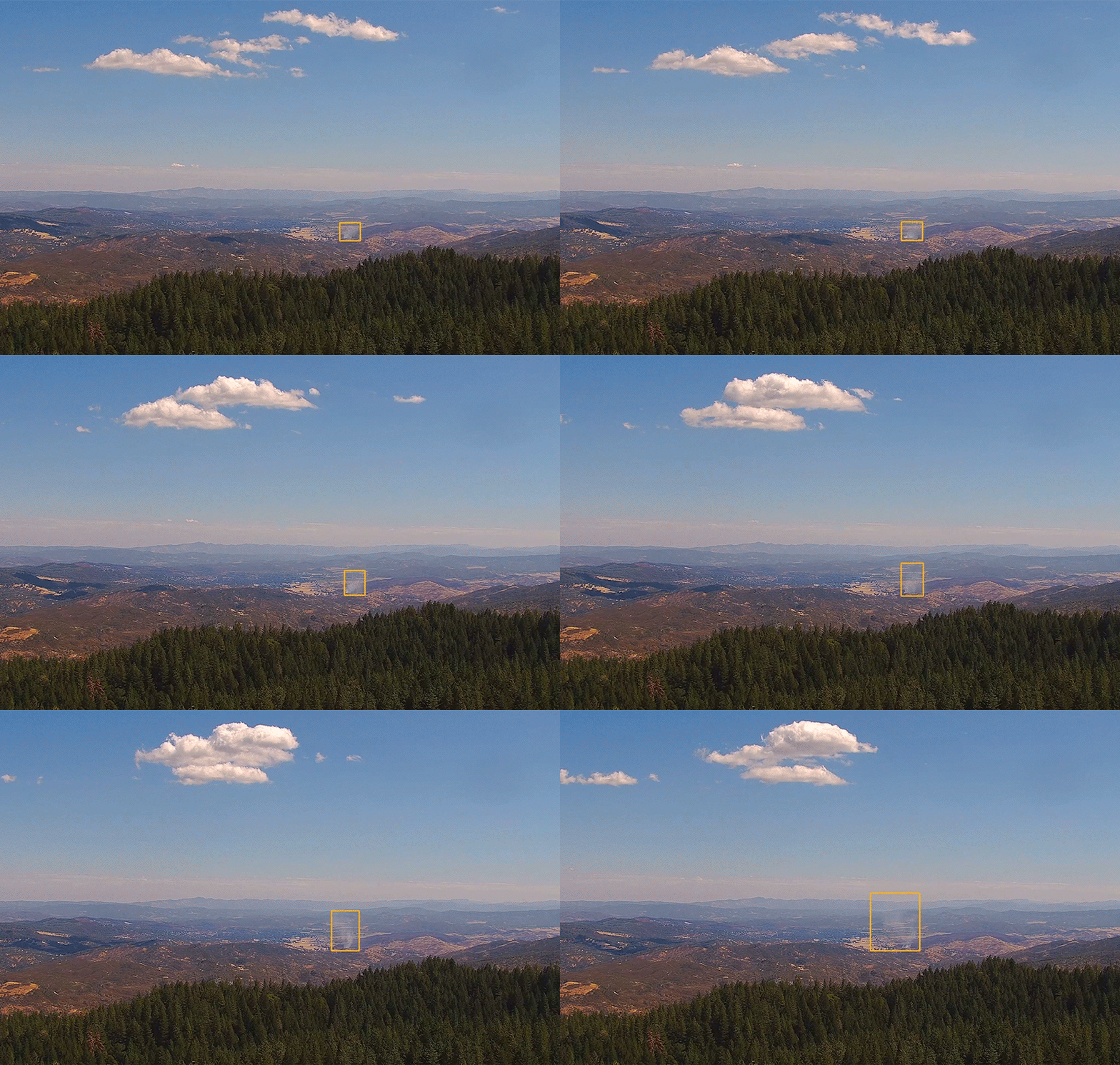
Our partnership with Pano AI – a disaster preparedness technology solutions provider – and Portland General Electric is a great example of how T-Mobile 5G is working to mitigate the effects of wildfires through early detection and response. Together, the partnership has deployed 5G-connected cameras that enable AI-powered active wildfire detection near Portland, Oregon, to identify the first signs of wildfires and help firefighters stop them before they have the chance to spread.

The bandwidth and reach of the 5G network enables Pano AI to gather extremely high-quality video in at-risk areas and send vast amounts of data to its command center in near real time, maximizing the effectiveness of its AI platform and helping to spot potentially dangerous situations quickly and reliably. In one instance, firefighters were able to respond to a fire nearly two hours faster when using Pano AI equipment outfitted with T-Mobile 5G.
Resilience
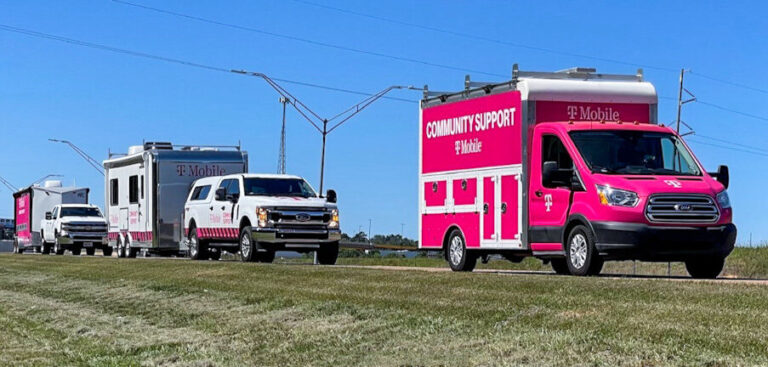
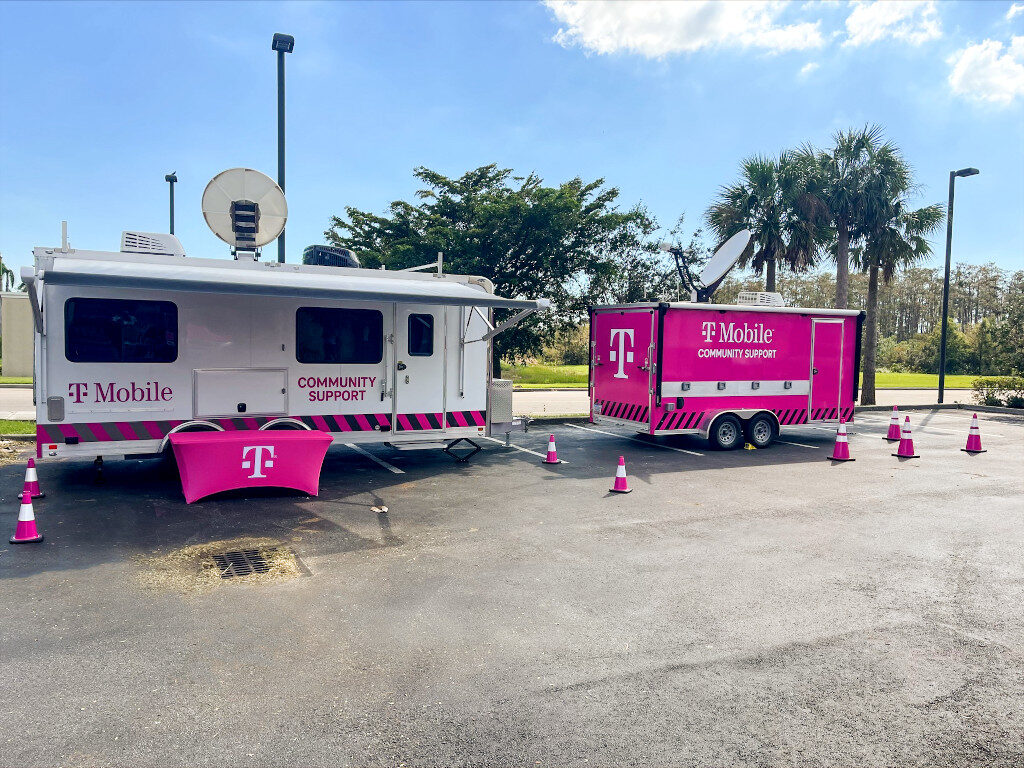
Beyond wildfires, T-Mobile is also leveraging 5G and its resources to provide critical on-the-ground response to communities affected by major weather events. Massive network resilience investments continue to add thousands of backup generators to T-Mobile’s resource inventory, expand our community support fleet outfitted with wi-fi and charging trailers, develop mobile command centers with computer workstations, and launch tow vehicles with satellite/two-way radio communication and phones, charging cords and portable chargers to help communities when they need it most.

T-Mobile is committed to assisting with relief efforts when communication is more crucial than ever and stands ready 24/7/365 to support communities with network response teams, telecommunications infrastructure and employee volunteers to lend a hand and ensure network reliability.

2023 and beyond
In the coming years, we will see 5G continue to play a critical role in spotting wildfires and other natural disasters well before they can be detected by other technologies, with the hopes that such detection techniques can be replicated on a global scale. This will help lead to faster response times and quicker evacuation and shelter in place warnings to keep people connected when it matters most.

T-Mobile is already exploring ways to bring such technologies to life, so stay tuned for more as we investigate the role 5G has to play in mitigating the effects natural disasters have across the globe.
Previous ArticleEquatorial waves could hold key to early cyclone detection
Next Article Flying laboratory launches open opportunity for environmental researchers

Read Similar Stories

Features

FEATURE: How the Arctic oscillation fueled widespread winter storms

April 9, 20265 Mins Read
Features

EXCLUSIVE INTERVIEW: Chris Hyde, energy lead at Meteomatics

March 19, 20264 Mins Read
Features

EXCLUSIVE INTERVIEW: Mausumi Dikpati, NSF NCAR senior scientist

March 5, 20265 Mins Read
Latest News

Extreme heat posing significant risks to ecosystems and agriculture, FAO-WMO report warns

April 22, 2026

Atmospheric G2 secures Japan weather forecasting license

April 21, 2026

China completes Antarctic meteorological research mission with Xuelong icebreaker

April 21, 2026

Receive breaking stories and features in your inbox each week, for free


Enter your email address:


Supplier Spotlights
  • ROTRONIC AG
Getting in Touch
  • Contact Us / Advertise
  • Meet the Editors
  • Media Pack
  • Free Weekly E-Newsletter
Our Social Channels
  • Facebook
  • LinkedIn
© 2026 UKi Media & Events a division of UKIP Media & Events Ltd
  • Cookie Policy
  • Privacy Policy
  • Terms and Conditions
  • Notice and Takedown Policy

Type above and press Enter to search. Press Esc to cancel.