



Stephen Hunt, the new CEO of MetService New Zealand, talks to Meteorological Technology International about the unique challenges of balancing its commercial model with the requirements of its public-safety mandate.
As a pilot and mountaineer, Stephen Hunt has been using high-end meteorological products in safety-critical environments for more than 35 years. As a result, the new CEO of New Zealand’s MetService has been dependent on the science and technology of meteorology to stay safe and, on many occasions, to stay alive.
“From the Arctic to the Antarctic, tropics to deserts, aircraft carriers to ice runways, meteorological experts and weather intelligence have often been vital components providing a decisive factor,” he says. “Managing threats and risks using weather products is deeply ingrained in the aviation industry. For airline flight operations, weather impacts safety and productivity, and can increase carbon emissions. Meteorological accuracy and data integrity have a clear impact on profitability and customer experience.”
Hunt took over his new role in January 2021 after a career predominantly in military and civil aviation. “Over the years I have been extremely fortunate to have the opportunity to fly in many different, and often extreme, global environments,” he says. “Originally from New Zealand, I flew for the Royal Air Force for 17 years before spending two years flying business jets in Australia. Since returning to New Zealand in 2005 I have completed an MBA and held a variety of roles with the Royal New Zealand Air Force, on the executive board at the Civil Aviation Authority and on the senior leadership team at Air New Zealand.”
According to Hunt, all these roles have involved very close relationships with meteorology. “The precision, data integrity, accuracy and usability of meteorological products produced for aviation is the same as that needed by many other industries. Because of my aviation experience, I focus on the customer and user, the efficiency of our systems, and on the relevance, delivery channels and accessibility of weather information.”

Leading the way
One of Hunt’s key aims as the new CEO of MetService is to connect with the organization’s workforce so they can build on existing success together. “MetService has wonderful and talented people devoted to science, public safety and to the success of our customers,” Hunt comments. “Our purpose of helping New Zealanders stay safe and make informed decisions based on the weather forecast goes to the heart of our organization’s collective commitment to the security and success of New Zealand.”
For Hunt, this is an exciting and challenging time within the meteorological sector, and one that offers growth opportunities for MetService. “The global competitive landscape is changing quickly and there are plenty of opportunities to look at ways to integrate our systems more efficiently and manage our data in more structured and accessible ways,” he says. “This approach will enable us to apply our science and R&D expertise to produce better services and products across more channels. A current example of improving our capabilities is the shift from owning our computing resources and data storage, to the migration into the cloud for both high-speed on-demand computing and data warehousing.”
The future will see MetService increase its capabilities in augmented reality, virtual reality, machine learning and AI. “How we shape the current role of forecasters and embrace these emerging technologies is an ongoing opportunity,” Hunt continues. “The specter of climate change is the backdrop to these new technologies, and during my time with MetService we will face the real impacts of long-term climate trends on short-term weather.”
Commercial opportunities
Back in 1992, New Zealand became the first country in the world to create a commercial company out of its national weather service. The idea was to commercialize its scientists’ expertise and use the profits to help support operations and reduce the cost of weather services for the taxpayer. Today, MetService is a world leader in public weather forecasting and commercial weather information and has operations in New Zealand, Australia, Asia and Europe.
“Being a commercial company that generates sustained revenue and profit is extremely efficient for New Zealand,” explains Hunt. “The commercial imperative keeps us focused and lean, and provides competitive flexibility. Our offshore work allows us to return revenue for investment into new products and services that benefit New Zealand.
“Today, we have some world-leading capabilities in visualization, media and marine services. Competing with the biggest weather companies in the world helps drive our innovation and responsiveness. In the media space, our Weatherscape platform is used by more than 30 broadcasters globally. Every Australian media outlet uses Weatherscape to present the weather, for example. Al Jazeera began using Weatherscape in 2019, and last year we were delighted to begin working with Sky News in Europe.
“The Weatherscape product has been operating internationally now for almost 20 years,” Hunt continues. “We are currently scoping out significant improvements that will enhance the graphics and realism of this platform, that enable Weatherscape to be used across a wider range of industries.”
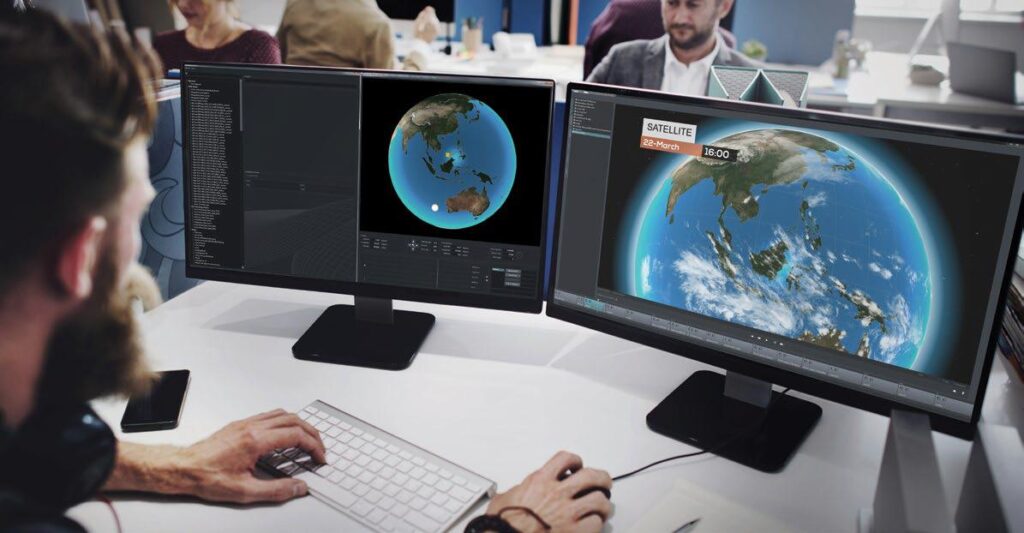
by media broadcasters around the world
Enhancing services
Hunt explains that to remain competitive and fulfill its public-safety purpose, MetService must continually evolve to become more efficient, effective and high-performing. “One way we are working on enhancing our offering is by liberating more of our high-value data through scalable, digital platforms and APIs across our oceanography and meteorology divisions. This will allow other organizations to better integrate our meteorological expertise into their own products and systems.”
MetService also has a strong history of partnering with organizations to launch new products that support the work of other sectors. “A recent example is our work in Australasia with a UK-based company, which sees MetService provide in-depth weather data to support the cost-effective management of energy infrastructure,” says Hunt.
“Furthermore, MetOcean, our oceanography division, is conducting groundbreaking research into ocean climatology, and recently launched seven-day forecasts of sea surface temperatures that predict marine heatwaves. These conditions have profound impacts on ocean life, marine industries and aquaculture. Our work has also supported the development of a lightning detection network across 25 locations in the South Pacific.”
MetService’s forecast and research teams are also currently piloting some innovative projects that use global weather research and forecasting (WRF) data and high-resolution rainfall nowcasting in New Zealand. “And we are working with other New Zealand agencies and organizations to develop real-time forecasting models for volcanic ash fall to help New Zealand communities best manage the impact of future eruptions,” Hunt adds.
Future plans
One of Hunt’s and MetService’s key aims is to ensure the organization makes best use of its data and that any data gaps are filled. “New Zealand is a mountainous country surrounded by water, synonymous with having four seasons in one day,” Hunt explains. “Our extensive radar network is a critical asset and we continue to grow our national coverage. We added the 10th radar to our network in late 2020. We continuously work with the New Zealand government to address existing gaps in the radar coverage across New Zealand.
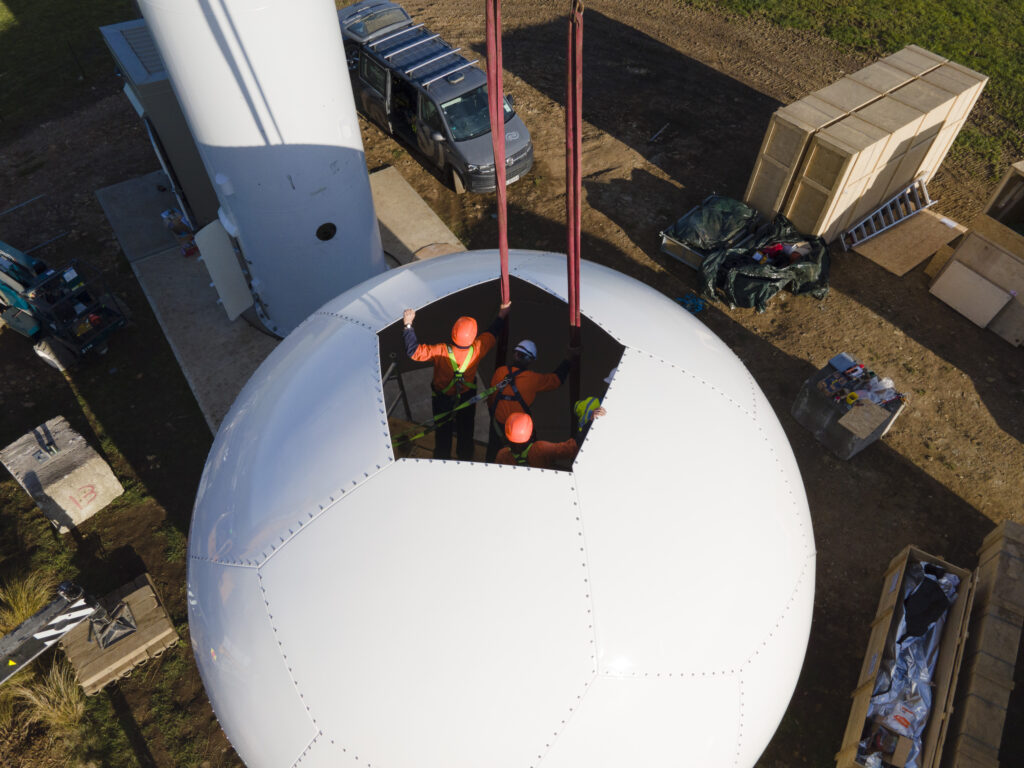
“We are also running a program of work to overhaul our data architecture. As the technology landscape changes, we anticipate an increasing need for data scientists to allow the extraction of valuable information from ever-increasing data volumes, with an emphasis on applications of AI to support our role,” he adds.
Balancing the needs of its public-safety mandate with its commercial model as a state-owned enterprise will continue to present both a challenge and an opportunity for MetService. Currently, approximately 40% of the organization’s income comes through a contract with the New Zealand government; the remainder is secured through commercial endeavors.
“We’ve successfully operated under this model for almost 30 years, and the need to innovate and diversify is paramount, especially in the current environment,” explains Hunt. “Of course, 2020 saw a significant reduction in aviation revenue. As a result, we’ve diversified our offering, providing additional support to aeronautical projects, including embedding meteorologists who are specialized in aviation into organizations in this industry,” he concludes.