Close Menu
Meteorological Technology International
  • News
    • A-E
      • Agriculture
      • Artificial Intelligence
      • Automated Weather Stations
      • Aviation
      • Climate Measurement
      • Data
      • Developing Countries
      • Digital Applications
      • Early Warning Systems
      • Extreme Weather
    • G-P
      • Hydrology
      • Lidar
      • Lightning Detection
      • New Appointments
      • Nowcasting
      • Numerical Weather Prediction
      • Polar Weather
    • R-S
      • Radar
      • Rainfall
      • Remote Sensing
      • Renewable Energy
      • Satellites
      • Solar
      • Space Weather
      • Supercomputers
    • T-Z
      • Training
      • Transport
      • Weather Instruments
      • Wind
      • World Meteorological Organization
      • Meteorological Technology World Expo
  • Features
  • Online Magazines
    • September 2026
    • January 2026
    • April 2025
    • January 2025
    • September 2024
    • April 2024
    • Archive Issues
    • Subscribe Free!
  • Opinion
  • Videos
  • Supplier Spotlight
  • Expo
LinkedIn X (Twitter) Facebook
  • Sign-up for Free Weekly E-Newsletter
  • Meet the Editors
  • Contact Us
  • Media Pack
LinkedIn Facebook
Subscribe
Meteorological Technology International
  • News
      • Agriculture
      • Artificial Intelligence
      • Automated Weather Stations
      • Aviation
      • Climate Measurement
      • Data
      • Developing Countries
      • Digital Applications
      • Early Warning Systems
      • Extreme Weather
      • Hydrology
      • Lidar
      • Lightning Detection
      • New Appointments
      • Nowcasting
      • Numerical Weather Prediction
      • Polar Weather
      • Radar
      • Rainfall
      • Remote Sensing
      • Renewable Energy
      • Satellites
      • Solar
      • Space Weather
      • Supercomputers
      • Training
      • Transport
      • Weather Instruments
      • Wind
      • World Meteorological Organization
      • Meteorological Technology World Expo
  • Features
  • Online Magazines
    1. September 2026
    2. April 2026
    3. January 2026
    4. September 2025
    5. April 2025
    6. January 2025
    7. September 2024
    8. April 2024
    9. January 2024
    10. Archive Issues
    11. Subscribe Free!
    Featured
    August 4, 2026

    In this Issue – September 2026

    By Web TeamAugust 4, 2026
    Recent

    In this Issue – September 2026

    August 4, 2026

    In this Issue – April 2026

    May 5, 2026

    In this Issue – January 2026

    November 27, 2025
  • Opinion
  • Videos
  • Supplier Spotlight
  • Expo
Facebook LinkedIn
Subscribe
Meteorological Technology International
Automated Weather Stations

Automatic weather stations to boost Ghanaian meteorological capabilities

Helen NormanBy Helen NormanFebruary 20, 20192 Mins Read
Share LinkedIn Facebook Twitter Email
Share
LinkedIn Facebook Twitter Email

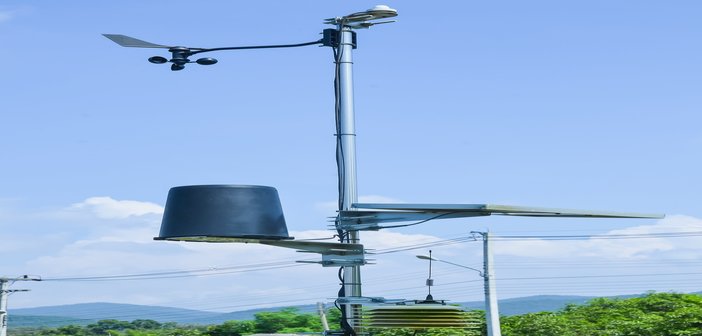
The Ghanaian government has completed the installation of 10 automatic weather stations as part of its World Bank-backed E-Transform Project, helping to significantly improve the data gathering and weather prediction capabilities of the Ghana Meteorological Agency (GMet). Prior to the new installations, GMet had operated using 22 synoptic weather stations, seven of which were manual. The data collected can now be transmitted to the GMet database in real time, enabling it to provide prompt, accurate data to its numerous clients and stakeholders. GMet received US$450,000 in funding for the E-Transform Project, US$100,000 of which will be reserved for a two-year maintenance program for the equipment. “The benefits to be derived from these automatic weather stations are enormous,” said Ghana’s communications minister, Ursula Owusu Ekuful. “This instrument is able to transmit data every 15 minutes and its data quality is very high and reliable, thus improving data collection and completely eliminating human errors associated with conventional instruments. “Standardized observation techniques enable the homogenization of observed data in regions where automatic weather observation is adopted across the globe. In addition, new observation elements can be added relatively easily by installing new instruments and sensors. “Optimal measuring instruments with the appropriate level of measurement accuracy for the required observation can be chosen, and the need for observer training will be eliminated.” GMet can now leverage a network of 25 automatic stations that can measure all the weather parameters needed for the agency’s operations. To view the original article click here: https://www.graphic.com.gh/news/general-news/ghana-meteorological-agency-gets-10-automatic-weather-stations.html

Previous ArticleAustralian Bureau of Meteorology to deploy Vaisala’s next-gen sounding systems
Next Article Chinese meteorological agency expands Antarctic weather station network

Read Similar Stories

Rainfall

India outlines steps to advance monsoon science and forecasting

August 5, 20262 Mins Read
Weather Instruments

LSI Lastem launches PRTHL thermo-hygro-barometer for environmental monitoring

July 27, 20262 Mins Read
Developing Countries

Tropical cyclones threaten energy security in Bangladesh, study finds

May 29, 20262 Mins Read
Latest News

Tomorrow.io reveals five-instrument design for DeepSky weather satellites

September 11, 2026

Climavision opens radar network and forecasting platform to AI data centers ahead of 2027 grid deadline

September 10, 2026

August 2026 was joint warmest month on record, Copernicus reports

September 10, 2026

Receive breaking stories and features in your inbox each week, for free


Enter your email address:


Supplier Spotlights
  • Kipp & Zonen
Getting in Touch
  • Contact Us / Advertise
  • Meet the Editors
  • Media Pack
  • Free Weekly E-Newsletter
Our Social Channels
  • Facebook
  • LinkedIn
© 2026 UKi Media & Events a division of UKIP Media & Events Ltd
  • Cookie Policy
  • Privacy Policy
  • Terms and Conditions
  • Notice and Takedown Policy

Type above and press Enter to search. Press Esc to cancel.