


The Chongqing Meteorological Bureau is expanding the use of artificial intelligence and digital weather services as part of efforts to improve forecasting and warning capabilities across the Chinese megacity.
The bureau has reported deploying the Tianzi 12h (2.0) AI model, which provides hourly updated forecasts for the Chengdu-Chongqing region at a spatial resolution of 1km. The system forms part of a 0-60-day gridded forecasting network covering both weather and climate predictions.
Authorities said forecasting accuracy for several indicators – including 24-hour maximum temperature, sunshine or rain forecasts, heavy rainfall and monthly temperature predications – ranks among the top five nationally.
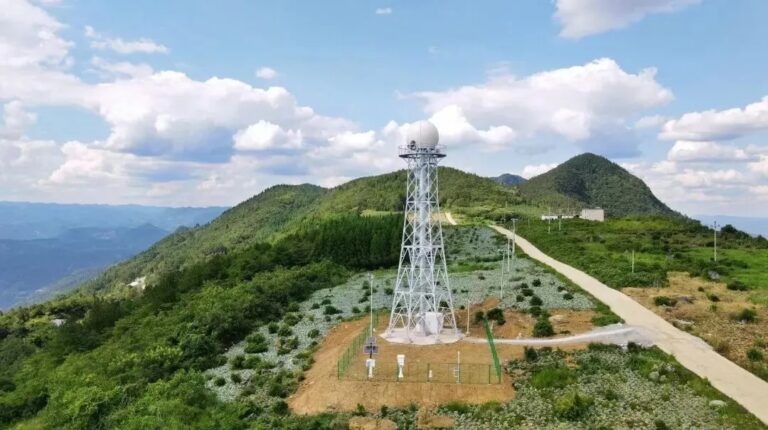
Across this year, the bureau plans to further expand the use of AI agents and open-source large language models such as DeepSeek and Qwen observation infrastructure, and to deploy micro X-band weather radars and wind-profiler lidars.
The expanded monitoring and forecasting capabilities are expected to support areas including emergency warnings, urban infrastructure management and low-altitude operations such as drone flights.
According to information released by the bureau, the city issued around 11,000 weather warning messages in 2025, reaching the public approximately 120 million times through 15 alert dissemination channels.
The upgrades form part of a broader initiative to modernize meteorological services in Chongqing, a city with complex terrain and exposure to hazards including floods, heatwaves and severe connective storms.
The bureau said meteorological hazard monitoring coverage has reached 92%, while short-term forecasting and nowcasting warning lead times have increased to 47 minutes. An “electric geofence” alert system has also been deployed across the networks of China Mobile, China Unicom and China Telecom to expand warning delivery.
The city has also improved its meteorological observation network and data integration capabilities. A “meteorology plus big data” platform now enables shared access to datasets from 26 government departments.
Ground observation stations are spaced on average around 5.4km apart, while radar coverage at 1km above ground level has reached 95.8%, improving detection of storms and heavy rainfall.
Meteorological data is also being integrated into other public service systems. Chongqing meteorological authorities and the city’s disease control administration have jointly issued alerts covering high-temperature health risks and influenza risk for the first time.
Weather services are also supporting logistics and infrastructure operations. Meteorological data has been integrated into the operations center of the New International Land-Sea Trade Corridor and the Belt and Road Initiative, the logistics dispatch system at Guoyuan Port, as well as services supporting the China-Europa Railway Express.
Related news, Unmanned Antarctica atmospheric observation experiment advances in China