


A new European climate report has highlighted widespread temperature extremes, shrinking ice and increasing environmental pressures across the continent.
The European State of the Climate (ESOTC) 2025 report, produced by the European Centre for Medium-Range Weather Forecasts (ECMWF)and the World Meteorological Organization, identifies Europe as the fastest-warming continent, with impacts ranging from record heat waves to biodiversity loss.
According to the report, at least 95% of Europe experienced above-average annual temperatures in 2025. A three-week heat wave in sub-Arctic Fennoscandia saw temperatures exceed 30°C within the Arctic Circle. Furthermore, overall cold extremes declined, with fewer freezing days recorded across much of the continent.
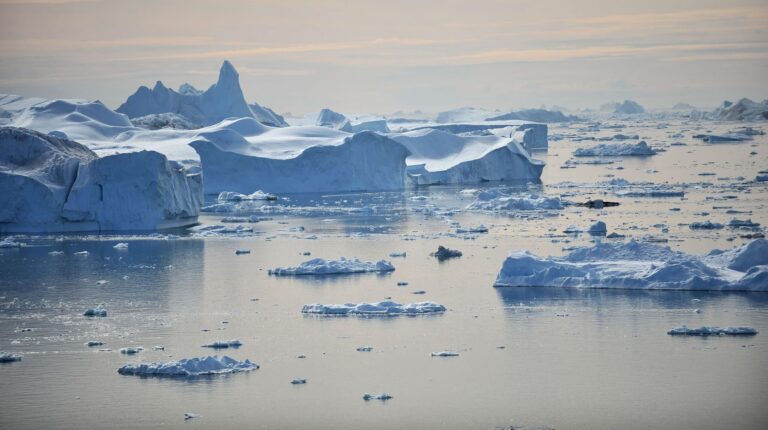
Snow and ice cover also continued to decline. Snow cover was 31% below average in March 2025, marking one of the lowest levels on record, while glaciers across all European regions saw net mass loss. The Greenland Ice Sheet lost an estimated 139 gigatonnes of ice.
“Europe is the fastest-warming continent, and the impacts are already severe,” said Florian Pappenberger, director-general of ECMWF. “The 2025 report offers clear, actionable insights to support policy decisions and help the public better understand the changing climate we live in.”
Ocean conditions also reached new extremes. The European region recorded its highest annual sea- surface temperatures, with 86% of marine areas affected by at least ‘strong’ marine heat waves. A total of 36% experienced ‘severe’ or ‘extreme’ conditions, the highest proportion on record.
On land, drought and reduced river flows were widespread. Around 70% of rivers recorded below-average annual flow, while soil moisture levels ranked among the three lowest since 1992. Wildfires burned approximately 1,034,550ha – the largest area recorded – driven by hot and dry conditions.
Celeste Saulo, secretary-general of WMO, said the findings reflect broader global trends. “The WMO State of the Climate has revealed the imbalance of energy on our planet, and the European State of the Climate produced jointly by WMO and ECMWF reflects the impacts for Europe.”
The report also highlights growing impacts on biodiversity, with extreme weather events, habitat shifts and changing seasonal patterns affecting terrestrial and marine ecosystems.
At the same time, it notes progress in energy transition, with renewable sources supplying 46.4% of Europe’s electricity in 2025. Solar power reached a record contribution of 12.5%.
Samantha Burgess, strategic lead for climate at ECMWF, said, “The ESOTC 2025 paints a stark picture: the pace of climate change demands more urgent action. With rising temperatures, and widespread wildfires and drought, the evidence is unequivocal: climate change is not a future threat, it is our present reality.”
The report draws on contributions from around 100 scientists and provides a detailed assessment of climate indicators across Europe, including marine ecosystems, rivers, wildfire risk and cold regions.
In related news, WMO signals increasing likelihood of El Niño developing in 2026