


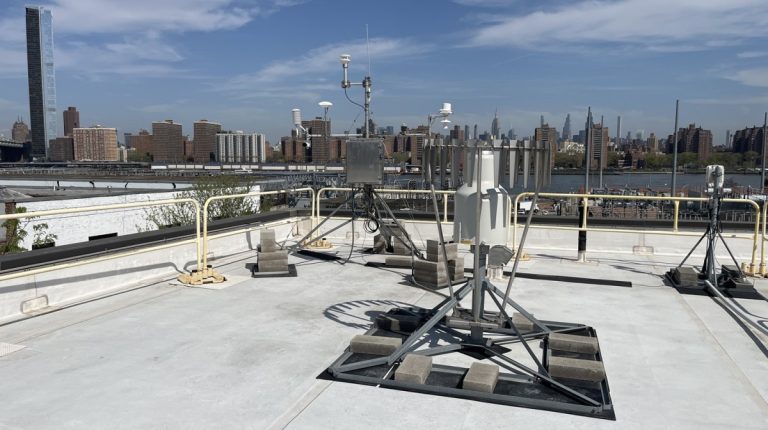
Skyfora and the New York State Mesonet (NYSM) at the University at Albany have launched a pilot project to explore how dense, real-time atmospheric humidity observations can improve 0-6-hour precipitation nowcasting across the New York City metropolitan region.
The project combines Skyfora’s GNSS meteorology technology with NYSM’s observing network, infrastructure and scientific expertise. The partners say it aims to establish one of the world’s densest urban networks for continuous atmospheric water-vapor monitoring. More than 20 stations are currently streaming data, capturing changes in atmospheric moisture every few minutes.
The partners said atmospheric water vapor is the fuel for precipitation, and that changes in its distribution often provide early signals before intense rainfall reaches the ground. The collaboration will investigate how high-resolution GNSS-derived water-vapor observations can complement conventional weather observations to provide earlier and more accurate situational awareness for forecasters, emergency managers and critical infrastructure operators.
Skyfora’s technology transforms existing GNSS infrastructure, such as telecom cell towers, into a distributed atmospheric sensing network capable of producing continuous observations of precipitable water vapor in near real time. The partners said it increases observation density in the atmospheric boundary layer, where many rapidly developing weather events originate.
Skyfora provides the StreamGNSS hardware and atmospheric processing platform, while NYSM contributes installation sites, operational infrastructure, deployment, maintenance and complementary surface meteorological observations. The partners will evaluate the performance of the observations and engage researchers and future operational users to demonstrate their value.
June Wang, director of NYSM, said, “This pilot project will allow us to test whether Skyfora’s technology provides significant advantages over other water-vapor measurements and can help us give emergency managers the best available information on the risks to the public.”
Jostein Mælan, chief commercial officer at Skyfora, said, “Together we are exploring how real-time humidity observations can enable earlier and more accurate precipitation nowcasts, helping communities, emergency managers and critical infrastructure operators gain valuable time ahead of flooding and other high-impact weather.”
As the pilot progresses, the partners expect to evaluate applications including 0-6-hour precipitation nowcasting, operational use of dense GNSS signal delay observations, flash-flood early warning and urban flood monitoring, severe thunderstorm and hailstorm development, AI-assisted weather forecasting and rapid forecast updates, weather intelligence for critical infrastructure such as electric utilities, telecom infrastructure and urban hubs, and future National Mesonet capabilities.
In related news, University of Vermont launches first station in statewide weather monitoring network