


Close Menu
Meteorological Technology International
  • News
    • A-E
      • Agriculture
      • Automated Weather Stations
      • Aviation
      • Climate Measurement
      • Data
      • Developing Countries
      • Digital Applications
      • Early Warning Systems
      • Extreme Weather
    • G-P
      • Hydrology
      • Lidar
      • Lightning Detection
      • New Appointments
      • Nowcasting
      • Numerical Weather Prediction
      • Polar Weather
    • R-S
      • Radar
      • Rainfall
      • Remote Sensing
      • Renewable Energy
      • Satellites
      • Solar
      • Space Weather
      • Supercomputers
    • T-Z
      • Training
      • Transport
      • Weather Instruments
      • Wind
      • World Meteorological Organization
      • Meteorological Technology World Expo
  • Features
  • Online Magazines
    • January 2026
    • April 2025
    • January 2025
    • September 2024
    • April 2024
    • Archive Issues
    • Subscribe Free!
  • Opinion
  • Videos
  • Supplier Spotlight
  • Expo
LinkedIn X (Twitter) Facebook
  • Sign-up for Free Weekly E-Newsletter
  • Meet the Editors
  • Contact Us
  • Media Pack
LinkedIn Facebook
Subscribe
Meteorological Technology International
  • News
      • Agriculture
      • Automated Weather Stations
      • Aviation
      • Climate Measurement
      • Data
      • Developing Countries
      • Digital Applications
      • Early Warning Systems
      • Extreme Weather
      • Hydrology
      • Lidar
      • Lightning Detection
      • New Appointments
      • Nowcasting
      • Numerical Weather Prediction
      • Polar Weather
      • Radar
      • Rainfall
      • Remote Sensing
      • Renewable Energy
      • Satellites
      • Solar
      • Space Weather
      • Supercomputers
      • Training
      • Transport
      • Weather Instruments
      • Wind
      • World Meteorological Organization
      • Meteorological Technology World Expo
  • Features
  • Online Magazines
    1. January 2026
    2. September 2025
    3. April 2025
    4. January 2025
    5. September 2024
    6. April 2024
    7. January 2024
    8. September 2023
    9. April 2023
    10. Archive Issues
    11. Subscribe Free!
    Featured
    November 27, 2025

    In this Issue – January 2026

    By Hazel KingNovember 27, 2025
    Recent

    In this Issue – January 2026

    November 27, 2025

    In this Issue – September 2025

    August 11, 2025

    In this Issue – April 2025

    April 15, 2025
  • Opinion
  • Videos
  • Supplier Spotlight
  • Expo
Facebook LinkedIn
Subscribe
Meteorological Technology International
Climate Measurement

Asia-Pacific region still vulnerable to overlapping crises, finds disaster report

Dan SymondsBy Dan SymondsAugust 31, 20213 Mins Read
Share LinkedIn Facebook Twitter Email
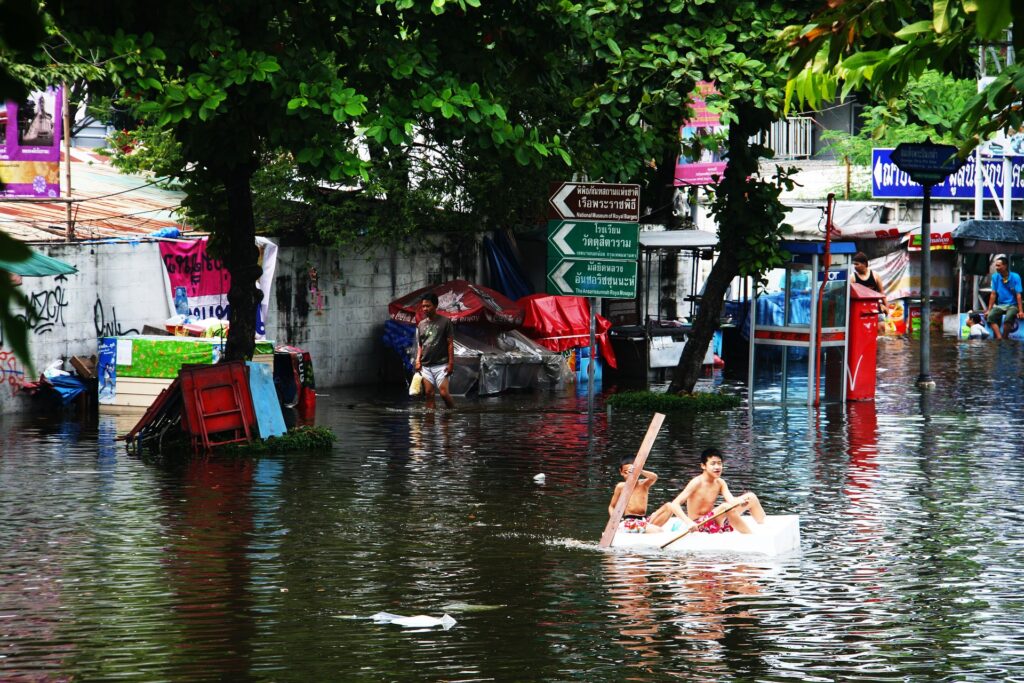
Credit: Pixabay
Share
LinkedIn Facebook Twitter Email

The UN Economic and Social Commission for Asia and the Pacific (ESCAP) has warned that the Asia-Pacific region needs to step up efforts to prepare for and tackle overlapping crises in order to increase its resilience to climate change.

Armida Salsiah Alisjahbana, UN under-secretary-general and executive secretary of ESCAP, said, “Notwithstanding the progress made by many countries in devising more robust systems of early warning and responsive protection – with far fewer people dying as a result of natural disasters – the Covid-19 pandemic has demonstrated that almost without exception, countries around the world are still ill-prepared to deal with multiple overlapping crises, which often cascade.

“Tropical cyclones, for example, can lead to floods, which lead to disease, which exacerbates poverty,” she told the ESCAP committee on disaster risk reduction.

The Asia-Pacific Disaster Report 2021, which was launched during ESCAP’s Disaster Resilience Week, shows that the pandemic, combined with the persistent reality of climate change, has reshaped and expanded the disaster ‘risk-scape’ in Asia and the Pacific.

The triple threat of disease, disaster and climate change is causing not only considerable human hardship but also significant economic losses. Currently, the annual average disaster-related losses are US$780bn. This could nearly double, to around US$1.4tn, in a worst-case climate scenario. Choosing a proactive strategy of adapting to natural and other biological hazards would be far more cost-effective at an annual cost of US$270bn, said the report.

Petteri Taalas, secretary-general at the WMO, commented, “If we fail with the climate change mitigation, the impact is going to be felt for centuries or even millennia, so the scale of the problem we are talking about when it comes to climate change is much bigger.

“Heatwaves, drought, forest fires, flooding, landslides and tropical storms are becoming more intense as a result. Last year was the warmest year on record in Asia and we have also seen record-breaking flooding, especially in East Asia,” he said.

The ESCAP Committee on Disaster Risk Reduction is charged with addressing the following issues: (a) Emergence of cascading risks and extension of the disaster risk-scape; (b) Scaling-up multisectoral cooperation frameworks to manage cascading risks; (c) Status of regional cooperation efforts.

WMO and ESCAP have a Memorandum of Understanding to work together to build resilience to climate and disaster risks and the promotion of impact-based early warning services and systems. The two organizations have a long history of cooperation by jointly establishing the Typhoon Committee.

Taalas stressed the importance of building capacity in Least Developed Countries and Small Island Developing States to adapt to climate change and build resilience through investments in early warning services.

However, major gaps in observing systems in many parts of the world, including islands and least developed countries in the Asia-Pacific region, have a negative impact on the quality of early warning services. WMO’s new initiative, the Systematic Observations Financing Facility (SOFF), seeks to close these gaps and leverage sustainable financing.

To view the Asia-Pacific Disaster Report 2021, click here.

Previous ArticleBiral completes installation of lightning warning system at North Sea wind farm
Next Article Sea and greenhouse gas levels highest on record

Read Similar Stories

Agriculture

Extreme heat posing significant risks to ecosystems and agriculture, FAO-WMO report warns

April 22, 20263 Mins Read
Climate Measurement

China completes Antarctic meteorological research mission with Xuelong icebreaker

April 21, 20262 Mins Read
Extreme Weather

AI model improves real-time prediction of wildfire spread

April 16, 20263 Mins Read
Latest News

Extreme heat posing significant risks to ecosystems and agriculture, FAO-WMO report warns

April 22, 2026

Atmospheric G2 secures Japan weather forecasting license

April 21, 2026

China completes Antarctic meteorological research mission with Xuelong icebreaker

April 21, 2026

Receive breaking stories and features in your inbox each week, for free


Enter your email address:


Supplier Spotlights
  • Geolux d.o.o.
Getting in Touch
  • Contact Us / Advertise
  • Meet the Editors
  • Media Pack
  • Free Weekly E-Newsletter
Our Social Channels
  • Facebook
  • LinkedIn
© 2026 UKi Media & Events a division of UKIP Media & Events Ltd
  • Cookie Policy
  • Privacy Policy
  • Terms and Conditions
  • Notice and Takedown Policy

Type above and press Enter to search. Press Esc to cancel.