


Close Menu
Meteorological Technology International
  • News
    • A-E
      • Agriculture
      • Artificial Intelligence
      • Automated Weather Stations
      • Aviation
      • Climate Measurement
      • Data
      • Developing Countries
      • Digital Applications
      • Early Warning Systems
      • Extreme Weather
    • G-P
      • Hydrology
      • Lidar
      • Lightning Detection
      • New Appointments
      • Nowcasting
      • Numerical Weather Prediction
      • Polar Weather
    • R-S
      • Radar
      • Rainfall
      • Remote Sensing
      • Renewable Energy
      • Satellites
      • Solar
      • Space Weather
      • Supercomputers
    • T-Z
      • Training
      • Transport
      • Weather Instruments
      • Wind
      • World Meteorological Organization
      • Meteorological Technology World Expo
  • Features
  • Online Magazines
    • September 2026
    • January 2026
    • April 2025
    • January 2025
    • September 2024
    • April 2024
    • Archive Issues
    • Subscribe Free!
  • Opinion
  • Videos
  • Supplier Spotlight
  • Expo
LinkedIn X (Twitter) Facebook
  • Sign-up for Free Weekly E-Newsletter
  • Meet the Editors
  • Contact Us
  • Media Pack
LinkedIn Facebook
Subscribe
Meteorological Technology International
  • News
      • Agriculture
      • Artificial Intelligence
      • Automated Weather Stations
      • Aviation
      • Climate Measurement
      • Data
      • Developing Countries
      • Digital Applications
      • Early Warning Systems
      • Extreme Weather
      • Hydrology
      • Lidar
      • Lightning Detection
      • New Appointments
      • Nowcasting
      • Numerical Weather Prediction
      • Polar Weather
      • Radar
      • Rainfall
      • Remote Sensing
      • Renewable Energy
      • Satellites
      • Solar
      • Space Weather
      • Supercomputers
      • Training
      • Transport
      • Weather Instruments
      • Wind
      • World Meteorological Organization
      • Meteorological Technology World Expo
  • Features
  • Online Magazines
    1. September 2026
    2. April 2026
    3. January 2026
    4. September 2025
    5. April 2025
    6. January 2025
    7. September 2024
    8. April 2024
    9. January 2024
    10. Archive Issues
    11. Subscribe Free!
    Featured
    August 4, 2026

    In this Issue – September 2026

    By Web TeamAugust 4, 2026
    Recent

    In this Issue – September 2026

    August 4, 2026

    In this Issue – April 2026

    May 5, 2026

    In this Issue – January 2026

    November 27, 2025
  • Opinion
  • Videos
  • Supplier Spotlight
  • Expo
Facebook LinkedIn
Subscribe
Meteorological Technology International
Climate Measurement

Flash flood warning system for South Asia launched

Lawrence ButcherBy Lawrence ButcherOctober 27, 20202 Mins Read
Share LinkedIn Facebook Twitter Email
Share
LinkedIn Facebook Twitter Email

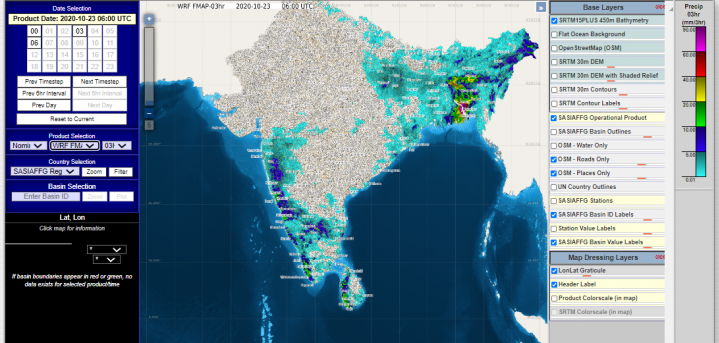
The South Asia Flash Flood Guidance System (South Asia FFGS) has been launched, to assist in the provision of improved early warnings in one of the world’s most populated regions.

Operated by the India Meteorological Department (IMD), the South FFGS is now providing the nation’s population with flash flood guidance and forecasts. IMD also acts as the regional center covering Bhutan, Bangladesh, India, Nepal and Sri Lanka, providing forecast products, data and training.

The South Asia FFGS is funded by the United States Agency for International Development/Bureau for Humanitarian Assistance (USAID/BHA) and implemented by the World Meteorological Organization (WMO) and the Hydrologic Research Center (HRC), while the National Oceanic and Atmospheric Administration (NOAA) is a satellite data provider into the system.

It is part of a global FFGS program which currently provides early warnings to three billion people – 40% of the world’s population – across more than 60 countries. Under the program, the automated dissemination of information will leverage social media, so that the information reaches disaster management authorities in a timely manner.

Guidance for flash floods in the form of Threats (6 hours in advance) and Risks (24 hours in advance) will be provided by the system. This should enable all member countries to issue impact-based forecasting, at watershed and also city level, of flash floods.

Previous ArticleAlaskan permafrost change study gets underway
Next Article Kiruna Ground Station: Celebrating 30 years of space excellence

Read Similar Stories

Satellites

Tomorrow.io reveals five-instrument design for DeepSky weather satellites

September 11, 20263 Mins Read
Radar

Climavision opens radar network and forecasting platform to AI data centers ahead of 2027 grid deadline

September 10, 20263 Mins Read
Climate Measurement

August 2026 was joint warmest month on record, Copernicus reports

September 10, 20263 Mins Read
Latest News

Tomorrow.io reveals five-instrument design for DeepSky weather satellites

September 11, 2026

Climavision opens radar network and forecasting platform to AI data centers ahead of 2027 grid deadline

September 10, 2026

August 2026 was joint warmest month on record, Copernicus reports

September 10, 2026

Receive breaking stories and features in your inbox each week, for free


Enter your email address:


Supplier Spotlights
  • Baron
Getting in Touch
  • Contact Us / Advertise
  • Meet the Editors
  • Media Pack
  • Free Weekly E-Newsletter
Our Social Channels
  • Facebook
  • LinkedIn
© 2026 UKi Media & Events a division of UKIP Media & Events Ltd
  • Cookie Policy
  • Privacy Policy
  • Terms and Conditions
  • Notice and Takedown Policy

Type above and press Enter to search. Press Esc to cancel.