


Close Menu
Meteorological Technology International
  • News
    • A-E
      • Agriculture
      • Automated Weather Stations
      • Aviation
      • Climate Measurement
      • Data
      • Developing Countries
      • Digital Applications
      • Early Warning Systems
      • Extreme Weather
    • G-P
      • Hydrology
      • Lidar
      • Lightning Detection
      • New Appointments
      • Nowcasting
      • Numerical Weather Prediction
      • Polar Weather
    • R-S
      • Radar
      • Rainfall
      • Remote Sensing
      • Renewable Energy
      • Satellites
      • Solar
      • Space Weather
      • Supercomputers
    • T-Z
      • Training
      • Transport
      • Weather Instruments
      • Wind
      • World Meteorological Organization
      • Meteorological Technology World Expo
  • Features
  • Online Magazines
    • January 2026
    • April 2025
    • January 2025
    • September 2024
    • April 2024
    • Archive Issues
    • Subscribe Free!
  • Opinion
  • Videos
  • Supplier Spotlight
  • Expo
LinkedIn X (Twitter) Facebook
  • Sign-up for Free Weekly E-Newsletter
  • Meet the Editors
  • Contact Us
  • Media Pack
LinkedIn Facebook
Subscribe
Meteorological Technology International
  • News
      • Agriculture
      • Automated Weather Stations
      • Aviation
      • Climate Measurement
      • Data
      • Developing Countries
      • Digital Applications
      • Early Warning Systems
      • Extreme Weather
      • Hydrology
      • Lidar
      • Lightning Detection
      • New Appointments
      • Nowcasting
      • Numerical Weather Prediction
      • Polar Weather
      • Radar
      • Rainfall
      • Remote Sensing
      • Renewable Energy
      • Satellites
      • Solar
      • Space Weather
      • Supercomputers
      • Training
      • Transport
      • Weather Instruments
      • Wind
      • World Meteorological Organization
      • Meteorological Technology World Expo
  • Features
  • Online Magazines
    1. April 2026
    2. January 2026
    3. September 2025
    4. April 2025
    5. January 2025
    6. September 2024
    7. April 2024
    8. January 2024
    9. Archive Issues
    10. Subscribe Free!
    Featured
    May 5, 2026

    In this Issue – April 2026

    By Web TeamMay 5, 2026
    Recent

    In this Issue – April 2026

    May 5, 2026

    In this Issue – January 2026

    November 27, 2025

    In this Issue – September 2025

    August 11, 2025
  • Opinion
  • Videos
  • Supplier Spotlight
  • Expo
Facebook LinkedIn
Subscribe
Meteorological Technology International
Climate Measurement

Google launches machine learning solution for accurate weather forecasting

Hazel KingBy Hazel KingJuly 24, 20243 Mins Read
Share LinkedIn Facebook Twitter Email
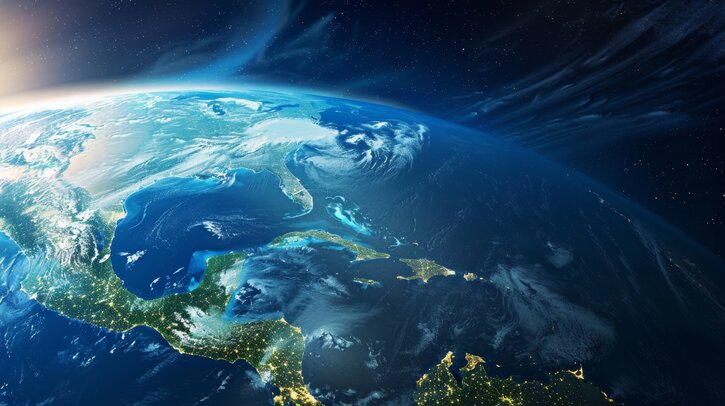
The development of precise weather prediction models is a combination of data analysis scientific knowledge and advanced computer programming.
Share
LinkedIn Facebook Twitter Email

Google has presented its new machine learning (ML) approach that can rapidly, efficiently and accurately simulate Earth’s atmosphere in the latest issue of Nature.

In the article, Neural general circulation models for weather and climate, the company outlines NeuralGCM, a ML-based approach to simulating Earth’s atmosphere that combines traditional physics-based modeling with ML for improved simulation accuracy and efficiency.

Developed in partnership with the European Centre for Medium-Range Weather Forecasts (ECMWF), NeuralGCM generates 2-15 day weather forecasts that are more accurate than the current gold-standard physics-based model, and reproduces temperatures over a past 40-year period more accurately than traditional atmospheric models.

Although Google has not yet built NeuralGCM into a full climate model, it believes the solution marks a significant step toward developing more powerful and accessible climate models. “We hope it will eventually enable a more accurate and actionable understanding of how our climate is changing,” Stephan Hoyer, senior staff software engineer at Google Research said in a blog on its website.

Transforming climate modeling

Like a traditional climate model, NeuralGCM divides the Earth’s atmosphere into cubes and runs calculations on the physics of large-scale processes like air and moisture movement. But instead of depending on parameterizations formulated by scientists to simulate small-scale aspects like cloud formation, it uses a neural network to learn the physics of those events from existing weather data.

“A key innovation of NeuralGCM is that we rewrote the numerical solver for large-scale processes from scratch inJAX. This allowed us to use gradient-based optimization to tune the behavior of the coupled system ‘online’ over many time steps,” Hoyer wrote. “In contrast, prior attempts to enhance climate models with ML struggled greatly with numerical stability, because they used ‘offline’ training, which ignores critical feedback between small- and large-scale processes that accumulates over time.

“Another bonus of writing the entire model in JAX is that it runs efficiently on TPUs and GPUs, in contrast to traditional climate models that mostly run on CPUs.

“We trained a suite of NeuralGCM models using weather data from ECMWF from 1979 to 2019 at 0.7°, 1.4° and 2.8° resolution. Although our models were trained on weather forecasts, we designed NeuralGCM to be a general-purpose atmospheric model,” Hoyer added.

Expansion plans

NeuralGCM currently models just Earth’s atmosphere but Google has said it hopes to eventually include other aspects of Earth’s climate system, such as oceans and the carbon cycle, into the model.

“By doing so, we’ll allow NeuralGCM to make predictions on longer timescales, going beyond predicting weather over days and weeks to making forecasts on climate timescales,” Hoyer wrote.

Previous ArticleNOAA tests next-generation wildfire detection and warning tools
Next Article DOST-PAGASA opens new weather station in the Province of Bulacan

Read Similar Stories

Oceans

VIDEO: Sentinel-6 satellite detects El Niño precursor in Pacific

June 4, 20262 Mins Read
Nowcasting

Colorado State University and Nvidia partner to extend severe storm prediction lead times

June 2, 20262 Mins Read
Climate Measurement

WMO warns El Niño is developing with 80% certainty, urges preparation

June 2, 20263 Mins Read
Latest News

VIDEO: Sentinel-6 satellite detects El Niño precursor in Pacific

June 4, 2026

New forecasting framework targets solar-limb flare blind spot

June 4, 2026

Colorado State University and Nvidia partner to extend severe storm prediction lead times

June 2, 2026

Receive breaking stories and features in your inbox each week, for free


Enter your email address:


Supplier Spotlights
  • Reuniwatt
Getting in Touch
  • Contact Us / Advertise
  • Meet the Editors
  • Media Pack
  • Free Weekly E-Newsletter
Our Social Channels
  • Facebook
  • LinkedIn
© 2026 UKi Media & Events a division of UKIP Media & Events Ltd
  • Cookie Policy
  • Privacy Policy
  • Terms and Conditions
  • Notice and Takedown Policy

Type above and press Enter to search. Press Esc to cancel.