


Close Menu
Meteorological Technology International
  • News
    • A-E
      • Agriculture
      • Automated Weather Stations
      • Aviation
      • Climate Measurement
      • Data
      • Developing Countries
      • Digital Applications
      • Early Warning Systems
      • Extreme Weather
    • G-P
      • Hydrology
      • Lidar
      • Lightning Detection
      • New Appointments
      • Nowcasting
      • Numerical Weather Prediction
      • Polar Weather
    • R-S
      • Radar
      • Rainfall
      • Remote Sensing
      • Renewable Energy
      • Satellites
      • Solar
      • Space Weather
      • Supercomputers
    • T-Z
      • Training
      • Transport
      • Weather Instruments
      • Wind
      • World Meteorological Organization
      • Meteorological Technology World Expo
  • Features
  • Online Magazines
    • January 2026
    • April 2025
    • January 2025
    • September 2024
    • April 2024
    • Archive Issues
    • Subscribe Free!
  • Opinion
  • Videos
  • Supplier Spotlight
  • Expo
LinkedIn X (Twitter) Facebook
  • Sign-up for Free Weekly E-Newsletter
  • Meet the Editors
  • Contact Us
  • Media Pack
LinkedIn Facebook
Subscribe
Meteorological Technology International
  • News
      • Agriculture
      • Automated Weather Stations
      • Aviation
      • Climate Measurement
      • Data
      • Developing Countries
      • Digital Applications
      • Early Warning Systems
      • Extreme Weather
      • Hydrology
      • Lidar
      • Lightning Detection
      • New Appointments
      • Nowcasting
      • Numerical Weather Prediction
      • Polar Weather
      • Radar
      • Rainfall
      • Remote Sensing
      • Renewable Energy
      • Satellites
      • Solar
      • Space Weather
      • Supercomputers
      • Training
      • Transport
      • Weather Instruments
      • Wind
      • World Meteorological Organization
      • Meteorological Technology World Expo
  • Features
  • Online Magazines
    1. January 2026
    2. September 2025
    3. April 2025
    4. January 2025
    5. September 2024
    6. April 2024
    7. January 2024
    8. September 2023
    9. April 2023
    10. Archive Issues
    11. Subscribe Free!
    Featured
    November 27, 2025

    In this Issue – January 2026

    By Hazel KingNovember 27, 2025
    Recent

    In this Issue – January 2026

    November 27, 2025

    In this Issue – September 2025

    August 11, 2025

    In this Issue – April 2025

    April 15, 2025
  • Opinion
  • Videos
  • Supplier Spotlight
  • Expo
Facebook LinkedIn
Subscribe
Meteorological Technology International
Climate Measurement

La Niña confirmed for Pacific Ocean

Lawrence ButcherBy Lawrence ButcherSeptember 29, 20202 Mins Read
Share LinkedIn Facebook Twitter Email
IDL TIFF file
Share
LinkedIn Facebook Twitter Email

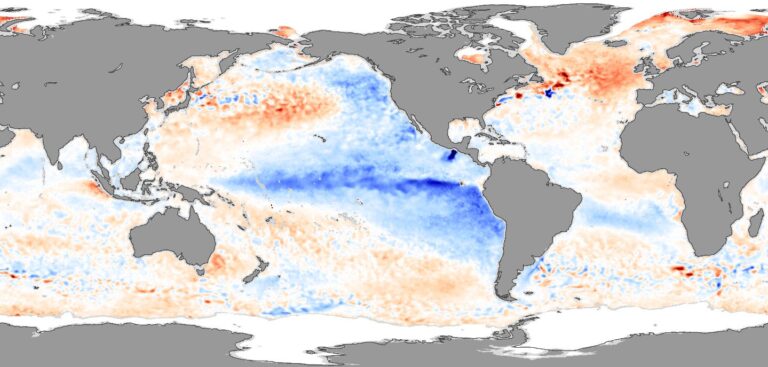
The Australian Bureau of Meteorology has declared that La Niña has developed in the Pacific Ocean, upgrading from a La Niña Alert status to an active event. This, it says, means that recent changes in ocean temperatures and weather patterns over the Pacific are now likely to remain until at least the end of the year.

The bureau notes that La Niña is the cool phase of the El Niño Southern Oscillation. It is associated with cooler than average sea surface temperatures (SST) in the central and eastern tropical Pacific Ocean. La Niña events often form in autumn or winter, then decay in late summer. The greatest impact normally occurs during the spring and early summer period.

La Niña events normally last for around a year, however they can be shorter, or much longer. The Bureau says that recent observations and model forecasts show the central tropical Pacific Ocean is now 0.8°C cooler than normal, and that has resulted in changes to trade winds and pressure patterns. Climate models suggest these patterns will continue until at least the end of the year.

La Niña typically results in above-average spring rainfall for Australia, particularly across eastern, central and northern regions. It can also mean cooler days, more tropical cyclones, and an earlier onset of the first rains of the wet season across the north.

The last La Niña event occurred from 2010-2012 and resulted in one of Australia’s wettest two-year periods on record. Widespread flooding occurred in many parts of Australia associated with the record rainfalls.

The impacts of La Niña can vary significantly between events. It is likely this year will not see the same intensity as the 2010-11 La Niña event, but is still likely to be of moderate strength.

The Bureau previously shifted from La Niña Watch to La Niña Alert on August 18, 2020. The US National Oceanic and Atmospheric Administration declared an active La Niña status on September 10, 2020.

Previous ArticleIn this Issue – September 2020
Next Article Desert weather observations in China

Read Similar Stories

Data

Atmospheric G2 secures Japan weather forecasting license

April 21, 20262 Mins Read
Climate Measurement

China completes Antarctic meteorological research mission with Xuelong icebreaker

April 21, 20262 Mins Read
Climate Measurement

Study identifies atmospheric trigger behind flash droughts in Puerto Rico

April 15, 20263 Mins Read
Latest News

Extreme heat posing significant risks to ecosystems and agriculture, FAO-WMO report warns

April 22, 2026

Atmospheric G2 secures Japan weather forecasting license

April 21, 2026

China completes Antarctic meteorological research mission with Xuelong icebreaker

April 21, 2026

Receive breaking stories and features in your inbox each week, for free


Enter your email address:


Supplier Spotlights
  • ZOGLAB Microsystem Co., Ltd
Getting in Touch
  • Contact Us / Advertise
  • Meet the Editors
  • Media Pack
  • Free Weekly E-Newsletter
Our Social Channels
  • Facebook
  • LinkedIn
© 2026 UKi Media & Events a division of UKIP Media & Events Ltd
  • Cookie Policy
  • Privacy Policy
  • Terms and Conditions
  • Notice and Takedown Policy

Type above and press Enter to search. Press Esc to cancel.