


Close Menu
Meteorological Technology International
  • News
    • A-E
      • Agriculture
      • Automated Weather Stations
      • Aviation
      • Climate Measurement
      • Data
      • Developing Countries
      • Digital Applications
      • Early Warning Systems
      • Extreme Weather
    • G-P
      • Hydrology
      • Lidar
      • Lightning Detection
      • New Appointments
      • Nowcasting
      • Numerical Weather Prediction
      • Polar Weather
    • R-S
      • Radar
      • Rainfall
      • Remote Sensing
      • Renewable Energy
      • Satellites
      • Solar
      • Space Weather
      • Supercomputers
    • T-Z
      • Training
      • Transport
      • Weather Instruments
      • Wind
      • World Meteorological Organization
      • Meteorological Technology World Expo
  • Features
  • Online Magazines
    • January 2026
    • April 2025
    • January 2025
    • September 2024
    • April 2024
    • Archive Issues
    • Subscribe Free!
  • Opinion
  • Videos
  • Supplier Spotlight
  • Expo
LinkedIn X (Twitter) Facebook
  • Sign-up for Free Weekly E-Newsletter
  • Meet the Editors
  • Contact Us
  • Media Pack
LinkedIn Facebook
Subscribe
Meteorological Technology International
  • News
      • Agriculture
      • Automated Weather Stations
      • Aviation
      • Climate Measurement
      • Data
      • Developing Countries
      • Digital Applications
      • Early Warning Systems
      • Extreme Weather
      • Hydrology
      • Lidar
      • Lightning Detection
      • New Appointments
      • Nowcasting
      • Numerical Weather Prediction
      • Polar Weather
      • Radar
      • Rainfall
      • Remote Sensing
      • Renewable Energy
      • Satellites
      • Solar
      • Space Weather
      • Supercomputers
      • Training
      • Transport
      • Weather Instruments
      • Wind
      • World Meteorological Organization
      • Meteorological Technology World Expo
  • Features
  • Online Magazines
    1. April 2026
    2. January 2026
    3. September 2025
    4. April 2025
    5. January 2025
    6. September 2024
    7. April 2024
    8. January 2024
    9. Archive Issues
    10. Subscribe Free!
    Featured
    May 5, 2026

    In this Issue – April 2026

    By Web TeamMay 5, 2026
    Recent

    In this Issue – April 2026

    May 5, 2026

    In this Issue – January 2026

    November 27, 2025

    In this Issue – September 2025

    August 11, 2025
  • Opinion
  • Videos
  • Supplier Spotlight
  • Expo
Facebook LinkedIn
Subscribe
Meteorological Technology International
Climate Measurement

NASA, WMO confirm that 2019 was the second-hottest year on record

Helen NormanBy Helen NormanJanuary 20, 20202 Mins Read
Share LinkedIn Facebook Twitter Email
Share
LinkedIn Facebook Twitter Email

A number of international agencies including the WMO, NASA and the NOAA have confirmed that 2019 was second-hottest year on record.

A similar analysis by the UK Met Office came to same conclusion. The global temperatures for 2019 were second only to 2016, with the past five years the warmest recorded on Earth since record-keeping began in 1880.

According to scientists at NASA’s Goddard Institute for Space Studies (GISS) in New York, temperatures for the last year were on average 0.98°C warmer than the mean average from 1951 to 1980.

“The decade that just ended is clearly the warmest decade on record,” said GISS director Gavin Schmidt. “Every decade since the 1960s clearly has been warmer than the one before.”

NASA’s analysis – conducted jointly with NOAA – used climate models and statistical analysis of global temperature data.

Through this analysis scientists were able to conclude that the increase mostly has been driven by rising CO2 and other greenhouse gas emissions.

“This shows that what’s happening is persistent, not a fluke due to some weather phenomenon: we know that the long-term trends are being driven by the increasing levels of greenhouse gases in the atmosphere,” Schmidt said.

“The average global temperature has risen by about 1.1°C since the pre-industrial era and ocean heat content is at a record level,” said WMO secretary-general Petteri Taalas. “On the current path of carbon dioxide emissions, we are heading toward a temperature increase of 3°C to 5°C by the end of century.”

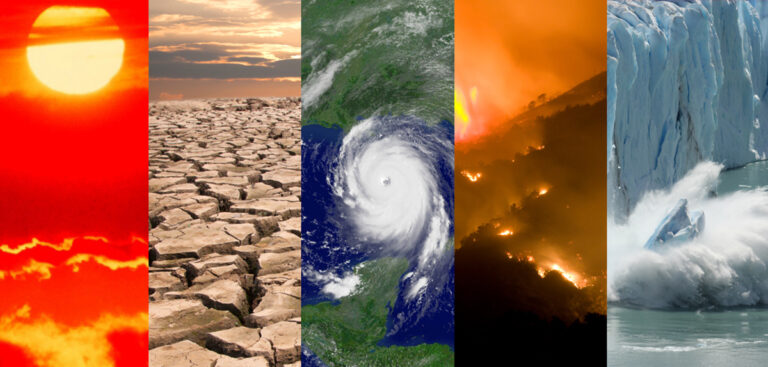
Taalas warned of the ongoing impact of this temperature rise in increased frequency of “high-impact weather and climate-related events” such as the recent bushfires in Australia.

“Unfortunately, we expect to see much extreme weather throughout 2020 and the coming decades, fuelled by record levels of heat-trapping greenhouse gases in the atmosphere,” said Taalas.

Click here for a video from NASA and NOAA showing how global warming affects the plane

Previous ArticleSatellite radar data helps disaster response for Puerto Rico quake
Next Article NOAA collaborates with ocean tech firm to map deep water regions

Read Similar Stories

Artificial Intelligence

Machine learning opens new possibilities for global atmospheric reanalysis

July 22, 20263 Mins Read
Extreme Weather

North Sea marine heatwave intensified impacts of Storm Babet by 9-20%

July 21, 20263 Mins Read
Climate Measurement

Sonardyne provides navigation support to BAS GIANT climate mission studying Greenland’s glaciers

July 16, 20263 Mins Read
Latest News

Machine learning opens new possibilities for global atmospheric reanalysis

July 22, 2026

North Sea marine heatwave intensified impacts of Storm Babet by 9-20%

July 21, 2026

FEATURE: UAH study tracks post-wildfire weather shifts

July 21, 2026

Receive breaking stories and features in your inbox each week, for free


Enter your email address:


Supplier Spotlights
  • AIRMAR Technology Corporation
Getting in Touch
  • Contact Us / Advertise
  • Meet the Editors
  • Media Pack
  • Free Weekly E-Newsletter
Our Social Channels
  • Facebook
  • LinkedIn
© 2026 UKi Media & Events a division of UKIP Media & Events Ltd
  • Cookie Policy
  • Privacy Policy
  • Terms and Conditions
  • Notice and Takedown Policy

Type above and press Enter to search. Press Esc to cancel.