

Close Menu
Meteorological Technology International
  • News
    • A-E
      • Agriculture
      • Automated Weather Stations
      • Aviation
      • Climate Measurement
      • Data
      • Developing Countries
      • Digital Applications
      • Early Warning Systems
      • Extreme Weather
    • G-P
      • Hydrology
      • Lidar
      • Lightning Detection
      • New Appointments
      • Nowcasting
      • Numerical Weather Prediction
      • Polar Weather
    • R-S
      • Radar
      • Rainfall
      • Remote Sensing
      • Renewable Energy
      • Satellites
      • Solar
      • Space Weather
      • Supercomputers
    • T-Z
      • Training
      • Transport
      • Weather Instruments
      • Wind
      • World Meteorological Organization
      • Meteorological Technology World Expo
  • Features
  • Online Magazines
    • January 2026
    • April 2025
    • January 2025
    • September 2024
    • April 2024
    • Archive Issues
    • Subscribe Free!
  • Opinion
  • Videos
  • Supplier Spotlight
  • Expo
LinkedIn X (Twitter) Facebook
  • Sign-up for Free Weekly E-Newsletter
  • Meet the Editors
  • Contact Us
  • Media Pack
LinkedIn Facebook
Subscribe
Meteorological Technology International
  • News
      • Agriculture
      • Automated Weather Stations
      • Aviation
      • Climate Measurement
      • Data
      • Developing Countries
      • Digital Applications
      • Early Warning Systems
      • Extreme Weather
      • Hydrology
      • Lidar
      • Lightning Detection
      • New Appointments
      • Nowcasting
      • Numerical Weather Prediction
      • Polar Weather
      • Radar
      • Rainfall
      • Remote Sensing
      • Renewable Energy
      • Satellites
      • Solar
      • Space Weather
      • Supercomputers
      • Training
      • Transport
      • Weather Instruments
      • Wind
      • World Meteorological Organization
      • Meteorological Technology World Expo
  • Features
  • Online Magazines
    1. January 2026
    2. September 2025
    3. April 2025
    4. January 2025
    5. September 2024
    6. April 2024
    7. January 2024
    8. September 2023
    9. April 2023
    10. Archive Issues
    11. Subscribe Free!
    Featured
    November 27, 2025

    In this Issue – January 2026

    By Hazel KingNovember 27, 2025
    Recent

    In this Issue – January 2026

    November 27, 2025

    In this Issue – September 2025

    August 11, 2025

    In this Issue – April 2025

    April 15, 2025
  • Opinion
  • Videos
  • Supplier Spotlight
  • Expo
Facebook LinkedIn
Subscribe
Meteorological Technology International
Climate Measurement

New insights into Earth’s biosphere and air quality

Lawrence ButcherBy Lawrence ButcherSeptember 11, 20202 Mins Read
Share LinkedIn Facebook Twitter Email
Share
LinkedIn Facebook Twitter Email

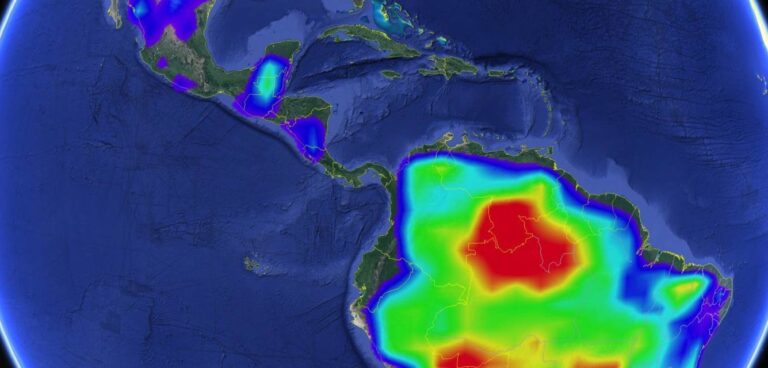
A new study led by a team of University of Minnesota researchers, with co-authors from the Cooperative Institute for Research In Environmental Sciences (CIRES), claims to provide the first global satellite measurements of one of the most important chemicals affecting Earth’s atmosphere, isoprene.

This is a natural hydrocarbon emitted to the atmosphere in vast quantities—approximately 500 billion kilograms per year—by plants and trees. It is chemically reactive, and once in the atmosphere, combines with human-caused pollutants to adversely affect air quality. Isoprene also reacts with the main atmospheric oxidizing agent—called OH radicals—and therefore reduces the capacity of the atmosphere to scrub itself of pollutants and greenhouse gases.

Scientists look to atmospheric models to predict current and future atmospheric composition and air quality, as well as to diagnose the atmosphere’s ability to remove greenhouse gases and air pollutants. However, isoprene emission rates are highly uncertain due to sparse ground-based measurements, and researchers are also unsure of the extent to which isoprene acts to suppress or sustain the abundance of OH radicals in the atmosphere.

The team behind the study says it has developed the first-ever global measurements of isoprene from space. Using observations from the Cross-track Infrared Sounder (CrIS) sensor on Suomi NPP, a NOAA-operated satellite, researchers developed a retrieval method that uses machine learning to determine the atmospheric concentration of isoprene over different parts of the world. They combined these measurements with atmospheric modeling to test current scientific understanding of global isoprene emissions and of how isoprene affects atmospheric oxidation. The research was published in the journal Nature.

“Isoprene is one of the most important drivers of global atmospheric chemistry,” said lead author Dylan Millet, a professor in the University of Minnesota’s Department of Soil, Water, and Climate. “These satellite measurements provide new understanding of how Earth’s biosphere and atmosphere interact.”

Previous ArticleESA launches remote sensing tech for atmospheric measurements
Next Article La Nina to persist through winter

Read Similar Stories

Extreme Weather

Researchers investigate links between air pollution, extreme weather and climate

May 1, 20262 Mins Read
Early Warning Systems

China expands MAZU early warning system for developing countries

April 30, 20262 Mins Read
Radar

Météo-France begins construction of France’s tallest weather radar tower in Sembadel

April 29, 20262 Mins Read
Latest News

Researchers investigate links between air pollution, extreme weather and climate

May 1, 2026

China expands MAZU early warning system for developing countries

April 30, 2026

Météo-France begins construction of France’s tallest weather radar tower in Sembadel

April 29, 2026

Receive breaking stories and features in your inbox each week, for free


Enter your email address:


Supplier Spotlights
  • Reuniwatt
Getting in Touch
  • Contact Us / Advertise
  • Meet the Editors
  • Media Pack
  • Free Weekly E-Newsletter
Our Social Channels
  • Facebook
  • LinkedIn
© 2026 UKi Media & Events a division of UKIP Media & Events Ltd
  • Cookie Policy
  • Privacy Policy
  • Terms and Conditions
  • Notice and Takedown Policy

Type above and press Enter to search. Press Esc to cancel.