


Meteorological Technology International
  • News
    • A-E
      • Agriculture
      • Automated Weather Stations
      • Aviation
      • Climate Measurement
      • Data
      • Developing Countries
      • Digital Applications
      • Early Warning Systems
      • Extreme Weather
    • G-P
      • Hydrology
      • Lidar
      • Lightning Detection
      • New Appointments
      • Nowcasting
      • Numerical Weather Prediction
      • Polar Weather
    • R-S
      • Radar
      • Rainfall
      • Remote Sensing
      • Renewable Energy
      • Satellites
      • Solar
      • Space Weather
      • Supercomputers
    • T-Z
      • Training
      • Transport
      • Weather Instruments
      • Wind
      • World Meteorological Organization
      • Meteorological Technology World Expo
  • Features
  • Online Magazines
    • January 2026
    • April 2025
    • January 2025
    • September 2024
    • April 2024
    • Archive Issues
    • Subscribe Free!
  • Opinion
  • Videos
  • Supplier Spotlight
  • Expo
LinkedIn Twitter Facebook
  • Sign-up for Free Weekly E-Newsletter
  • Meet the Editors
  • Contact Us
  • Media Pack
LinkedIn Facebook
Subscribe
Meteorological Technology International
  • News
      • Agriculture
      • Automated Weather Stations
      • Aviation
      • Climate Measurement
      • Data
      • Developing Countries
      • Digital Applications
      • Early Warning Systems
      • Extreme Weather
      • Hydrology
      • Lidar
      • Lightning Detection
      • New Appointments
      • Nowcasting
      • Numerical Weather Prediction
      • Polar Weather
      • Radar
      • Rainfall
      • Remote Sensing
      • Renewable Energy
      • Satellites
      • Solar
      • Space Weather
      • Supercomputers
      • Training
      • Transport
      • Weather Instruments
      • Wind
      • World Meteorological Organization
      • Meteorological Technology World Expo
  • Features
  • Online Magazines
    1. January 2026
    2. September 2025
    3. April 2025
    4. January 2025
    5. September 2024
    6. April 2024
    7. January 2024
    8. September 2023
    9. April 2023
    10. Archive Issues
    11. Subscribe Free!
    Featured
    November 27, 2025

    In this Issue – January 2026

    By Hazel KingNovember 27, 2025
    Recent

    In this Issue – January 2026

    November 27, 2025

    In this Issue – September 2025

    August 11, 2025

    In this Issue – April 2025

    April 15, 2025
  • Opinion
  • Videos
  • Supplier Spotlight
  • Expo
Facebook LinkedIn
Subscribe
Meteorological Technology International
Climate Measurement

Machine learning method improves extreme weather projections

Elizabeth BakerBy Elizabeth BakerJuly 30, 20254 Mins Read
Share LinkedIn Facebook Twitter Email
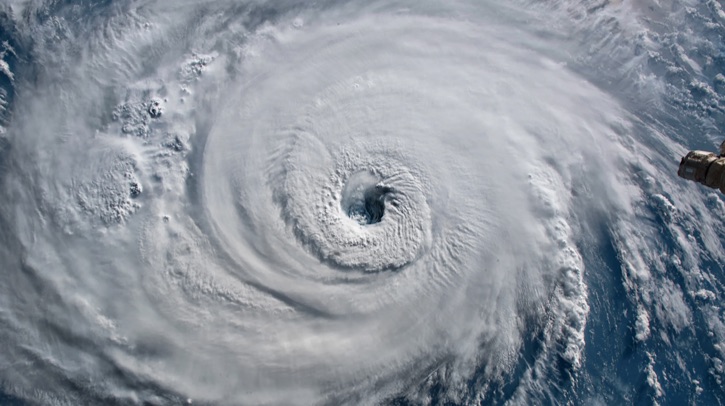
Hurricane Florence moves over the Atlantics, close to the US coast.
Elements of this image were furnished by NASA
Share
LinkedIn Facebook Twitter Email

Researchers at North Carolina State University have devised a machine learning (ML) method to improve large-scale climate model projections and demonstrated that the tool makes models more accurate at both the global and regional level.

These findings were facilitated by the National Science Foundation, under grants 2151651 and 2152887 and published in the paper, ‘A Complete Density Correction using Normalizing Flows (CDC-NF) for CMIP6 GCMs’, in the journal Scientific Data – Nature. The paper was co-authored by Emily Hector, an assistant professor of statistics at NC State; Brian Reich, the Gertrude M Cox distinguished professor of statistics at NC State; and Reetam Majumder, an assistant professor of statistics at the University of Arkansas.

Planning for extreme weather

This solution is expected to provide policymakers with improved climate projections that can be used to inform policy and planning decisions.

Shiqi Fang, first author of a paper on the work and a research associate at North Carolina State University, said, “Global climate models are essential for policy planning, but these models often struggle with ‘compound extreme events,’ which is when extreme events happen in short succession – such as when extreme rainfall is followed immediately by a period of extreme heat.

“Specifically, these models struggle to accurately capture observed patterns regarding compound events in the data used to train the models,” Fang added. “This leads to two additional problems: difficulty in providing accurate projections of compound events on a global scale; and difficulty in providing accurate projections of compound events on a local scale. The work we’ve done here addresses all three of those challenges.”

“All models are imperfect,” commented Sankar Arumugam, corresponding author of the paper and a professor of civil, construction and environmental engineering at NC State. “Sometimes a model may underestimate rainfall, and/or overestimate temperature, or whatever. Model developers have a suite of tools that they can use to correct these so-called biases, improving a model’s accuracy.

“However, the existing suite of tools has a key limitation: they are very good at correcting a flaw in a single parameter (like rainfall), but not very good at correcting flaws in multiple parameters (like rainfall and temperature),” Arumugam continued. “This is important, because compound events can pose serious threats and – by definition – involve societal impacts from two physical variables, temperature and humidity. This is where our new method comes in.”

Validating the method

The new method makes use of ML techniques to modify a climate model’s outputs in a way that moves the model’s projections closer to the patterns that can be observed in real-world data.

The researchers tested the new method – called Complete Density Correction using Normalizing Flows (CDC-NF) – with the five most widely used global climate models. The testing was done at both the global scale and at the national scale for the continental United States.

“The accuracy of all five models improved when used in conjunction with the CDC-NF method,” said Fang. “And these improvements were especially pronounced with regard to accuracy regarding both isolated extreme events and compound extreme events.”

“We have made the code and data we used publicly available, so that other researchers can use our method in conjunction with their modeling efforts – or further revise the method to meet their needs,” concluded Arumugam. “We’re optimistic that this can improve the accuracy of projections used to inform climate adaptation strategies.”

In related news, Dr Kianoosh Yousefi, assistant professor of mechanical engineering in the Erik Jonsson School of Engineering and Computer Science at the University of Texas at Dallas, recently received an Office of Naval Research 2025 Young Investigator Program (YIP) award of US$742,345 over three years to improve hurricane forecasting with machine learning (ML)

Previous ArticleNOAA Research develops AI-powered weather forecast model
Next Article MetOp-SG-A1 satellite to launch in August

Read Similar Stories

Climate Measurement

UK to strengthen climate observations and satellite functions with £17m space innovation investment

December 4, 20253 Mins Read
Climate Measurement

Uncrewed systems prove new method for observing deep ocean currents in real time

December 4, 20253 Mins Read
Climate Measurement

WMO predicts borderline La Niña conditions

December 4, 20252 Mins Read
Latest News

UK to strengthen climate observations and satellite functions with £17m space innovation investment

December 4, 2025

Uncrewed systems prove new method for observing deep ocean currents in real time

December 4, 2025

WMO predicts borderline La Niña conditions

December 4, 2025

Receive breaking stories and features in your inbox each week, for free


Enter your email address:


Supplier Spotlights
  • Nel Hydrogen
Getting in Touch
  • Contact Us / Advertise
  • Meet the Editors
  • Download Media Pack
  • Free Weekly E-Newsletter
Our Social Channels
  • Facebook
  • LinkedIn
© 2025 UKi Media & Events a division of UKIP Media & Events Ltd
  • Cookie Policy
  • Privacy Policy
  • Terms and Conditions
  • Notice and Takedown Policy

Type above and press Enter to search. Press Esc to cancel.

We use cookies on our website to give you the most relevant experience by remembering your preferences and repeat visits. By clicking “Accept”, you consent to the use of ALL the cookies.
Cookie settingsACCEPT
Manage consent

Privacy Overview

This website uses cookies to improve your experience while you navigate through the website. Out of these, the cookies that are categorized as necessary are stored on your browser as they are essential for the working of basic functionalities of the website. We also use third-party cookies that help us analyze and understand how you use this website. These cookies will be stored in your browser only with your consent. You also have the option to opt-out of these cookies. But opting out of some of these cookies may affect your browsing experience.
Necessary
Always Enabled

Necessary cookies are absolutely essential for the website to function properly. These cookies ensure basic functionalities and security features of the website, anonymously.

CookieDurationDescription
cookielawinfo-checbox-analytics11 monthsThis cookie is set by GDPR Cookie Consent plugin. The cookie is used to store the user consent for the cookies in the category "Analytics".
cookielawinfo-checbox-functional11 monthsThe cookie is set by GDPR cookie consent to record the user consent for the cookies in the category "Functional".
cookielawinfo-checbox-others11 monthsThis cookie is set by GDPR Cookie Consent plugin. The cookie is used to store the user consent for the cookies in the category "Other.
cookielawinfo-checkbox-necessary11 monthsThis cookie is set by GDPR Cookie Consent plugin. The cookies is used to store the user consent for the cookies in the category "Necessary".
cookielawinfo-checkbox-performance11 monthsThis cookie is set by GDPR Cookie Consent plugin. The cookie is used to store the user consent for the cookies in the category "Performance".
viewed_cookie_policy11 monthsThe cookie is set by the GDPR Cookie Consent plugin and is used to store whether or not user has consented to the use of cookies. It does not store any personal data.

Functional

Functional cookies help to perform certain functionalities like sharing the content of the website on social media platforms, collect feedbacks, and other third-party features.

Performance

Performance cookies are used to understand and analyze the key performance indexes of the website which helps in delivering a better user experience for the visitors.

Analytics

Analytical cookies are used to understand how visitors interact with the website. These cookies help provide information on metrics the number of visitors, bounce rate, traffic source, etc.

Advertisement

Advertisement cookies are used to provide visitors with relevant ads and marketing campaigns. These cookies track visitors across websites and collect information to provide customized ads.

Others

Other uncategorized cookies are those that are being analyzed and have not been classified into a category as yet.

SAVE & ACCEPT
Powered by