


Close Menu
Meteorological Technology International
  • News
    • A-E
      • Agriculture
      • Automated Weather Stations
      • Aviation
      • Climate Measurement
      • Data
      • Developing Countries
      • Digital Applications
      • Early Warning Systems
      • Extreme Weather
    • G-P
      • Hydrology
      • Lidar
      • Lightning Detection
      • New Appointments
      • Nowcasting
      • Numerical Weather Prediction
      • Polar Weather
    • R-S
      • Radar
      • Rainfall
      • Remote Sensing
      • Renewable Energy
      • Satellites
      • Solar
      • Space Weather
      • Supercomputers
    • T-Z
      • Training
      • Transport
      • Weather Instruments
      • Wind
      • World Meteorological Organization
      • Meteorological Technology World Expo
  • Features
  • Online Magazines
    • January 2026
    • April 2025
    • January 2025
    • September 2024
    • April 2024
    • Archive Issues
    • Subscribe Free!
  • Opinion
  • Videos
  • Supplier Spotlight
  • Expo
LinkedIn X (Twitter) Facebook
  • Sign-up for Free Weekly E-Newsletter
  • Meet the Editors
  • Contact Us
  • Media Pack
LinkedIn Facebook
Subscribe
Meteorological Technology International
  • News
      • Agriculture
      • Automated Weather Stations
      • Aviation
      • Climate Measurement
      • Data
      • Developing Countries
      • Digital Applications
      • Early Warning Systems
      • Extreme Weather
      • Hydrology
      • Lidar
      • Lightning Detection
      • New Appointments
      • Nowcasting
      • Numerical Weather Prediction
      • Polar Weather
      • Radar
      • Rainfall
      • Remote Sensing
      • Renewable Energy
      • Satellites
      • Solar
      • Space Weather
      • Supercomputers
      • Training
      • Transport
      • Weather Instruments
      • Wind
      • World Meteorological Organization
      • Meteorological Technology World Expo
  • Features
  • Online Magazines
    1. January 2026
    2. September 2025
    3. April 2025
    4. January 2025
    5. September 2024
    6. April 2024
    7. January 2024
    8. September 2023
    9. April 2023
    10. Archive Issues
    11. Subscribe Free!
    Featured
    November 27, 2025

    In this Issue – January 2026

    By Hazel KingNovember 27, 2025
    Recent

    In this Issue – January 2026

    November 27, 2025

    In this Issue – September 2025

    August 11, 2025

    In this Issue – April 2025

    April 15, 2025
  • Opinion
  • Videos
  • Supplier Spotlight
  • Expo
Facebook LinkedIn
Subscribe
Meteorological Technology International
Nowcasting

Short-range weather modeling application released to forecasting community

Lawrence ButcherBy Lawrence ButcherMarch 5, 20213 Mins Read
Share LinkedIn Facebook Twitter Email
Share
LinkedIn Facebook Twitter Email

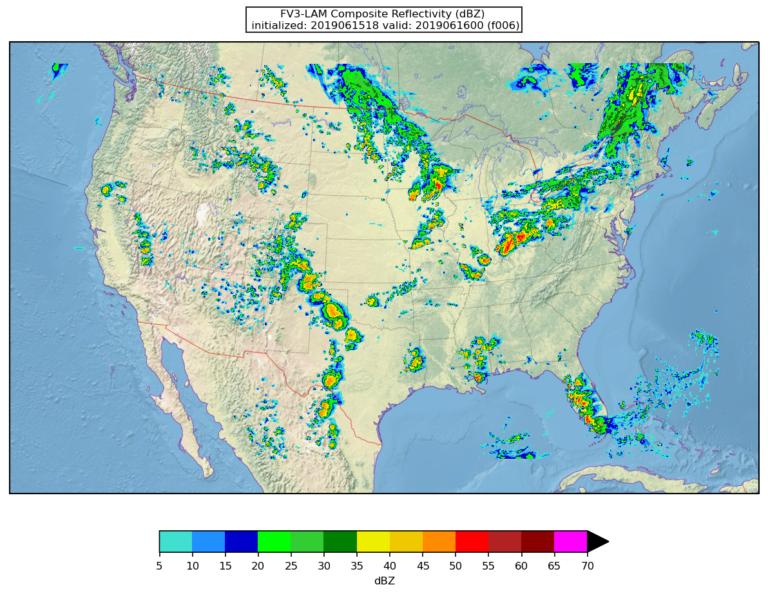
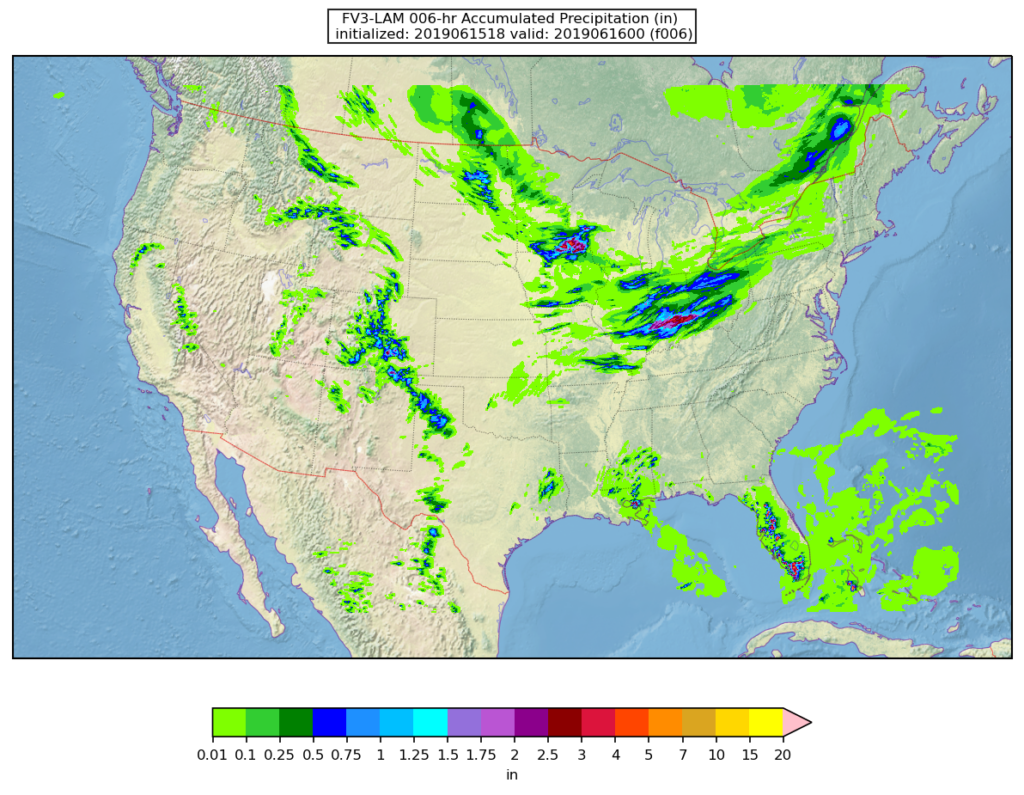
The US National Oceanic and Atmospheric Administration (NOAA) and its partners have released a second application based on the Unified Forecasting System (UFS) framework.

The agency says the new code will enable users to make improvements that focus on the short-range weather applications, critical for life-saving weather and water forecasts in the USA during extreme events such as tornadoes, blizzards, floods and hurricanes. The short-range weather application predicts atmospheric behavior on a timescale from less than an hour to several days.

The release, available through GitHub, is part of an ongoing effort by NOAA to transition to an open, community development paradigm and accelerate the advancement of environmental prediction models.

“This release of a UFS application further demonstrates our commitment to leverage the expertise of the weather community beyond NOAA to accelerate the emerging scientific and technological advancements from research into operations,” said Louis W Uccellini, director of NOAA’s National Weather Service.

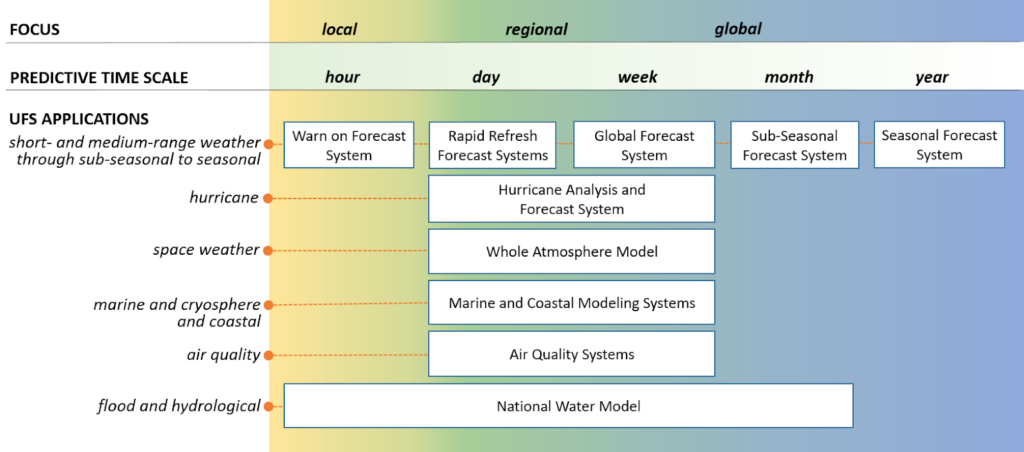
The short-range weather application is the foundation of NOAA’s future convection-allowing ensemble forecast system, known as the Rapid Refresh Forecast System, which is the successor to the High-Resolution Rapid Refresh model, or the HRRR.

“NOAA is excited to give the weather research community the opportunity to work with this code before operational implementation,” added Craig McLean, NOAA Research Assistant Administrator. “It opens the door for collaboration much earlier in the model development process, which will maximize the model’s capabilities.”
The short-range weather application was developed by a community of partners from academia, the Developmental Testbed Center, and a cross-NOAA team of scientists from the Global Systems Laboratory, the National Severe Storms Laboratory, the Environmental Modeling Center, and the Storm Prediction Center.

This collaborative approach to sharing model code benefits NOAA operations through its participation in the broader weather and modeling community. The UFS enables NOAA to simplify its production suite of forecasting models from many independent systems, each of which has to be improved and maintained separately, into a single and more streamlined modeling system with fewer, more comprehensive applications. The end goal is a suite of coupled UFS numerical weather models, which span local to global domains and predictive timescales from sub-hourly analyses to seasonal forecasts.

The UFS will be bolstered by NOAA’s Earth Prediction Innovation Center (EPIC), made possible by Congressional authorization in 2019. EPIC will ensure that the UFS efforts are facilitating research and development in the modeling community, whose efforts can then be applied to improve operational forecasts.

This latest release of code encompasses short-range weather/convection-allowing model atmospheric phenomena from less than an hour to several days, and includes: a limited area modeling capability, pre- and post-processing utilities, the ability to use multiple sources of input data for initial and lateral boundary conditions, an end-to-end workflow, and comprehensive documentation, along with user support.

The UFS is a community-based, coupled, comprehensive Earth modeling system that shares the science components and software infrastructure for weather forecasting.
Previous ArticleNASA scientists complete first global survey of freshwater fluctuation
Next Article El Dorado International installs DTN windshear alerting system

Read Similar Stories

Data

Atmospheric G2 secures Japan weather forecasting license

April 21, 20262 Mins Read
Climate Measurement

China completes Antarctic meteorological research mission with Xuelong icebreaker

April 21, 20262 Mins Read
Climate Measurement

Study identifies atmospheric trigger behind flash droughts in Puerto Rico

April 15, 20263 Mins Read
Latest News

Extreme heat posing significant risks to ecosystems and agriculture, FAO-WMO report warns

April 22, 2026

Atmospheric G2 secures Japan weather forecasting license

April 21, 2026

China completes Antarctic meteorological research mission with Xuelong icebreaker

April 21, 2026

Receive breaking stories and features in your inbox each week, for free


Enter your email address:


Supplier Spotlights
  • REMTECH
Getting in Touch
  • Contact Us / Advertise
  • Meet the Editors
  • Media Pack
  • Free Weekly E-Newsletter
Our Social Channels
  • Facebook
  • LinkedIn
© 2026 UKi Media & Events a division of UKIP Media & Events Ltd
  • Cookie Policy
  • Privacy Policy
  • Terms and Conditions
  • Notice and Takedown Policy

Type above and press Enter to search. Press Esc to cancel.