


Close Menu
Meteorological Technology International
  • News
    • A-E
      • Agriculture
      • Artificial Intelligence
      • Automated Weather Stations
      • Aviation
      • Climate Measurement
      • Data
      • Developing Countries
      • Digital Applications
      • Early Warning Systems
      • Extreme Weather
    • G-P
      • Hydrology
      • Lidar
      • Lightning Detection
      • New Appointments
      • Nowcasting
      • Numerical Weather Prediction
      • Polar Weather
    • R-S
      • Radar
      • Rainfall
      • Remote Sensing
      • Renewable Energy
      • Satellites
      • Solar
      • Space Weather
      • Supercomputers
    • T-Z
      • Training
      • Transport
      • Weather Instruments
      • Wind
      • World Meteorological Organization
      • Meteorological Technology World Expo
  • Features
  • Online Magazines
    • September 2026
    • January 2026
    • April 2025
    • January 2025
    • September 2024
    • April 2024
    • Archive Issues
    • Subscribe Free!
  • Opinion
  • Videos
  • Supplier Spotlight
  • Expo
LinkedIn X (Twitter) Facebook
  • Sign-up for Free Weekly E-Newsletter
  • Meet the Editors
  • Contact Us
  • Media Pack
LinkedIn Facebook
Subscribe
Meteorological Technology International
  • News
      • Agriculture
      • Artificial Intelligence
      • Automated Weather Stations
      • Aviation
      • Climate Measurement
      • Data
      • Developing Countries
      • Digital Applications
      • Early Warning Systems
      • Extreme Weather
      • Hydrology
      • Lidar
      • Lightning Detection
      • New Appointments
      • Nowcasting
      • Numerical Weather Prediction
      • Polar Weather
      • Radar
      • Rainfall
      • Remote Sensing
      • Renewable Energy
      • Satellites
      • Solar
      • Space Weather
      • Supercomputers
      • Training
      • Transport
      • Weather Instruments
      • Wind
      • World Meteorological Organization
      • Meteorological Technology World Expo
  • Features
  • Online Magazines
    1. September 2026
    2. April 2026
    3. January 2026
    4. September 2025
    5. April 2025
    6. January 2025
    7. September 2024
    8. April 2024
    9. January 2024
    10. Archive Issues
    11. Subscribe Free!
    Featured
    August 4, 2026

    In this Issue – September 2026

    By Web TeamAugust 4, 2026
    Recent

    In this Issue – September 2026

    August 4, 2026

    In this Issue – April 2026

    May 5, 2026

    In this Issue – January 2026

    November 27, 2025
  • Opinion
  • Videos
  • Supplier Spotlight
  • Expo
Facebook LinkedIn
Subscribe
Meteorological Technology International
Climate Measurement

SpaceX to launch ISS cargo resupply mission with climate modeling study on board

Elizabeth BakerBy Elizabeth BakerMay 27, 20222 Mins Read
Share LinkedIn Facebook Twitter Email
Share
LinkedIn Facebook Twitter Email

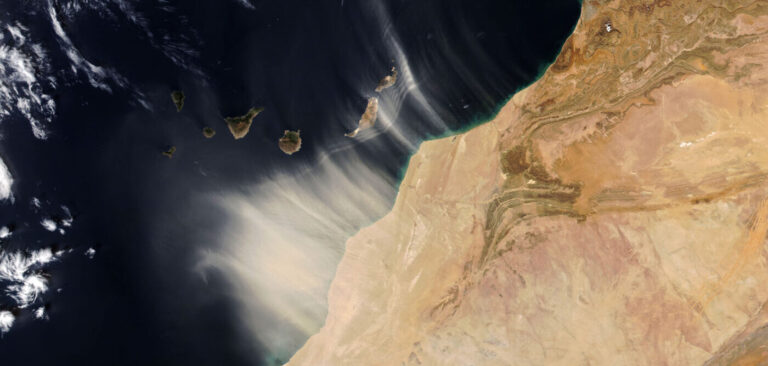
NASA has announced that SpaceX will launch the 25th cargo resupply services mission (CRS-25) to the International Space Station (ISS) on June 9, with a variety of experiments on board the Dragon capsule including a study to map the composition of Earth’s dust and further understand its role in Earth’s climate.

The Earth Surface Mineral Dust Source Investigation (EMIT), developed by NASA’s Jet Propulsion Laboratory in California, employs NASA imaging spectroscopy technology to measure the mineral composition of dust in Earth’s arid regions. Mineral dust blown into the air can travel significant distances and affect Earth’s climate, weather, vegetation and more. For example, dust containing dark minerals that absorb sunlight can warm an area, while light-colored mineral dust can cool it. Blowing dust also affects air quality, surface conditions such as rate of snow melt, and phytoplankton health in the ocean. The investigation collects images for one year to generate maps of the mineral composition in the regions on Earth that produce dust. Such mapping could advance our understanding of the effects of mineral dust on human populations now and in the future.

The mission will launch from NASA’s Kennedy Space Center in Florida and will also be carrying scientific research and technology demonstrations covering the immune system, wound healing, soil communities and cell-free biomarkers, as well as the testing of an alternative to concrete.

Previous ArticleNOAA predicts above-average 2022 Atlantic hurricane season
Next Article Eighth Challenges in Meteorology conference focuses on air quality

Read Similar Stories

Climate Measurement

September’s Antarctic ozone hole grows to larger than average size

September 16, 20262 Mins Read
Extreme Weather

Cardiff University to use drone technology to strengthen wildfire monitoring and response

September 15, 20263 Mins Read
Radar

Climavision opens radar network and forecasting platform to AI data centers ahead of 2027 grid deadline

September 10, 20263 Mins Read
Latest News

September’s Antarctic ozone hole grows to larger than average size

September 16, 2026

Cardiff University to use drone technology to strengthen wildfire monitoring and response

September 15, 2026

Tomorrow.io reveals five-instrument design for DeepSky weather satellites

September 11, 2026

Receive breaking stories and features in your inbox each week, for free


Enter your email address:


Supplier Spotlights
  • AIRMAR Technology Corporation
Getting in Touch
  • Contact Us / Advertise
  • Meet the Editors
  • Media Pack
  • Free Weekly E-Newsletter
Our Social Channels
  • Facebook
  • LinkedIn
© 2026 UKi Media & Events a division of UKIP Media & Events Ltd
  • Cookie Policy
  • Privacy Policy
  • Terms and Conditions
  • Notice and Takedown Policy

Type above and press Enter to search. Press Esc to cancel.