


Close Menu
Meteorological Technology International
  • News
    • A-E
      • Agriculture
      • Automated Weather Stations
      • Aviation
      • Climate Measurement
      • Data
      • Developing Countries
      • Digital Applications
      • Early Warning Systems
      • Extreme Weather
    • G-P
      • Hydrology
      • Lidar
      • Lightning Detection
      • New Appointments
      • Nowcasting
      • Numerical Weather Prediction
      • Polar Weather
    • R-S
      • Radar
      • Rainfall
      • Remote Sensing
      • Renewable Energy
      • Satellites
      • Solar
      • Space Weather
      • Supercomputers
    • T-Z
      • Training
      • Transport
      • Weather Instruments
      • Wind
      • World Meteorological Organization
      • Meteorological Technology World Expo
  • Features
  • Online Magazines
    • January 2026
    • April 2025
    • January 2025
    • September 2024
    • April 2024
    • Archive Issues
    • Subscribe Free!
  • Opinion
  • Videos
  • Supplier Spotlight
  • Expo
LinkedIn X (Twitter) Facebook
  • Sign-up for Free Weekly E-Newsletter
  • Meet the Editors
  • Contact Us
  • Media Pack
LinkedIn Facebook
Subscribe
Meteorological Technology International
  • News
      • Agriculture
      • Automated Weather Stations
      • Aviation
      • Climate Measurement
      • Data
      • Developing Countries
      • Digital Applications
      • Early Warning Systems
      • Extreme Weather
      • Hydrology
      • Lidar
      • Lightning Detection
      • New Appointments
      • Nowcasting
      • Numerical Weather Prediction
      • Polar Weather
      • Radar
      • Rainfall
      • Remote Sensing
      • Renewable Energy
      • Satellites
      • Solar
      • Space Weather
      • Supercomputers
      • Training
      • Transport
      • Weather Instruments
      • Wind
      • World Meteorological Organization
      • Meteorological Technology World Expo
  • Features
  • Online Magazines
    1. January 2026
    2. September 2025
    3. April 2025
    4. January 2025
    5. September 2024
    6. April 2024
    7. January 2024
    8. September 2023
    9. April 2023
    10. Archive Issues
    11. Subscribe Free!
    Featured
    November 27, 2025

    In this Issue – January 2026

    By Hazel KingNovember 27, 2025
    Recent

    In this Issue – January 2026

    November 27, 2025

    In this Issue – September 2025

    August 11, 2025

    In this Issue – April 2025

    April 15, 2025
  • Opinion
  • Videos
  • Supplier Spotlight
  • Expo
Facebook LinkedIn
Subscribe
Meteorological Technology International
Climate Measurement

Tracking water under Earth’s deserts

Lawrence ButcherBy Lawrence ButcherSeptember 25, 20203 Mins Read
Share LinkedIn Facebook Twitter Email
Share
LinkedIn Facebook Twitter Email

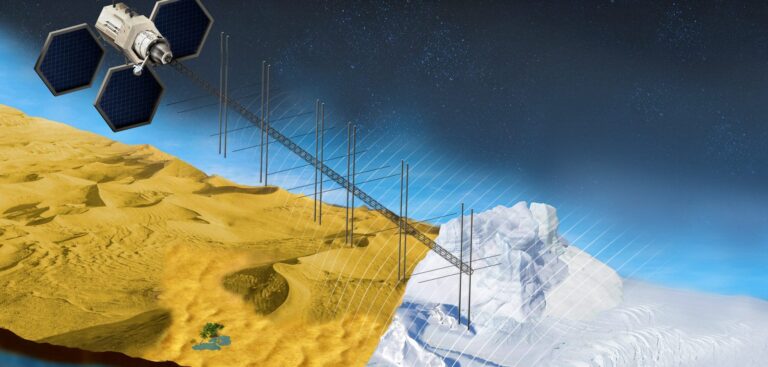
A joint effort between NASA and the Qatar Foundation aims to further understanding of the effects of climate change on desert environments. To this end, researchers with the Orbiting Arid Subsurfaces and Ice Sheet Sounder (OASIS) study project are designing a satellite mission to probe the sand dunes and ice sheets of some of Earth’s driest places with radar technology similar to that used by NASA’s Mars Reconnaissance Orbiter (MRO). The project’s primary goal would be to discover and monitor underground sources of fresh water otherwise known as aquifers.

Under a reimbursable Space Act Agreement with NASA and the Qatar Foundation (QF) for Science, Education & Community Development – represented by Hamad Bin Khalifa University (HBKU) and the Qatar Environment and Energy Research Institute (QEERI) at HBKU – NASA’s Jet Propulsion Laboratory and QEERI will jointly formulate a mission concept study for Qatar’s prospective OASIS mission.

The project seeks to put a satellite in Earth orbit to map the distribution of shallow aquifers beneath the desert’s surface in North Africa and the Arabian Peninsula. The plan is to use the satellite’s radar instruments to study how those aquifers originated and how groundwater moves beneath the deserts through a complex system of subsurface fractures that interlink them.

“The scientific community is excited about this mission. OASIS would be the first spaceborne radar specifically designed to detect directly subsurface water on Earth,” said James Graf, director for Earth Science and Technology at JPL in Southern California.

Project researchers also intend to study the topography of the land under ice sheets in Greenland and Antarctica to determine such properties as ice sheet thickness and the pathways by which ice flows to the ocean. This information could feed into models of current and future ice sheet responses to climate change, which would help researchers better understand ice sheet contributions to sea level rise.

“Warm and cold deserts are responding to climatic changes by expanding and shrinking, respectively,” explained Essam Heggy, the OASIS principal investigator and chief scientist and research program director of the Earth Science Program at QEERI. “Studying the forces driving these transformations will give us insight into the evolution of deserts on Earth.”

Led by Artur Chmielewski, the OASIS study project manager at JPL, and Heggy, the project’s team plans to design a spaceborne mission that uses radar technology similar to that developed for MRO to explore beneath the Martian surface. The instrument under consideration for the OASIS project, a 50MHz sounding radar, is expected to penetrate up to 1.8 miles (3km) of ice and nearly 330ft (100m) of sand.

In a 2011 proof-of-concept mission, researchers flew a helicopter over two well-known freshwater aquifers beneath Kuwait’s deserts to ensure a radar sounding instrument could detect them. They conducted several similar flights over other deserts in Oman and Morocco.

The OASIS study project will expand the scope of those initial efforts for a more global picture. The researchers and engineers involved in the project hope to finish formulating the mission concept over the next two years.

Previous Article5G challenges for forecast data gathering
Next Article New cold record extracted from archive data

Read Similar Stories

Climate Measurement

China completes Antarctic meteorological research mission with Xuelong icebreaker

April 21, 20262 Mins Read
Space Weather

Northumbria University secures £4m to study Earth’s radiation belts

April 16, 20262 Mins Read
Extreme Weather

AI model improves real-time prediction of wildfire spread

April 16, 20263 Mins Read
Latest News

Extreme heat posing significant risks to ecosystems and agriculture, FAO-WMO report warns

April 22, 2026

Atmospheric G2 secures Japan weather forecasting license

April 21, 2026

China completes Antarctic meteorological research mission with Xuelong icebreaker

April 21, 2026

Receive breaking stories and features in your inbox each week, for free


Enter your email address:


Supplier Spotlights
  • EUMETSAT
Getting in Touch
  • Contact Us / Advertise
  • Meet the Editors
  • Media Pack
  • Free Weekly E-Newsletter
Our Social Channels
  • Facebook
  • LinkedIn
© 2026 UKi Media & Events a division of UKIP Media & Events Ltd
  • Cookie Policy
  • Privacy Policy
  • Terms and Conditions
  • Notice and Takedown Policy

Type above and press Enter to search. Press Esc to cancel.