

Close Menu
Meteorological Technology International
  • News
    • A-E
      • Agriculture
      • Automated Weather Stations
      • Aviation
      • Climate Measurement
      • Data
      • Developing Countries
      • Digital Applications
      • Early Warning Systems
      • Extreme Weather
    • G-P
      • Hydrology
      • Lidar
      • Lightning Detection
      • New Appointments
      • Nowcasting
      • Numerical Weather Prediction
      • Polar Weather
    • R-S
      • Radar
      • Rainfall
      • Remote Sensing
      • Renewable Energy
      • Satellites
      • Solar
      • Space Weather
      • Supercomputers
    • T-Z
      • Training
      • Transport
      • Weather Instruments
      • Wind
      • World Meteorological Organization
      • Meteorological Technology World Expo
  • Features
  • Online Magazines
    • January 2026
    • April 2025
    • January 2025
    • September 2024
    • April 2024
    • Archive Issues
    • Subscribe Free!
  • Opinion
  • Videos
  • Supplier Spotlight
  • Expo
LinkedIn X (Twitter) Facebook
  • Sign-up for Free Weekly E-Newsletter
  • Meet the Editors
  • Contact Us
  • Media Pack
LinkedIn Facebook
Subscribe
Meteorological Technology International
  • News
      • Agriculture
      • Automated Weather Stations
      • Aviation
      • Climate Measurement
      • Data
      • Developing Countries
      • Digital Applications
      • Early Warning Systems
      • Extreme Weather
      • Hydrology
      • Lidar
      • Lightning Detection
      • New Appointments
      • Nowcasting
      • Numerical Weather Prediction
      • Polar Weather
      • Radar
      • Rainfall
      • Remote Sensing
      • Renewable Energy
      • Satellites
      • Solar
      • Space Weather
      • Supercomputers
      • Training
      • Transport
      • Weather Instruments
      • Wind
      • World Meteorological Organization
      • Meteorological Technology World Expo
  • Features
  • Online Magazines
    1. January 2026
    2. September 2025
    3. April 2025
    4. January 2025
    5. September 2024
    6. April 2024
    7. January 2024
    8. September 2023
    9. April 2023
    10. Archive Issues
    11. Subscribe Free!
    Featured
    November 27, 2025

    In this Issue – January 2026

    By Hazel KingNovember 27, 2025
    Recent

    In this Issue – January 2026

    November 27, 2025

    In this Issue – September 2025

    August 11, 2025

    In this Issue – April 2025

    April 15, 2025
  • Opinion
  • Videos
  • Supplier Spotlight
  • Expo
Facebook LinkedIn
Subscribe
Meteorological Technology International
Data

ECMWF prototype for monitoring anthropogenic CO2 emissions nears completion

ECMWFBy ECMWFJanuary 25, 20233 Mins Read
Share LinkedIn Facebook Twitter Email
Photo credit: Pixabay
Share
LinkedIn Facebook Twitter Email

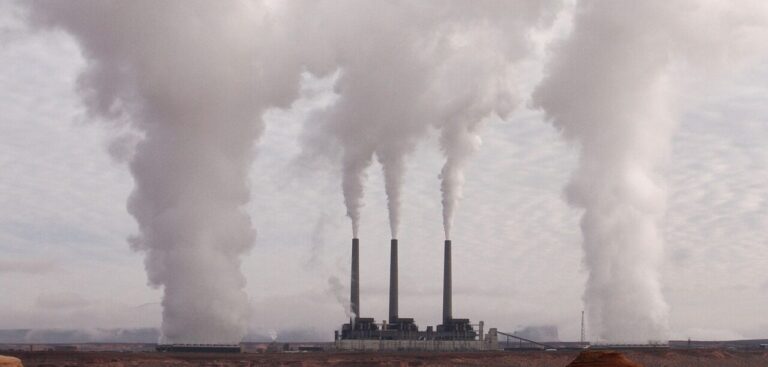
A prototype project coordinated by the European Centre for Medium-Range Weather Forecasts (ECMWF) to monitor anthropogenic CO2 emissions worldwide has moved into its final year.

The Copernicus CO2 service (CoCO2) is on track to feed into a permanent anthropogenic greenhouse gas emissions Monitoring and Verification Support Capacity (CO2MVS). This capacity will provide continuous monitoring of CO2 and methane (CH4) emissions and fluxes using a combination of observations and Earth system modeling.

CO2MVS is being developed as part of the EU’s Copernicus Atmosphere Monitoring Service (CAMS) implemented by ECMWF. A key element of the CoCO2 project is the ability to separate natural occurrences of CO2 or CH4 from anthropogenic ones. To do this, the system will combine many data sources that provide information about different parts of the full carbon cycle. These include observations of atmospheric CO2, CH4 and nitrogen dioxide (NO2); vegetation models; and prior knowledge about emission sources.

The progress of CoCO2 means that a prototype of the CO2MVS should be ready by the end of the year. The prototype system will then be implemented as a pre-operational service within CAMS in parallel with further development of the system.

Richard Engelen, project coordinator of CoCO2 and deputy director of CAMS, said, “Once the CO2MVS is up and running, we will have the tools to monitor anthropogenic greenhouse gas emissions globally and locally. This will provide vital data and tools to support efforts to keep global warming in check.”

The CO2MVS is expected to become fully operational in 2026, at the same time as the launch of a dedicated Copernicus satellite mission, CO2M, that will provide observations of CO2 and CH4.

Future observations

As part of the Copernicus Sentinel program, the European Space Agency (ESA) and the European Organisation for the Exploitation of Meteorological Satellites (EUMETSAT) are developing a constellation of satellites to support the CO2MVS.

They will be able to measure concentrations of CO2 and CH4 in the atmosphere with an unprecedented combination of accuracy, coverage and detail. The satellites will observe the entire globe in just a few days and will be able to look at individual carbon dioxide and methane sources, such as power plants and fossil fuel production sites. They are expected to go into operation in 2026.

The CORSO projects

A new project in support of the CO2MVS started on January 1, 2023. This EU-funded project, called CORSO (CO2MVS Research on Supplementary Observations), intends to support CO2MVS development and enhance its ability to assess anthropogenic CO2 emissions.

It focuses on the use of observations of co-emitted species (e.g. NO2 and CO), radiocarbon and the land biosphere to better distinguish between the effects of fossil fuel and biospheric fluxes on atmospheric CO2 concentrations.

Anna Agusti-Panareda, an ECMWF scientist working on the CoCO2 project, said, “As the last year of CoCO2 begins, the different elements of the ambitious CO2MVS capacity are coming together. We hope that by the end of the year, a first phase of the CO2MVS can begin before it becomes fully operational in 2026.”

This article was originally posted on the ECMWF website, and can be viewed here.

Headline and opening paragraph adapted to suit the Meteorological Technology International website. Content shared under Creative Commons — Attribution 4.0 International — CC BY 4.0

Previous ArticleNOAA satellites helped rescue nearly 400 people in the US in 2022
Next Article WMO issues international guidelines for nowcasting in Africa

Read Similar Stories

Extreme Weather

Researchers investigate links between air pollution, extreme weather and climate

May 1, 20262 Mins Read
Early Warning Systems

China expands MAZU early warning system for developing countries

April 30, 20262 Mins Read
Radar

Météo-France begins construction of France’s tallest weather radar tower in Sembadel

April 29, 20262 Mins Read
Latest News

Researchers investigate links between air pollution, extreme weather and climate

May 1, 2026

China expands MAZU early warning system for developing countries

April 30, 2026

Météo-France begins construction of France’s tallest weather radar tower in Sembadel

April 29, 2026

Receive breaking stories and features in your inbox each week, for free


Enter your email address:


Supplier Spotlights
  • LCJ Capteurs
Getting in Touch
  • Contact Us / Advertise
  • Meet the Editors
  • Media Pack
  • Free Weekly E-Newsletter
Our Social Channels
  • Facebook
  • LinkedIn
© 2026 UKi Media & Events a division of UKIP Media & Events Ltd
  • Cookie Policy
  • Privacy Policy
  • Terms and Conditions
  • Notice and Takedown Policy

Type above and press Enter to search. Press Esc to cancel.