

Close Menu
Meteorological Technology International
  • News
    • A-E
      • Agriculture
      • Automated Weather Stations
      • Aviation
      • Climate Measurement
      • Data
      • Developing Countries
      • Digital Applications
      • Early Warning Systems
      • Extreme Weather
    • G-P
      • Hydrology
      • Lidar
      • Lightning Detection
      • New Appointments
      • Nowcasting
      • Numerical Weather Prediction
      • Polar Weather
    • R-S
      • Radar
      • Rainfall
      • Remote Sensing
      • Renewable Energy
      • Satellites
      • Solar
      • Space Weather
      • Supercomputers
    • T-Z
      • Training
      • Transport
      • Weather Instruments
      • Wind
      • World Meteorological Organization
      • Meteorological Technology World Expo
  • Features
  • Online Magazines
    • January 2026
    • April 2025
    • January 2025
    • September 2024
    • April 2024
    • Archive Issues
    • Subscribe Free!
  • Opinion
  • Videos
  • Supplier Spotlight
  • Expo
LinkedIn X (Twitter) Facebook
  • Sign-up for Free Weekly E-Newsletter
  • Meet the Editors
  • Contact Us
  • Media Pack
LinkedIn Facebook
Subscribe
Meteorological Technology International
  • News
      • Agriculture
      • Automated Weather Stations
      • Aviation
      • Climate Measurement
      • Data
      • Developing Countries
      • Digital Applications
      • Early Warning Systems
      • Extreme Weather
      • Hydrology
      • Lidar
      • Lightning Detection
      • New Appointments
      • Nowcasting
      • Numerical Weather Prediction
      • Polar Weather
      • Radar
      • Rainfall
      • Remote Sensing
      • Renewable Energy
      • Satellites
      • Solar
      • Space Weather
      • Supercomputers
      • Training
      • Transport
      • Weather Instruments
      • Wind
      • World Meteorological Organization
      • Meteorological Technology World Expo
  • Features
  • Online Magazines
    1. April 2026
    2. January 2026
    3. September 2025
    4. April 2025
    5. January 2025
    6. September 2024
    7. April 2024
    8. January 2024
    9. Archive Issues
    10. Subscribe Free!
    Featured
    May 5, 2026

    In this Issue – April 2026

    By Web TeamMay 5, 2026
    Recent

    In this Issue – April 2026

    May 5, 2026

    In this Issue – January 2026

    November 27, 2025

    In this Issue – September 2025

    August 11, 2025
  • Opinion
  • Videos
  • Supplier Spotlight
  • Expo
Facebook LinkedIn
Subscribe
Meteorological Technology International
Climate Measurement

US Air Force extends its rugged weather radar capabilities

Lawrence ButcherBy Lawrence ButcherJune 17, 20203 Mins Read
Share LinkedIn Facebook Twitter Email
Share
LinkedIn Facebook Twitter Email

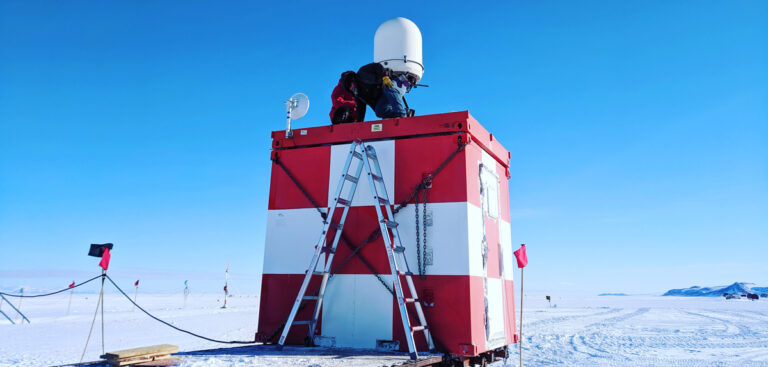
The Digital Directorate of the United States Air Force Aerospace Management Systems recently announced that EWR Radar Systems has been awarded a US$21.5m indefinite-delivery/indefinite quantity contract, providing Contractor Logistics Support (CLS) for its Portable Doppler Radar program.

Work will be performed by EWR in St Louis, Missouri, and is expected to be completed by the start of October 2025. This contract is the result of a sole-source acquisition.

The new PDR CLS contract has a value of US$21,529,141 and began immediately upon the expiration of the Air Force’s previous CLS contract, also held by EWR. Under the contract, EWR will provide contractor logistics support for the Air Force’s 22 currently fielded Portable Doppler Weather Radar Systems (E700XD), as well as 27 newly procured units from a separate contract awarded to EWR earlier this year.

EWR noted that it has a proud heritage of supplying the United States Department of Defense with weather radar systems. Since it was founded in 1982, EWR has been an industry leader in portable X-band weather radar solutions.

Additionally, the company highlighted its long experience with such systems which provides it with a detailed understanding of what it takes to build a radar system that is compact and rugged and can handle the rigors of mobile and rapid deployment in some of the most hostile conditions.

This experience is a key contributing factor in the United States Department of Defense’s decision to make EWR its primary supplier of ground-based weather radar systems.

Notably, EWR has pioneered the use of solid-state transmitters in weather radar systems. Where other Doppler radars utilize tube transmitters (klystrons, magnetrons, TWTs, etc.) that require frequent maintenance, run at high voltages and are prone to failure in difficult environments such as those found in mobile applications, the E700 PDR uses a long-life solid-state transmitter which is virtually maintenance free and consumes far less power.

The E700 PDR Weather Radar System is in use today by the US Air Force Special Operations Command, the United States Marine Corps for its Meteorological Mobile Facility (METMF) Next Generation (NEXGEN) systems and by the US Air Force for its next generation PDR (Portable Doppler Radar) program.

In addition to EWR’s line of portable weather radar systems, it also provides large, fixed-based weather radars to a wide array of clients including utility companies, oil companies, municipalities, first-alert responders and foreign governments including those of South Korea, Mexico, Indonesia, Myanmar and the United Arab Emirates.

Previous ArticleArctic Climate Forum issues 2020 seasonal climate outlook
Next Article Polarstern returns to Arctic MOSAiC floe with new fieldwork team

Read Similar Stories

Climate Measurement

Global warming reached 1.37°C in 2025 as heat accumulation hits record rate

June 12, 20263 Mins Read
Climate Measurement

Cambridge AI tool converts satellite archives into accessible Earth intelligence

June 10, 20262 Mins Read
Climate Measurement

ECMWF prepares release of new ORAS6 ocean reanalysis system

June 10, 20263 Mins Read
Latest News

NOAA’s SOLAR-1 satellite becomes operational, boosting space weather forecasting capability

June 16, 2026

Global warming reached 1.37°C in 2025 as heat accumulation hits record rate

June 12, 2026

NSF NCAR researchers develop advanced model for neighborhood-scale low-altitude wind prediction

June 11, 2026

Receive breaking stories and features in your inbox each week, for free


Enter your email address:


Supplier Spotlights
  • Senseca
Getting in Touch
  • Contact Us / Advertise
  • Meet the Editors
  • Media Pack
  • Free Weekly E-Newsletter
Our Social Channels
  • Facebook
  • LinkedIn
© 2026 UKi Media & Events a division of UKIP Media & Events Ltd
  • Cookie Policy
  • Privacy Policy
  • Terms and Conditions
  • Notice and Takedown Policy

Type above and press Enter to search. Press Esc to cancel.