

Close Menu
Meteorological Technology International
  • News
    • A-E
      • Agriculture
      • Automated Weather Stations
      • Aviation
      • Climate Measurement
      • Data
      • Developing Countries
      • Digital Applications
      • Early Warning Systems
      • Extreme Weather
    • G-P
      • Hydrology
      • Lidar
      • Lightning Detection
      • New Appointments
      • Nowcasting
      • Numerical Weather Prediction
      • Polar Weather
    • R-S
      • Radar
      • Rainfall
      • Remote Sensing
      • Renewable Energy
      • Satellites
      • Solar
      • Space Weather
      • Supercomputers
    • T-Z
      • Training
      • Transport
      • Weather Instruments
      • Wind
      • World Meteorological Organization
      • Meteorological Technology World Expo
  • Features
  • Online Magazines
    • January 2026
    • April 2025
    • January 2025
    • September 2024
    • April 2024
    • Archive Issues
    • Subscribe Free!
  • Opinion
  • Videos
  • Supplier Spotlight
  • Expo
LinkedIn X (Twitter) Facebook
  • Sign-up for Free Weekly E-Newsletter
  • Meet the Editors
  • Contact Us
  • Media Pack
LinkedIn Facebook
Subscribe
Meteorological Technology International
  • News
      • Agriculture
      • Automated Weather Stations
      • Aviation
      • Climate Measurement
      • Data
      • Developing Countries
      • Digital Applications
      • Early Warning Systems
      • Extreme Weather
      • Hydrology
      • Lidar
      • Lightning Detection
      • New Appointments
      • Nowcasting
      • Numerical Weather Prediction
      • Polar Weather
      • Radar
      • Rainfall
      • Remote Sensing
      • Renewable Energy
      • Satellites
      • Solar
      • Space Weather
      • Supercomputers
      • Training
      • Transport
      • Weather Instruments
      • Wind
      • World Meteorological Organization
      • Meteorological Technology World Expo
  • Features
  • Online Magazines
    1. April 2026
    2. January 2026
    3. September 2025
    4. April 2025
    5. January 2025
    6. September 2024
    7. April 2024
    8. January 2024
    9. Archive Issues
    10. Subscribe Free!
    Featured
    May 5, 2026

    In this Issue – April 2026

    By Web TeamMay 5, 2026
    Recent

    In this Issue – April 2026

    May 5, 2026

    In this Issue – January 2026

    November 27, 2025

    In this Issue – September 2025

    August 11, 2025
  • Opinion
  • Videos
  • Supplier Spotlight
  • Expo
Facebook LinkedIn
Subscribe
Meteorological Technology International
Climate Measurement

Arctic Climate Forum issues 2020 seasonal climate outlook

Lawrence ButcherBy Lawrence ButcherJune 17, 20203 Mins Read
Share LinkedIn Facebook Twitter Email
Share
LinkedIn Facebook Twitter Email

Arctic temperatures are continuing to warm at more than twice the global mean, according to the latest statement from the ACF.

The recently established Arctic Climate Forum (ACF) – convened by the Arctic Regional Climate Centre Network (ArcRCC-Network) under the auspices of the World Meteorological Organization (WMO) – provides consensus climate outlook statements in May prior to summer thawing and sea-ice break-up, and in October before the winter freezing and the return of sea ice.

The role of the ArcRCC-Network is to foster collaborative regional climate services among Arctic meteorological and ice services to synthesize observations, historical trends, forecast models and fill gaps with regional expertise to produce consensus climate statements.

In its latest consensus statement, the outcome of the fifth session of the ACF, which was held online on May 27-28, warned that Arctic temperatures continue to warm at more than twice the global mean.

The report noted that annual surface air temperatures over the last four years (2016–2019) in the Arctic (60°–85°N) have been the highest in the time series of observations for 1936-2019. The extent of winter sea-ice is at record low levels, and the volume of Arctic sea ice present in the month of September 2019 has declined by more than 50% compared with the mean value for 1979–2019.
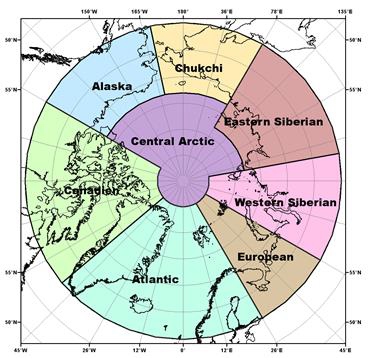
It was concluded that warmer than normal surface air temperatures over Eurasia and the Arctic Ocean contributed to below to near normal ice conditions during the 2019-2020 winter across the entire Arctic. Furthermore, forecast variability in above normal temperatures and wetter-than-average conditions across the different Arctic regions for June–August 2020 are contributing to the spatial variability in spring break-up and minimum sea ice extent forecast for the summer of 2020.

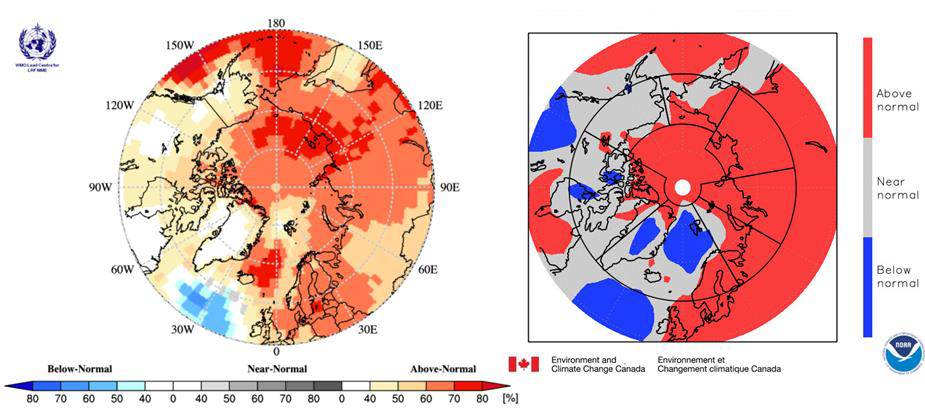
It was also found that the average surface air temperatures for FMA (February, March, April) 2020 ranged from lower than normal in the western hemisphere to higher than normal in the eastern hemisphere, with Siberia experiencing one of its warmest FMA on record. Above normal temperatures are expected to continue across the majority of the Arctic for June–August 2020.
Meanwhile, wetter than average conditions during FMA 2020 were observed across the majority of the Arctic. These conditions are expected to continue across Alaska, and portions of the Chukchi, Eastern Siberia, and northern Canada regions.

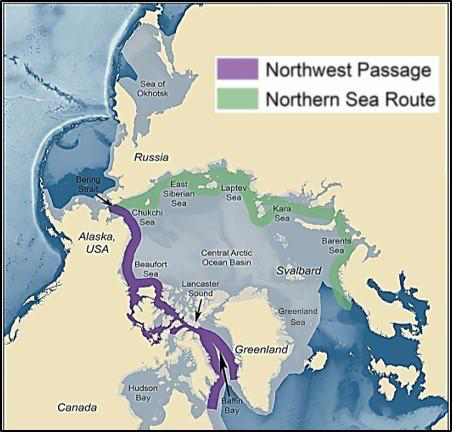
In the northern hemisphere in March 2020, maximum sea ice extent was the 11th lowest since 1979. Earlier than normal spring break-up is expected for the majority of the regions across the Arctic, with the exception of the Barents Sea, Greenland Sea, and the eastern half of Hudson Bay, where a later than normal spring break-up is expected.

Below normal 2020 minimum sea ice extent is forecast for the majority of the Arctic regions; exceptions are above normal conditions forecast for the Barents and Greenland Seas.
Previous ArticleSpeed, as well as size, matters with solar eruptions
Next Article US Air Force extends its rugged weather radar capabilities

Read Similar Stories

Climate Measurement

Cloud measurement campaign targets improved climate model accuracy

May 20, 20263 Mins Read
Videos

VIDEO: Meteosat-12 imagery over Europe and Africa made available via YouTube streams

May 19, 20262 Mins Read
Extreme Weather

Impacts of extreme weather and rising temperatures intensify across Latin America and Caribbean

May 15, 20263 Mins Read
Latest News

R.M. Young Company reengineers SNOdar snow-depth sensor

May 21, 2026

SMILE mission launches to study Earth’s magnetic shield and space weather

May 20, 2026

Cloud measurement campaign targets improved climate model accuracy

May 20, 2026

Receive breaking stories and features in your inbox each week, for free


Enter your email address:


Supplier Spotlights
  • EUMETSAT
Getting in Touch
  • Contact Us / Advertise
  • Meet the Editors
  • Media Pack
  • Free Weekly E-Newsletter
Our Social Channels
  • Facebook
  • LinkedIn
© 2026 UKi Media & Events a division of UKIP Media & Events Ltd
  • Cookie Policy
  • Privacy Policy
  • Terms and Conditions
  • Notice and Takedown Policy

Type above and press Enter to search. Press Esc to cancel.