


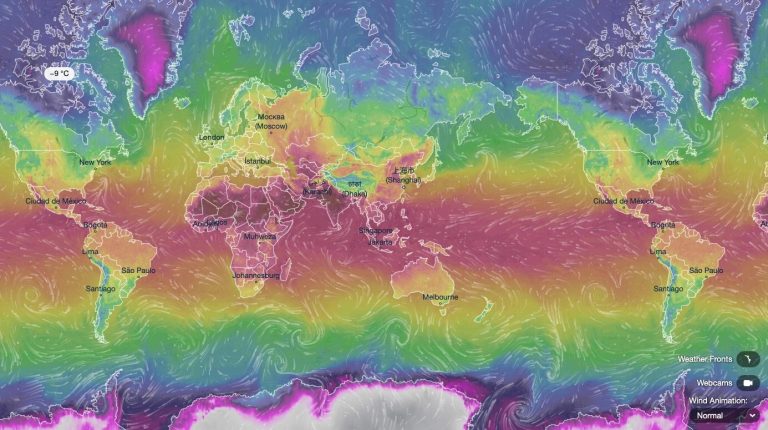
Weather platform Ventusky has introduced fire monitoring to its maps, combining wildfire data with existing meteorological and environmental layers.
The update allows users to view satellite-detected fires worldwide within the same interface that displays wind, precipitation, temperature, humidity, satellite imagery and air quality. In some countries, the platform also includes official fire incident data from emergency authorities.
According to Ventusky, the addition is intended to highlight the relationship between weather conditions and wildfire behavior. Wind, dry air and changes in rainfall or humidity can all influence how fires spread and evolve.
Fire markers are based on satellite detection of thermal anomalies, which can indicate potential fire activity, including in remote areas where on-the-ground information may be limited.
In the United States, Canada and Australia, the platform supplements this data with official reports. Depending on availability, these may include details such as affected area, fire intensity, number of personnel involved, fuel type and containment levels. Prescribed burns are identified separately from uncontrolled fires.
By integrating these datasets, users can assess fire activity alongside relevant weather factors. This includes monitoring wind speed and direction, rainfall, humidity levels, satellite imagery and PM2.5 concentrations associated with smoke.
Ventusky said the feature is designed to provide a tool for broader situational awareness rather than replacing official emergency communications. “The feature does not replace official emergency communication. Instead, it gives users a fast first view of a developing situation and the surrounding weather,” the company stated.
The platform also continues to display official meteorological and hydrological warnings issued by national weather services. These alerts cover hazards such as strong winds, thunderstorms, heavy rain, flooding, snow, ice, extreme temperatures and fire weather conditions.
Ventusky said it aims to bring together multiple data sources – such as satellite detections, incident reports and weather forecasts – into a single interface, reducing the need to consult separate systems.
In related news, Copernicus launches Weather Replay app to explore historical weather data