


Close Menu
Meteorological Technology International
  • News
    • A-E
      • Agriculture
      • Automated Weather Stations
      • Aviation
      • Climate Measurement
      • Data
      • Developing Countries
      • Digital Applications
      • Early Warning Systems
      • Extreme Weather
    • G-P
      • Hydrology
      • Lidar
      • Lightning Detection
      • New Appointments
      • Nowcasting
      • Numerical Weather Prediction
      • Polar Weather
    • R-S
      • Radar
      • Rainfall
      • Remote Sensing
      • Renewable Energy
      • Satellites
      • Solar
      • Space Weather
      • Supercomputers
    • T-Z
      • Training
      • Transport
      • Weather Instruments
      • Wind
      • World Meteorological Organization
      • Meteorological Technology World Expo
  • Features
  • Online Magazines
    • January 2026
    • April 2025
    • January 2025
    • September 2024
    • April 2024
    • Archive Issues
    • Subscribe Free!
  • Opinion
  • Videos
  • Supplier Spotlight
  • Expo
LinkedIn X (Twitter) Facebook
  • Sign-up for Free Weekly E-Newsletter
  • Meet the Editors
  • Contact Us
  • Media Pack
LinkedIn Facebook
Subscribe
Meteorological Technology International
  • News
      • Agriculture
      • Automated Weather Stations
      • Aviation
      • Climate Measurement
      • Data
      • Developing Countries
      • Digital Applications
      • Early Warning Systems
      • Extreme Weather
      • Hydrology
      • Lidar
      • Lightning Detection
      • New Appointments
      • Nowcasting
      • Numerical Weather Prediction
      • Polar Weather
      • Radar
      • Rainfall
      • Remote Sensing
      • Renewable Energy
      • Satellites
      • Solar
      • Space Weather
      • Supercomputers
      • Training
      • Transport
      • Weather Instruments
      • Wind
      • World Meteorological Organization
      • Meteorological Technology World Expo
  • Features
  • Online Magazines
    1. April 2026
    2. January 2026
    3. September 2025
    4. April 2025
    5. January 2025
    6. September 2024
    7. April 2024
    8. January 2024
    9. Archive Issues
    10. Subscribe Free!
    Featured
    May 5, 2026

    In this Issue – April 2026

    By Web TeamMay 5, 2026
    Recent

    In this Issue – April 2026

    May 5, 2026

    In this Issue – January 2026

    November 27, 2025

    In this Issue – September 2025

    August 11, 2025
  • Opinion
  • Videos
  • Supplier Spotlight
  • Expo
Facebook LinkedIn
Subscribe
Meteorological Technology International
Digital Applications

AI models lag behind traditional systems in predicting extreme weather

Alex PackBy Alex PackMay 5, 20262 Mins Read
Share LinkedIn Facebook Twitter Email
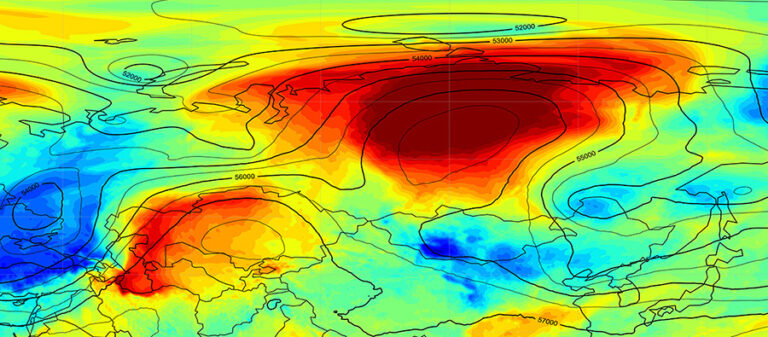
Heat map image showing temperature anomalies during the 2020 Siberian heatwave that shattered historical records and triggered widespread impacts, including severe wildfires. This image is generated using data from the European Centre for Medium-Range Weather Forecasts (ECMWF).
Temperature anomalies during the 2020 Siberian heatwave that shattered historical records and triggered widespread impacts, including severe wildfires. This image is generated using data from the European Centre for Medium-Range Weather Forecasts (ECMWF).
Share
LinkedIn Facebook Twitter Email

Artificial intelligence-based weather forecasting models remain less reliable than traditional numerical systems when predicting extreme weather events, according to new research from the University of Geneva and the Karlsruhe Institute of Technology.

The study, published in Science Advances, found that while AI models can outperform conventional approaches under typical conditions, they struggle to accurately predict the intensity and frequency of extreme weather events such as heatwaves, heavy rainfall and strong winds.

Meteorological forecasting has long relied on numerical models that simulate atmospheric conditions using physical laws and large datasets collected from satellites, weather stations and aircraft. Systems such as the High Resolution Forecast (HRES), used by the European Centre for Medium-Range Weather Forecasts (ECMWF), generate forecasts for multiple countries but require significant computing power.

Recent advances in AI have introduced alternative approaches that reduce computational costs and processing time. However, the research highlights key limitations when these models are applied to rare or unprecedented events.

“The introduction, three years ago, of the first models based on artificial intelligence has opened the way to simplifying processes and reducing their costs,” said Sebastian Engelke, full professor at the University of Geneva. “But the main problem with AI models is their difficulty in generalizing beyond the data on which they were trained.”

The study found that AI models consistently produced larger errors than traditional systems when forecasting extreme temperatures and wind conditions up to 10 days in advance.

Zhongwei Zhang, postdoctoral researcher at the Karlsruhe Institute of Technology and first author of the study, said this limitation stems from the historical datasets used to train AI systems. “They tend to be limited to extreme values already observed in the past, as if they had an implicit ceiling,” he explained. “By contrast, conventional models, based on the laws of atmospheric physics, are not constrained by this limitation and can theoretically represent unprecedented situations.”

The findings come as extreme weather events become more frequent and severe due to climate change, increasing the importance of accurate forecasting for early warning systems and disaster preparedness.

Researchers said the results underline the need for further development and evaluation of AI-based forecasting tools before they can be relied on independently in operational environments.

Related news, AI model improves real-time prediction of wildfire spread

Previous ArticleResearchers investigate links between air pollution, extreme weather and climate
Next Article In this Issue – April 2026

Read Similar Stories

Extreme Weather

Researchers investigate links between air pollution, extreme weather and climate

May 1, 20262 Mins Read
Early Warning Systems

China expands MAZU early warning system for developing countries

April 30, 20262 Mins Read
Digital Applications

ForecastWatch expands with launch of new independent platform for weather forecast verification

April 28, 20262 Mins Read
Latest News

In this Issue – April 2026

May 5, 2026

AI models lag behind traditional systems in predicting extreme weather

May 5, 2026

Researchers investigate links between air pollution, extreme weather and climate

May 1, 2026

Receive breaking stories and features in your inbox each week, for free


Enter your email address:


Supplier Spotlights
  • GAMIC GmbH
Getting in Touch
  • Contact Us / Advertise
  • Meet the Editors
  • Media Pack
  • Free Weekly E-Newsletter
Our Social Channels
  • Facebook
  • LinkedIn
© 2026 UKi Media & Events a division of UKIP Media & Events Ltd
  • Cookie Policy
  • Privacy Policy
  • Terms and Conditions
  • Notice and Takedown Policy

Type above and press Enter to search. Press Esc to cancel.