


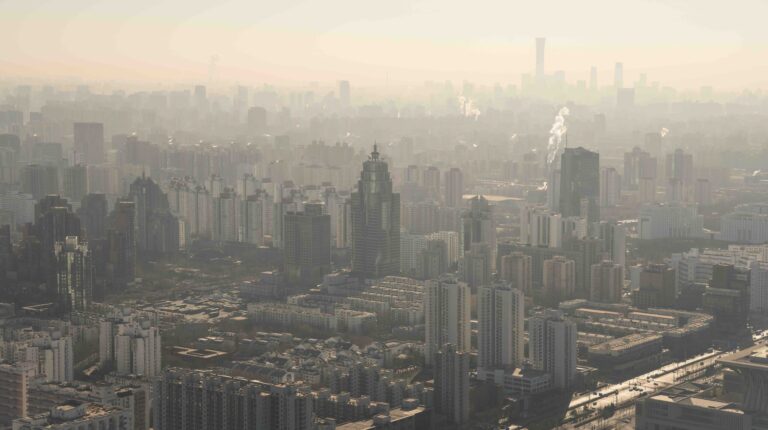
Scientists at the MAC-Air Center are studying how changes in atmospheric composition are influencing air quality, weather and climate, with the aim of improving forecasts and supporting measures to address pollution and climate change.
The initiative brings together multiple research institutions, including the Chinese Academy of Sciences and the Max Planck Institute for Chemistry, alongside partners such as the Indian Institute of Technology Madras, Seoul National University, Tsinghua University, Nanjing University and the University of Helsinki.
Researchers are focusing on the interactions between aerosols, solar radiation and clouds, using China’s rapidly changing atmospheric conditions as a case study. The country’s shifting environmental conditions provide an opportunity to examine how air pollution and climate-related factors interact.
To support the work, scientists collect atmospheric chemistry data from sources including the 325m Tower Observatory in Beijing. They also use simulations powered by Earthlab, a supercomputing platform designed for atmospheric and climate research.
The research combines observational data with historical datasets and artificial intelligence-supported meteorological models. The goal is to better understand how atmospheric chemistry influences weather systems and climate patterns, and to translate these findings into improved forecasting capabilities.
“The scientific findings are also directly relevant to Europe and Germany,” said Yafang Cheng, director at the Max Planck Institute for Chemistry and co-head of the MAC-Air Center. “After all, floods, heatwaves and other environmental damage are on the rise here too. Research can help to improve forecasts, adaptation strategies and resilience.”
In the longer term, the MAC-Air Center aims to reduce exposure to particulate matter, strengthen urban climate resilience and enhance early warning systems for extreme weather events.
The collaboration also includes a focus on training early-career researchers through joint supervision, exchange programs and cross-site training. These initiatives are intended to provide experience with a range of datasets, methodologies and research approaches across participating institutions.
In related news, European climate report highlights record heat, glacier loss and rising extremes