Close Menu
Meteorological Technology International
  • News
    • A-E
      • Agriculture
      • Automated Weather Stations
      • Aviation
      • Climate Measurement
      • Data
      • Developing Countries
      • Digital Applications
      • Early Warning Systems
      • Extreme Weather
    • G-P
      • Hydrology
      • Lidar
      • Lightning Detection
      • New Appointments
      • Nowcasting
      • Numerical Weather Prediction
      • Polar Weather
    • R-S
      • Radar
      • Rainfall
      • Remote Sensing
      • Renewable Energy
      • Satellites
      • Solar
      • Space Weather
      • Supercomputers
    • T-Z
      • Training
      • Transport
      • Weather Instruments
      • Wind
      • World Meteorological Organization
      • Meteorological Technology World Expo
  • Features
  • Online Magazines
    • January 2026
    • April 2025
    • January 2025
    • September 2024
    • April 2024
    • Archive Issues
    • Subscribe Free!
  • Opinion
  • Videos
  • Supplier Spotlight
  • Expo
LinkedIn X (Twitter) Facebook
  • Sign-up for Free Weekly E-Newsletter
  • Meet the Editors
  • Contact Us
  • Media Pack
LinkedIn Facebook
Subscribe
Meteorological Technology International
  • News
      • Agriculture
      • Automated Weather Stations
      • Aviation
      • Climate Measurement
      • Data
      • Developing Countries
      • Digital Applications
      • Early Warning Systems
      • Extreme Weather
      • Hydrology
      • Lidar
      • Lightning Detection
      • New Appointments
      • Nowcasting
      • Numerical Weather Prediction
      • Polar Weather
      • Radar
      • Rainfall
      • Remote Sensing
      • Renewable Energy
      • Satellites
      • Solar
      • Space Weather
      • Supercomputers
      • Training
      • Transport
      • Weather Instruments
      • Wind
      • World Meteorological Organization
      • Meteorological Technology World Expo
  • Features
  • Online Magazines
    1. January 2026
    2. September 2025
    3. April 2025
    4. January 2025
    5. September 2024
    6. April 2024
    7. January 2024
    8. September 2023
    9. April 2023
    10. Archive Issues
    11. Subscribe Free!
    Featured
    November 27, 2025

    In this Issue – January 2026

    By Hazel KingNovember 27, 2025
    Recent

    In this Issue – January 2026

    November 27, 2025

    In this Issue – September 2025

    August 11, 2025

    In this Issue – April 2025

    April 15, 2025
  • Opinion
  • Videos
  • Supplier Spotlight
  • Expo
Facebook LinkedIn
Subscribe
Meteorological Technology International
Digital Applications

NCAR opens revamped supercomputing center

Dan SymondsBy Dan SymondsMay 15, 20232 Mins Read
Share LinkedIn Facebook Twitter Email
Share
LinkedIn Facebook Twitter Email

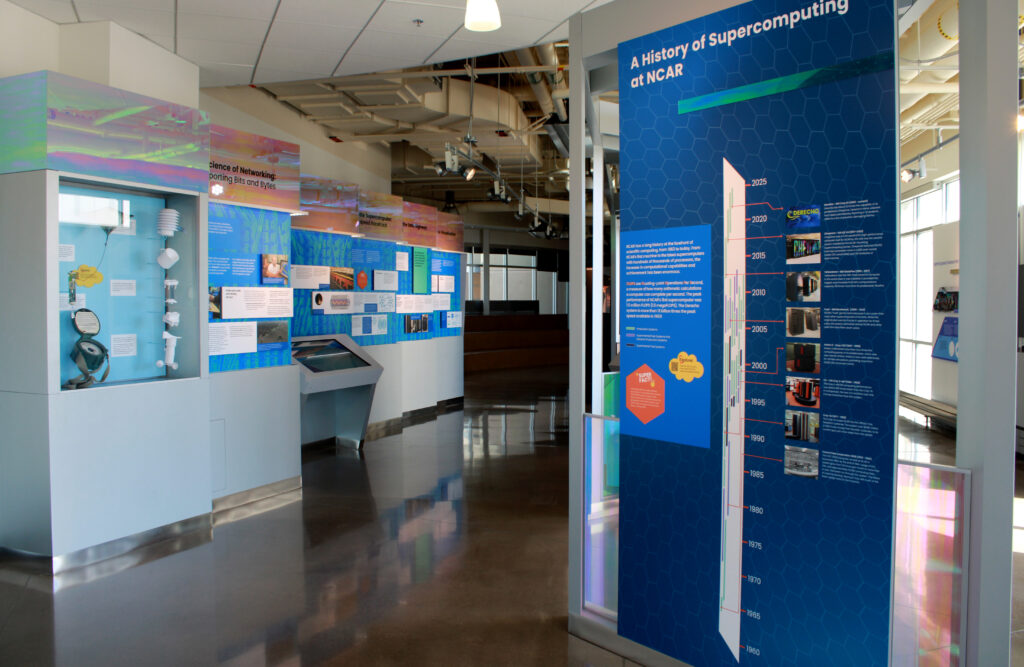
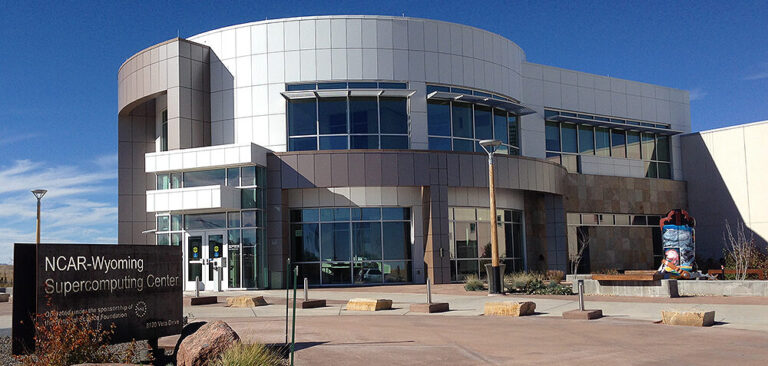
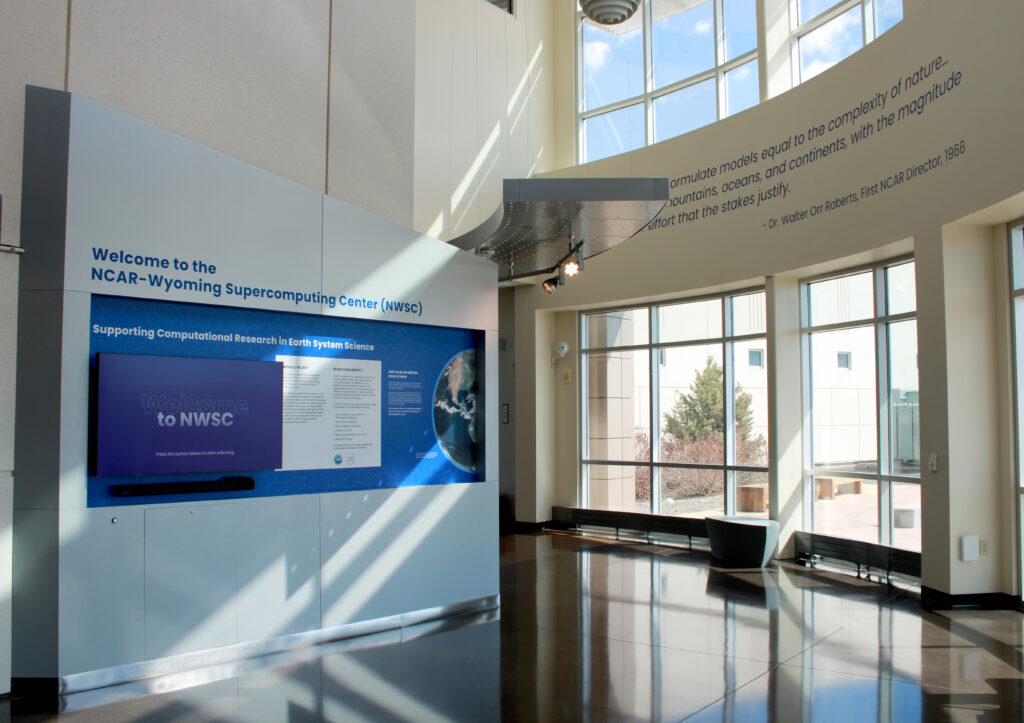
The US National Center for Atmospheric Research (NCAR) reopened the visitor center at its NCAR-Wyoming Supercomputing Center (NWSC) in Cheyenne on May 15 following a complete redesign of the facility.

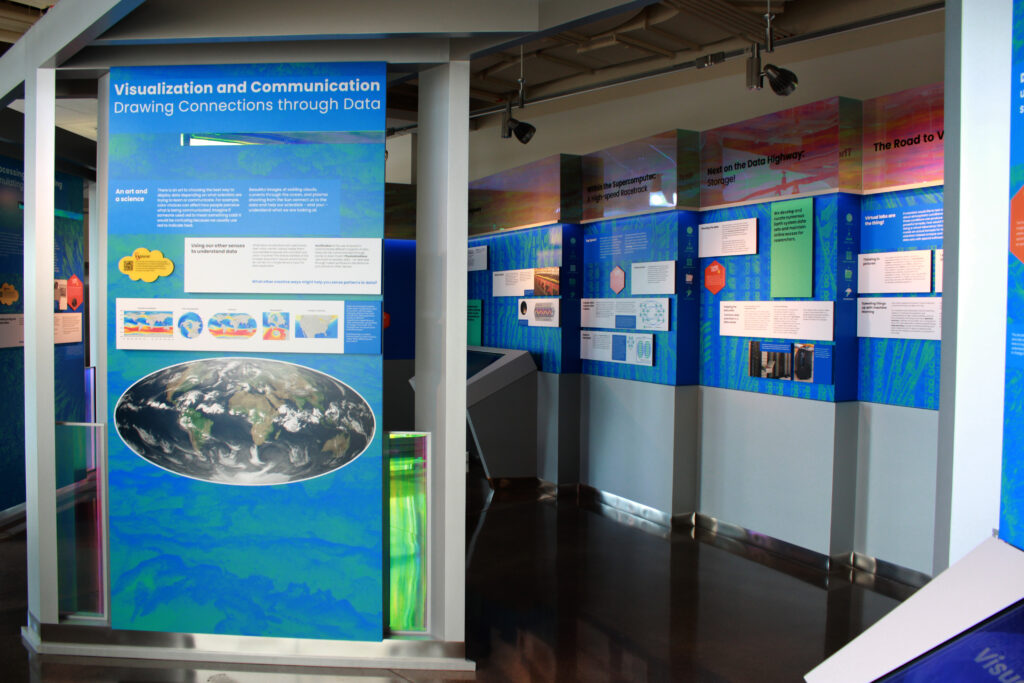
The upgrade included the installation of several new videos and interactive displays to highlight the role of supercomputing in scientific discovery.
Credit: NCAR

The NWSC’s newest supercomputer, named Derecho, can perform 19.87 quadrillion calculations per second and will begin operations later this year. This will enable researchers at NCAR and across the US to advance their understanding of climate, weather, geological processes and space weather, among other aspects of the Earth system.

A J Lauer, community and workforce development director at NCAR’s computing lab, said, “Although big data is fundamental for advancing research, it can be challenging to explain how it enables scientists to gain new insights into our planet. One of our goals with the new exhibit is to demystify the role of data for scientific discovery.”

For one of the interactive exhibits, visitors can ‘fly’ an airplane over a hurricane and release dropsondes into the storm, collecting information about temperature, humidity and wind speed. Another interactive exhibit enables visitors to engage in ‘data racing’, in which they manage traffic to get as many race-car packets as possible through a computing network.

The exhibits also illustrate the ways that NCAR scientists use data to advance science and help society, such as developing systems to reduce aircraft delays, predict floods and droughts, understand the sun’s magnetic fields that create disruptive solar storms, and identify regional vulnerabilities to sea-level rise.

Other highlights of the visitor center include an actual rack from a former NWSC supercomputer, information about the NWSC and its 11-year history, and a video about the future of supercomputing.

For more on digital applications, please click here.
Credit: NCAR
Credit: NCAR
Previous ArticleNOAA studies impact of ocean environment on global climate from underwater lab
Next Article Tomorrow.io launches AI-enhanced precipitation nowcasting tool

Read Similar Stories

Digital Applications

ForecastWatch expands with launch of new independent platform for weather forecast verification

April 28, 20262 Mins Read
Extreme Weather

AI model improves real-time prediction of wildfire spread

April 16, 20263 Mins Read
Climate Measurement

New tool speeds up climate model evaluation

April 13, 20262 Mins Read
Latest News

ForecastWatch expands with launch of new independent platform for weather forecast verification

April 28, 2026

European climate report highlights record heat, glacier loss and rising extremes

April 27, 2026

WMO signals increasing likelihood of El Niño developing in 2026

April 24, 2026

Receive breaking stories and features in your inbox each week, for free


Enter your email address:


Supplier Spotlights
  • Raymetrics
Getting in Touch
  • Contact Us / Advertise
  • Meet the Editors
  • Media Pack
  • Free Weekly E-Newsletter
Our Social Channels
  • Facebook
  • LinkedIn
© 2026 UKi Media & Events a division of UKIP Media & Events Ltd
  • Cookie Policy
  • Privacy Policy
  • Terms and Conditions
  • Notice and Takedown Policy

Type above and press Enter to search. Press Esc to cancel.