


Close Menu
Meteorological Technology International
  • News
    • A-E
      • Agriculture
      • Automated Weather Stations
      • Aviation
      • Climate Measurement
      • Data
      • Developing Countries
      • Digital Applications
      • Early Warning Systems
      • Extreme Weather
    • G-P
      • Hydrology
      • Lidar
      • Lightning Detection
      • New Appointments
      • Nowcasting
      • Numerical Weather Prediction
      • Polar Weather
    • R-S
      • Radar
      • Rainfall
      • Remote Sensing
      • Renewable Energy
      • Satellites
      • Solar
      • Space Weather
      • Supercomputers
    • T-Z
      • Training
      • Transport
      • Weather Instruments
      • Wind
      • World Meteorological Organization
      • Meteorological Technology World Expo
  • Features
  • Online Magazines
    • January 2026
    • April 2025
    • January 2025
    • September 2024
    • April 2024
    • Archive Issues
    • Subscribe Free!
  • Opinion
  • Videos
  • Supplier Spotlight
  • Expo
LinkedIn X (Twitter) Facebook
  • Sign-up for Free Weekly E-Newsletter
  • Meet the Editors
  • Contact Us
  • Media Pack
LinkedIn Facebook
Subscribe
Meteorological Technology International
  • News
      • Agriculture
      • Automated Weather Stations
      • Aviation
      • Climate Measurement
      • Data
      • Developing Countries
      • Digital Applications
      • Early Warning Systems
      • Extreme Weather
      • Hydrology
      • Lidar
      • Lightning Detection
      • New Appointments
      • Nowcasting
      • Numerical Weather Prediction
      • Polar Weather
      • Radar
      • Rainfall
      • Remote Sensing
      • Renewable Energy
      • Satellites
      • Solar
      • Space Weather
      • Supercomputers
      • Training
      • Transport
      • Weather Instruments
      • Wind
      • World Meteorological Organization
      • Meteorological Technology World Expo
  • Features
  • Online Magazines
    1. January 2026
    2. September 2025
    3. April 2025
    4. January 2025
    5. September 2024
    6. April 2024
    7. January 2024
    8. September 2023
    9. April 2023
    10. Archive Issues
    11. Subscribe Free!
    Featured
    November 27, 2025

    In this Issue – January 2026

    By Hazel KingNovember 27, 2025
    Recent

    In this Issue – January 2026

    November 27, 2025

    In this Issue – September 2025

    August 11, 2025

    In this Issue – April 2025

    April 15, 2025
  • Opinion
  • Videos
  • Supplier Spotlight
  • Expo
Facebook LinkedIn
Subscribe
Meteorological Technology International
Automated Weather Stations

Disposables drones to improve hurricane observations

Helen NormanBy Helen NormanNovember 28, 20192 Mins Read
Share LinkedIn Facebook Twitter Email
Share
LinkedIn Facebook Twitter Email

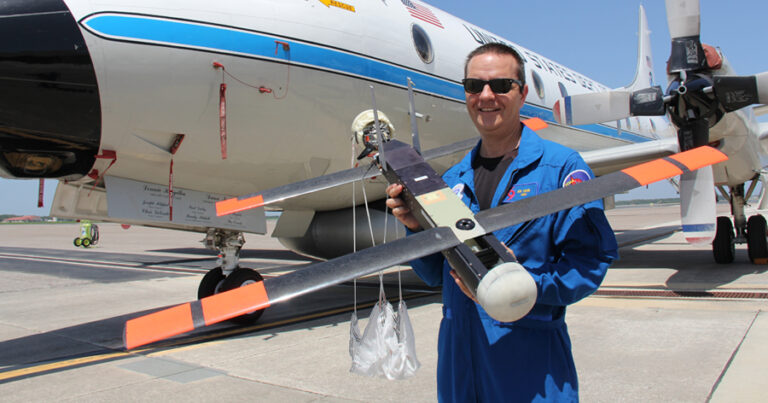
A new type of disposable drone has been developed to enable scientists to collect detail observations of hurricane winds that occur just above the surface of the ocean, near the eyewall of a storm.

Scientists have flown the Coyote drone into hurricanes Maria and Michael – two of the most powerful Atlantic basin hurricanes on record. The unmanned aerial system (UAS) measured atmospheric conditions as low as 360ft above the water and winds of up to 194mph.

A new paper by a team of scientists, led by the National Oceanic and Atmospheric Administration (NOAA) and National Center for Atmospheric Research (NCAR), demonstrates that such observations can improve the performance of hurricane models used by forecasters.

“We have an instrument to collect data that we’ve never been able to collect before,” said NCAR scientist George Bryan, a co-author of the new paper. “This is a new frontier in measuring the atmosphere.”

The observations will enable scientists to determine the extent to which the gusts shift and fluctuate, which can have significant implications for hurricane behavior as well as the potential for damage once the storm moves onshore.

Bryan said the drone’s measurements may also help answer a longstanding question about the interplay of hurricane winds and the ocean surface. Strong winds typically whip up ocean waves, which then exert a drag on the winds that can slow them down. Some evidence, however, indicates that hurricane-force winds cause waves to break in a way that would not exert such a drag, as well as stirring up so much froth that the water surface essentially has a lubricating effect.

“With the drone, we can get direct measurements of these processes for the first time,” Bryan said. “These data are crucial to help us configure our models to produce better simulations and forecasts.”

The new paper, Eye of the Storm: Observing Hurricanes with a Small Unmanned Aircraft System, is available online here.

Previous ArticleGlobal space weather center for aviation starts operations in Helsinki
Next Article WMO expresses concern about radio frequency decision

Read Similar Stories

Agriculture

Extreme heat posing significant risks to ecosystems and agriculture, FAO-WMO report warns

April 22, 20263 Mins Read
Extreme Weather

AI model improves real-time prediction of wildfire spread

April 16, 20263 Mins Read
Climate Measurement

Study identifies atmospheric trigger behind flash droughts in Puerto Rico

April 15, 20263 Mins Read
Latest News

Extreme heat posing significant risks to ecosystems and agriculture, FAO-WMO report warns

April 22, 2026

Atmospheric G2 secures Japan weather forecasting license

April 21, 2026

China completes Antarctic meteorological research mission with Xuelong icebreaker

April 21, 2026

Receive breaking stories and features in your inbox each week, for free


Enter your email address:


Supplier Spotlights
  • ROTRONIC AG
Getting in Touch
  • Contact Us / Advertise
  • Meet the Editors
  • Media Pack
  • Free Weekly E-Newsletter
Our Social Channels
  • Facebook
  • LinkedIn
© 2026 UKi Media & Events a division of UKIP Media & Events Ltd
  • Cookie Policy
  • Privacy Policy
  • Terms and Conditions
  • Notice and Takedown Policy

Type above and press Enter to search. Press Esc to cancel.