


Close Menu
Meteorological Technology International
  • News
    • A-E
      • Agriculture
      • Automated Weather Stations
      • Aviation
      • Climate Measurement
      • Data
      • Developing Countries
      • Digital Applications
      • Early Warning Systems
      • Extreme Weather
    • G-P
      • Hydrology
      • Lidar
      • Lightning Detection
      • New Appointments
      • Nowcasting
      • Numerical Weather Prediction
      • Polar Weather
    • R-S
      • Radar
      • Rainfall
      • Remote Sensing
      • Renewable Energy
      • Satellites
      • Solar
      • Space Weather
      • Supercomputers
    • T-Z
      • Training
      • Transport
      • Weather Instruments
      • Wind
      • World Meteorological Organization
      • Meteorological Technology World Expo
  • Features
  • Online Magazines
    • January 2026
    • April 2025
    • January 2025
    • September 2024
    • April 2024
    • Archive Issues
    • Subscribe Free!
  • Opinion
  • Videos
  • Supplier Spotlight
  • Expo
LinkedIn X (Twitter) Facebook
  • Sign-up for Free Weekly E-Newsletter
  • Meet the Editors
  • Contact Us
  • Media Pack
LinkedIn Facebook
Subscribe
Meteorological Technology International
  • News
      • Agriculture
      • Automated Weather Stations
      • Aviation
      • Climate Measurement
      • Data
      • Developing Countries
      • Digital Applications
      • Early Warning Systems
      • Extreme Weather
      • Hydrology
      • Lidar
      • Lightning Detection
      • New Appointments
      • Nowcasting
      • Numerical Weather Prediction
      • Polar Weather
      • Radar
      • Rainfall
      • Remote Sensing
      • Renewable Energy
      • Satellites
      • Solar
      • Space Weather
      • Supercomputers
      • Training
      • Transport
      • Weather Instruments
      • Wind
      • World Meteorological Organization
      • Meteorological Technology World Expo
  • Features
  • Online Magazines
    1. April 2026
    2. January 2026
    3. September 2025
    4. April 2025
    5. January 2025
    6. September 2024
    7. April 2024
    8. January 2024
    9. Archive Issues
    10. Subscribe Free!
    Featured
    May 5, 2026

    In this Issue – April 2026

    By Web TeamMay 5, 2026
    Recent

    In this Issue – April 2026

    May 5, 2026

    In this Issue – January 2026

    November 27, 2025

    In this Issue – September 2025

    August 11, 2025
  • Opinion
  • Videos
  • Supplier Spotlight
  • Expo
Facebook LinkedIn
Subscribe
Meteorological Technology International
Extreme Weather

UK Met Office to update power outage predictions for windstorms

Elizabeth BakerBy Elizabeth BakerMarch 31, 20253 Mins Read
Share LinkedIn Facebook Twitter Email
A team of researchers – led by Colin Manning, research associate at Newcastle University and visiting scientist at the Met Office – have published a study, “Antecedent rainfall, wind direction and seasonal effects may amplify risk of wind-driven power outages,” which highlights that incorporating the additional factors into a statistical model, alongside wind speed, greatly enhances the predictive accuracy of power outages during windstorms.  
Share
LinkedIn Facebook Twitter Email

A team of researchers – led by Colin Manning, a research associate at Newcastle University and visiting scientist at the Met Office – have published a study, Antecedent rainfall, wind direction and seasonal effects may amplify risk of wind-driven power outages, which highlights that incorporating the additional factors into a statistical model, alongside wind speed, greatly enhances the predictive accuracy of power outages during windstorms.

UK windstorm hazards

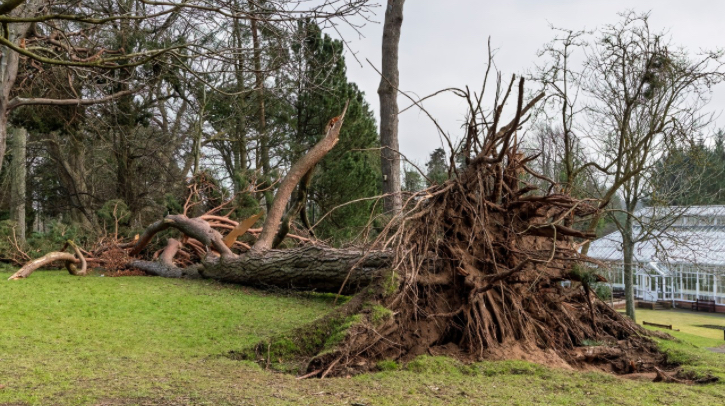
Windstorms are reportedly the leading cause of major power outages in the UK, primarily due to windthrow – the uprooting or breakage of trees, which then fall on overhead power lines. According to the Met Office, traditional risk assessments in the UK have focused solely on wind speed, overlooking critical factors that influence windthrow, such as antecedent rainfall, wind direction and seasonal elements like leaf cover. By analyzing power outage data from 2006 to 2018, the researchers have demonstrated that neglecting these additional factors can lead to an underestimation – by two to five times – of the likelihood of large power outages during windstorms.

Improving predictive accuracy

The probability of outages was found to be three to four times higher in summer than in winter for the same wind speed, likely due to leaves on trees providing a greater wind loading; and two to three times higher in wet conditions, and when wind direction largely deviates from the prevailing southwesterly direction. This was understood to be because trees are more vulnerable to uprooting in such conditions. When all conditions align, the probability of power outages can increase 4-5-fold, especially at lower wind speeds.

Manning said, “Windstorms have long been recognized as a threat to the UK’s electricity distribution networks, which are vital components of the nation’s critical infrastructure. Failures in these networks can cascade through other systems, affecting essential services. By taking the multiple weather conditions into consideration, we can significantly improve the accuracy of power outage predictions and better prepare for the impacts of extreme weather events.”

The research indicated the importance of understanding regional variability in the influence of these factors. Tree trimming practices, tree species and soil characteristics can vary regionally, highlighting the need for localized risk assessments. It also underscored the importance of understanding how these additional factors may change in a future climate if we are to accurately project the changing likelihood of power outages in the future.

Prof. Lizzie Kendon, strategic head of climate processes and projections at the Met Office, concluded, “This is the first UK study demonstrating the importance of additional factors affecting wind-driven power outages. Understanding how these factors will change and including them in future risk assessments is critical for accurately projecting the changing likelihood of power outages in the future. Changes in the seasonality of storms and increases in heavy rainfall with warming may act to compound the impact of strong windstorms in the future.”

In related news, the UK Met Office recently developed guidance and tools to improve the prediction of life-threatening flash flooding. Click here to read the full story.

Previous ArticleNPL and MSL detect earthquakes in Pacific Ocean using pioneering detection technique
Next Article Japan and Fiji to launch ¥1.75m meteorological partnership

Read Similar Stories

Extreme Weather

Impacts of extreme weather and rising temperatures intensify across Latin America and Caribbean

May 15, 20263 Mins Read
Automated Weather Stations

UNESCO hands over nine automated weather stations to the Ghana Meteorological Agency

May 12, 20262 Mins Read
Extreme Weather

Wildfires can create ‘burn scar heat islands’ that alter weather patterns, study finds

May 6, 20263 Mins Read
Latest News

R.M. Young Company reengineers SNOdar snow-depth sensor

May 21, 2026

SMILE mission launches to study Earth’s magnetic shield and space weather

May 20, 2026

Cloud measurement campaign targets improved climate model accuracy

May 20, 2026

Receive breaking stories and features in your inbox each week, for free


Enter your email address:


Supplier Spotlights
  • MicroStep-MIS
Getting in Touch
  • Contact Us / Advertise
  • Meet the Editors
  • Media Pack
  • Free Weekly E-Newsletter
Our Social Channels
  • Facebook
  • LinkedIn
© 2026 UKi Media & Events a division of UKIP Media & Events Ltd
  • Cookie Policy
  • Privacy Policy
  • Terms and Conditions
  • Notice and Takedown Policy

Type above and press Enter to search. Press Esc to cancel.