


Close Menu
Meteorological Technology International
  • News
    • A-E
      • Agriculture
      • Automated Weather Stations
      • Aviation
      • Climate Measurement
      • Data
      • Developing Countries
      • Digital Applications
      • Early Warning Systems
      • Extreme Weather
    • G-P
      • Hydrology
      • Lidar
      • Lightning Detection
      • New Appointments
      • Nowcasting
      • Numerical Weather Prediction
      • Polar Weather
    • R-S
      • Radar
      • Rainfall
      • Remote Sensing
      • Renewable Energy
      • Satellites
      • Solar
      • Space Weather
      • Supercomputers
    • T-Z
      • Training
      • Transport
      • Weather Instruments
      • Wind
      • World Meteorological Organization
      • Meteorological Technology World Expo
  • Features
  • Online Magazines
    • January 2026
    • April 2025
    • January 2025
    • September 2024
    • April 2024
    • Archive Issues
    • Subscribe Free!
  • Opinion
  • Videos
  • Supplier Spotlight
  • Expo
LinkedIn X (Twitter) Facebook
  • Sign-up for Free Weekly E-Newsletter
  • Meet the Editors
  • Contact Us
  • Media Pack
LinkedIn Facebook
Subscribe
Meteorological Technology International
  • News
      • Agriculture
      • Automated Weather Stations
      • Aviation
      • Climate Measurement
      • Data
      • Developing Countries
      • Digital Applications
      • Early Warning Systems
      • Extreme Weather
      • Hydrology
      • Lidar
      • Lightning Detection
      • New Appointments
      • Nowcasting
      • Numerical Weather Prediction
      • Polar Weather
      • Radar
      • Rainfall
      • Remote Sensing
      • Renewable Energy
      • Satellites
      • Solar
      • Space Weather
      • Supercomputers
      • Training
      • Transport
      • Weather Instruments
      • Wind
      • World Meteorological Organization
      • Meteorological Technology World Expo
  • Features
  • Online Magazines
    1. April 2026
    2. January 2026
    3. September 2025
    4. April 2025
    5. January 2025
    6. September 2024
    7. April 2024
    8. January 2024
    9. Archive Issues
    10. Subscribe Free!
    Featured
    May 5, 2026

    In this Issue – April 2026

    By Web TeamMay 5, 2026
    Recent

    In this Issue – April 2026

    May 5, 2026

    In this Issue – January 2026

    November 27, 2025

    In this Issue – September 2025

    August 11, 2025
  • Opinion
  • Videos
  • Supplier Spotlight
  • Expo
Facebook LinkedIn
Subscribe
Meteorological Technology International
Hydrology

Great Lakes ice extent reaches record low for time of year

Dan SymondsBy Dan SymondsFebruary 22, 20233 Mins Read
Share LinkedIn Facebook Twitter Email
Photo credit: Pixabay
Share
LinkedIn Facebook Twitter Email

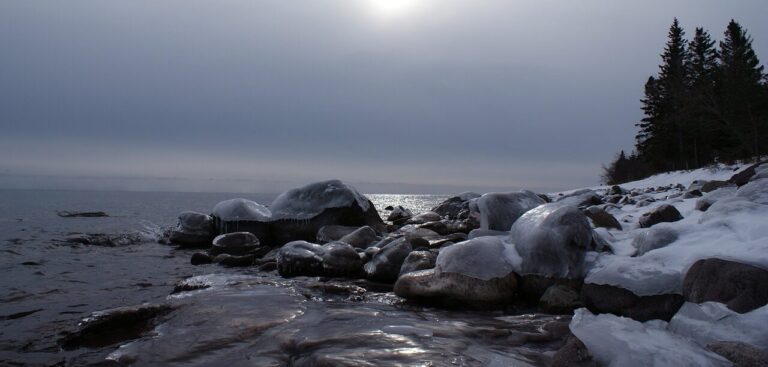
Ice coverage for the North American Great Lakes reached a record low for February, according to NOAA’s Great Lakes Environmental Research Laboratory (GLERL).

Only 7% of the five freshwater lakes were covered in ice on February 13, 2023, which is significantly below the 35-40% ice cover expected for the time of year. Ice extent across the basin briefly jumped to 21% in early February in response to a cold snap but then declined. Maximum ice cover typically occurs between the middle of February and early March. NOAA has been keeping records on the Great Lakes ice extent since 1973.

Air temperatures are the main factor affecting ice cover on the Great Lakes, and a warmer-than-average January contributed to the lack of ice. According to the US National Ice Center, each of the five lakes experienced warmer-than-average air temperatures in January. In addition, it was a particularly warm January across the contiguous US, with an average temperature of 35.2°F (5.1° above average) according to NOAA (January 2023 was Earth’s seventh-warmest January on record).

Although there is year-to-year variability in the ice cover of the lakes, NOAA research has found that in recent years ice cover has been in a downward trend. Analysis led by Jia Wang, an ice climatologist at NOAA’s GLERL, found significant declines in the average ice cover of the Great Lakes between 1973 and 2017. During the winter period of those 44 years, which runs from December 1 to April 30, average ice cover on the Great Lakes declined by around 70%.

Ice cover protects the shoreline of lakes. Without it, high waves can scour the coastline and cause severe flooding.  Ayumi Fujisaki-Manome, a researcher at NOAA’s Cooperative Institute for Great Lakes Research at the University of Michigan, said, “The moisture and heat from the lake surface water are absorbed into the atmosphere by storm systems, and then fall back to the ground as snow in the winter. When ice is not present, we can end up with big snowstorms like those that hit Buffalo, New York in December.”

Although human-induced warming plays a role in this decline, other key factors contributing to reduced ice loss are long-term patterns of climate variability over the Pacific and Atlantic oceans. Four patterns of climate variability are contributing to ice cover changes: the North Atlantic Oscillation, the Atlantic Multidecadal Oscillation, the Pacific Decadal Oscillation and the El Niño-Southern Oscillation.

“Each year, we have to look at these four patterns to model ice cover,” said Wang. “Right now, the Pacific Decadal Oscillation together with the North Atlantic Oscillation are causing warming in the Great Lakes.”

GLERL will continue to monitor the ice levels and will announce the end-of-season ice extent later this year.

Previous ArticleNOC provides evidence to key UK marine climate-change report
Next Article WMO secretary-general calls for improved integrated flood and drought management

Read Similar Stories

Climate Measurement

Study identifies atmospheric trigger behind flash droughts in Puerto Rico

April 15, 20263 Mins Read
Climate Measurement

Regional training aims to improve flood forecasting in Central Africa

April 1, 20263 Mins Read
Rainfall

New research to improve flash flood warnings in rural Virginia

March 17, 20263 Mins Read
Latest News

R.M. Young Company reengineers SNOdar snow-depth sensor

May 21, 2026

SMILE mission launches to study Earth’s magnetic shield and space weather

May 20, 2026

Cloud measurement campaign targets improved climate model accuracy

May 20, 2026

Receive breaking stories and features in your inbox each week, for free


Enter your email address:


Supplier Spotlights
  • AIRMAR Technology Corporation
Getting in Touch
  • Contact Us / Advertise
  • Meet the Editors
  • Media Pack
  • Free Weekly E-Newsletter
Our Social Channels
  • Facebook
  • LinkedIn
© 2026 UKi Media & Events a division of UKIP Media & Events Ltd
  • Cookie Policy
  • Privacy Policy
  • Terms and Conditions
  • Notice and Takedown Policy

Type above and press Enter to search. Press Esc to cancel.