


Close Menu
Meteorological Technology International
  • News
    • A-E
      • Agriculture
      • Automated Weather Stations
      • Aviation
      • Climate Measurement
      • Data
      • Developing Countries
      • Digital Applications
      • Early Warning Systems
      • Extreme Weather
    • G-P
      • Hydrology
      • Lidar
      • Lightning Detection
      • New Appointments
      • Nowcasting
      • Numerical Weather Prediction
      • Polar Weather
    • R-S
      • Radar
      • Rainfall
      • Remote Sensing
      • Renewable Energy
      • Satellites
      • Solar
      • Space Weather
      • Supercomputers
    • T-Z
      • Training
      • Transport
      • Weather Instruments
      • Wind
      • World Meteorological Organization
      • Meteorological Technology World Expo
  • Features
  • Online Magazines
    • January 2026
    • April 2025
    • January 2025
    • September 2024
    • April 2024
    • Archive Issues
    • Subscribe Free!
  • Opinion
  • Videos
  • Supplier Spotlight
  • Expo
LinkedIn X (Twitter) Facebook
  • Sign-up for Free Weekly E-Newsletter
  • Meet the Editors
  • Contact Us
  • Media Pack
LinkedIn Facebook
Subscribe
Meteorological Technology International
  • News
      • Agriculture
      • Automated Weather Stations
      • Aviation
      • Climate Measurement
      • Data
      • Developing Countries
      • Digital Applications
      • Early Warning Systems
      • Extreme Weather
      • Hydrology
      • Lidar
      • Lightning Detection
      • New Appointments
      • Nowcasting
      • Numerical Weather Prediction
      • Polar Weather
      • Radar
      • Rainfall
      • Remote Sensing
      • Renewable Energy
      • Satellites
      • Solar
      • Space Weather
      • Supercomputers
      • Training
      • Transport
      • Weather Instruments
      • Wind
      • World Meteorological Organization
      • Meteorological Technology World Expo
  • Features
  • Online Magazines
    1. April 2026
    2. January 2026
    3. September 2025
    4. April 2025
    5. January 2025
    6. September 2024
    7. April 2024
    8. January 2024
    9. Archive Issues
    10. Subscribe Free!
    Featured
    May 5, 2026

    In this Issue – April 2026

    By Web TeamMay 5, 2026
    Recent

    In this Issue – April 2026

    May 5, 2026

    In this Issue – January 2026

    November 27, 2025

    In this Issue – September 2025

    August 11, 2025
  • Opinion
  • Videos
  • Supplier Spotlight
  • Expo
Facebook LinkedIn
Subscribe
Meteorological Technology International
Meteorological Technology World Expo

EXPO NEWS | DAY 1: Sommer introduces next-generation snow depth sensors

Elizabeth BakerBy Elizabeth BakerOctober 3, 20233 Mins Read
Share LinkedIn Facebook Twitter Email
Share
LinkedIn Facebook Twitter Email

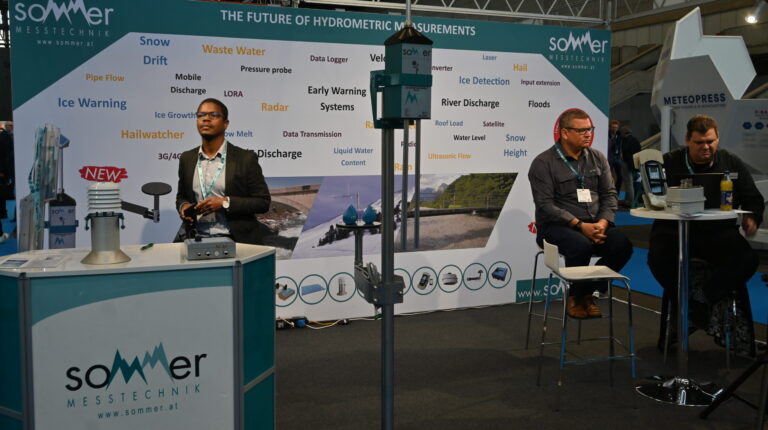
Sommer is introducing its next-generation snow depth sensors at Meteorological Technology World Expo in Geneva.

These snow depth sensors are designed to measure the thickness of snow on the ground. They are used in various applications, including weather monitoring, avalanche forecasting, hydrology and climate research, and employ different principles to measure the depth of snow.

Ultrasonic snow depth sensors emit ultrasonic waves and measure the time it takes for the sound waves to bounce back after hitting the snow surface. The sensor can calculate the snow depth based on the round-trip travel time and the speed of sound. Laser-based sensors use laser beams to determine the distance between the sensor and the snow surface. The device can calculate the snow depth by measuring the time that it takes for the laser beam to reflect back.

The accuracy of snow depth sensors can vary depending on the type of sensor and environmental conditions. According to the company, the proper sensor placement of snow depth sensors is crucial to obtain representative measurements. They should be installed in open areas away from obstructions like trees or buildings, as these can cause snow drifts and uneven distribution. By providing accurate measurements, snow depth sensors reportedly contribute to better decision making and risk assessment in snow-related activities.

Christoph Sommer, managing director of Sommer, commented, “Meteorological Technology World Expo is a great opportunity to showcase and introduce new products into the market and to show our customers. We are at the expo to meet our valued customers and partners from all around the world and also find new partners. The show is great because it brings together people from around the world for an exchange of knowledge and discussions.

“On display this year, we also have the new RQ-30 non-contact discharge sensor (stationary system); the new TQ-tracer dilution method discharge system (mobile system); and the new IDS-30, which is a simple and reliable ice detection sensor for communities and agriculture.

“The RQ-30 non-contact discharge sensor and the IDS-30 are both smaller and more compact versions with a new design and top-notch accuracy and simplicity. The RQ-30 non-contact discharge sensor also has added AI features. Similarly, the TQ-tracer dilution method discharge system is a smarter design with features like memory, display, new handling, new software and more quality assurance.”

Don’t miss out on the meteorological show of the year – register now for your free entry pass and visit the website for the full exhibitor list and all the latest information.

Visit Booth 2030 to discover more, and read more expo news here

Previous ArticleEXPO NEWS | DAY 1: EWR Radar Systems releases web-based weather display and analysis tool
Next Article EXPO NEWS | DAY 1: AEM launches natural disaster preparedness and response platform

Read Similar Stories

Weather Instruments

R.M. Young Company reengineers SNOdar snow-depth sensor

May 21, 20262 Mins Read
Climate Measurement

Cloud measurement campaign targets improved climate model accuracy

May 20, 20263 Mins Read
Automated Weather Stations

University of Vermont launches first station in statewide weather monitoring network

May 8, 20262 Mins Read
Latest News

Global warming reached 1.37°C in 2025 as heat accumulation hits record rate

June 12, 2026

NSF NCAR researchers develop advanced model for neighborhood-scale low-altitude wind prediction

June 11, 2026

Cambridge AI tool converts satellite archives into accessible Earth intelligence

June 10, 2026

Receive breaking stories and features in your inbox each week, for free


Enter your email address:


Supplier Spotlights
  • MicroStep-MIS
Getting in Touch
  • Contact Us / Advertise
  • Meet the Editors
  • Media Pack
  • Free Weekly E-Newsletter
Our Social Channels
  • Facebook
  • LinkedIn
© 2026 UKi Media & Events a division of UKIP Media & Events Ltd
  • Cookie Policy
  • Privacy Policy
  • Terms and Conditions
  • Notice and Takedown Policy

Type above and press Enter to search. Press Esc to cancel.