


Close Menu
Meteorological Technology International
  • News
    • A-E
      • Agriculture
      • Automated Weather Stations
      • Aviation
      • Climate Measurement
      • Data
      • Developing Countries
      • Digital Applications
      • Early Warning Systems
      • Extreme Weather
    • G-P
      • Hydrology
      • Lidar
      • Lightning Detection
      • New Appointments
      • Nowcasting
      • Numerical Weather Prediction
      • Polar Weather
    • R-S
      • Radar
      • Rainfall
      • Remote Sensing
      • Renewable Energy
      • Satellites
      • Solar
      • Space Weather
      • Supercomputers
    • T-Z
      • Training
      • Transport
      • Weather Instruments
      • Wind
      • World Meteorological Organization
      • Meteorological Technology World Expo
  • Features
  • Online Magazines
    • January 2026
    • April 2025
    • January 2025
    • September 2024
    • April 2024
    • Archive Issues
    • Subscribe Free!
  • Opinion
  • Videos
  • Supplier Spotlight
  • Expo
LinkedIn X (Twitter) Facebook
  • Sign-up for Free Weekly E-Newsletter
  • Meet the Editors
  • Contact Us
  • Media Pack
LinkedIn Facebook
Subscribe
Meteorological Technology International
  • News
      • Agriculture
      • Automated Weather Stations
      • Aviation
      • Climate Measurement
      • Data
      • Developing Countries
      • Digital Applications
      • Early Warning Systems
      • Extreme Weather
      • Hydrology
      • Lidar
      • Lightning Detection
      • New Appointments
      • Nowcasting
      • Numerical Weather Prediction
      • Polar Weather
      • Radar
      • Rainfall
      • Remote Sensing
      • Renewable Energy
      • Satellites
      • Solar
      • Space Weather
      • Supercomputers
      • Training
      • Transport
      • Weather Instruments
      • Wind
      • World Meteorological Organization
      • Meteorological Technology World Expo
  • Features
  • Online Magazines
    1. January 2026
    2. September 2025
    3. April 2025
    4. January 2025
    5. September 2024
    6. April 2024
    7. January 2024
    8. September 2023
    9. April 2023
    10. Archive Issues
    11. Subscribe Free!
    Featured
    November 27, 2025

    In this Issue – January 2026

    By Hazel KingNovember 27, 2025
    Recent

    In this Issue – January 2026

    November 27, 2025

    In this Issue – September 2025

    August 11, 2025

    In this Issue – April 2025

    April 15, 2025
  • Opinion
  • Videos
  • Supplier Spotlight
  • Expo
Facebook LinkedIn
Subscribe
Meteorological Technology International
Climate Measurement

NCAR celebrates completion of $25m Research Aviation Facility

Dan SymondsBy Dan SymondsSeptember 2, 20223 Mins Read
Share LinkedIn Facebook Twitter Email
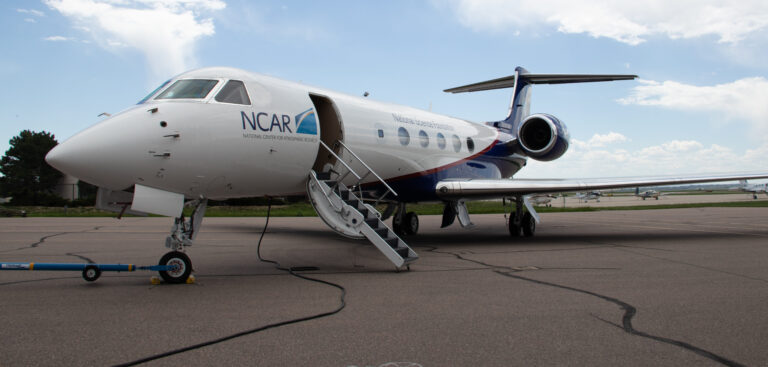
NCAR's Gulfstream V research aircraft
Share
LinkedIn Facebook Twitter Email

The US National Center for Atmospheric Research (NCAR) has completed the reconstruction of a research facility in Colorado that supports airborne meteorological projects globally.

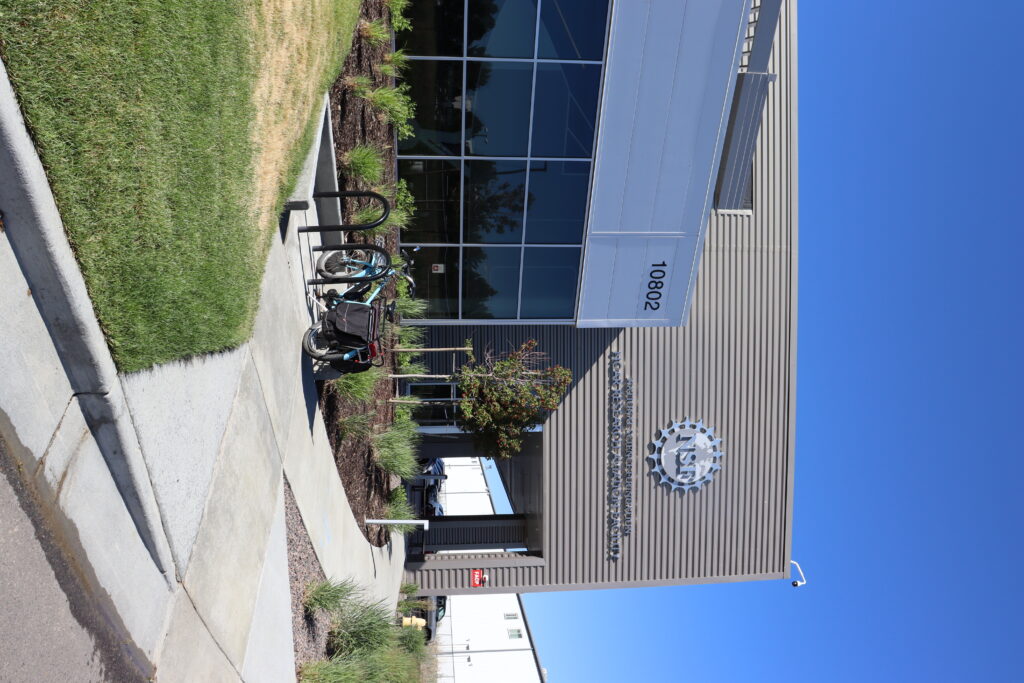
Funded by the US National Science Foundation (NSF), the new US$25m Research Aviation Facility (RAF) expands NCAR’s capacity to support critical field projects that lead to advances in weather, water, climate and air quality research.

Replacing the previous aviation facility that was more than 50 years old, the 42,931ft2 (3,988m2 ) building in Broomfield, Colorado, houses around three dozen permanent staff, including scientists, engineers, instrument technicians and flight operations experts, with additional space for visiting scientists.

Antonio Busalacchi, president, University Corporation for Atmospheric Research (UCAR), said, “RAF has always enabled researchers from universities and institutions across the country and the world to engage in cutting-edge research, the results of which have bolstered society’s ability to better prepare and respond to weather and climate threats. This updated building enhances our ability to provide critical support for these research projects, which are more important now than ever.”

UCAR is a non-profit consortium of 122 North American colleges and universities focused on research and training in Earth system science. UCAR manages NCAR on behalf of NSF.

Alexandra Isern, NSF’s assistant director for geosciences, said, “NSF is so pleased to support and to be part of the opening of this impressive facility. The new RAF will serve as a vital resource for our scientific community. The aircraft and equipment housed in the RAF enable research and data collection that will improve our weather and climate predictive capabilities, leading to increased public safety and economic security.”

RAF is home to two research aircraft owned by NSF and operated by NCAR: a Gulfstream V and a C-130. In the last decade, these flying laboratories have helped scientists study wildfire plumes to investigate how smoke impacts weather, air quality and climate; sample air over the Southern Ocean to shed light on how much carbon the icy waters in the region are able to store; chase solar eclipses to take rare measurements of the Sun’s corona from above the clouds; and catalog emissions from industrial facilities, motor vehicles, agricultural operations, oil and gas drilling and other activities on Colorado’s Front Range; among other important campaigns.

This summer, the newly updated RAF supported several important campaigns, including the Asian Summer Monsoon Chemical and Climate Impact Project (ACCLIP) in South Korea, where the NSF/NCAR G-V aircraft is currently deployed. The project is studying how the monsoon – one of the largest and most important meteorological patterns in the world – affects atmospheric chemistry and global climate.

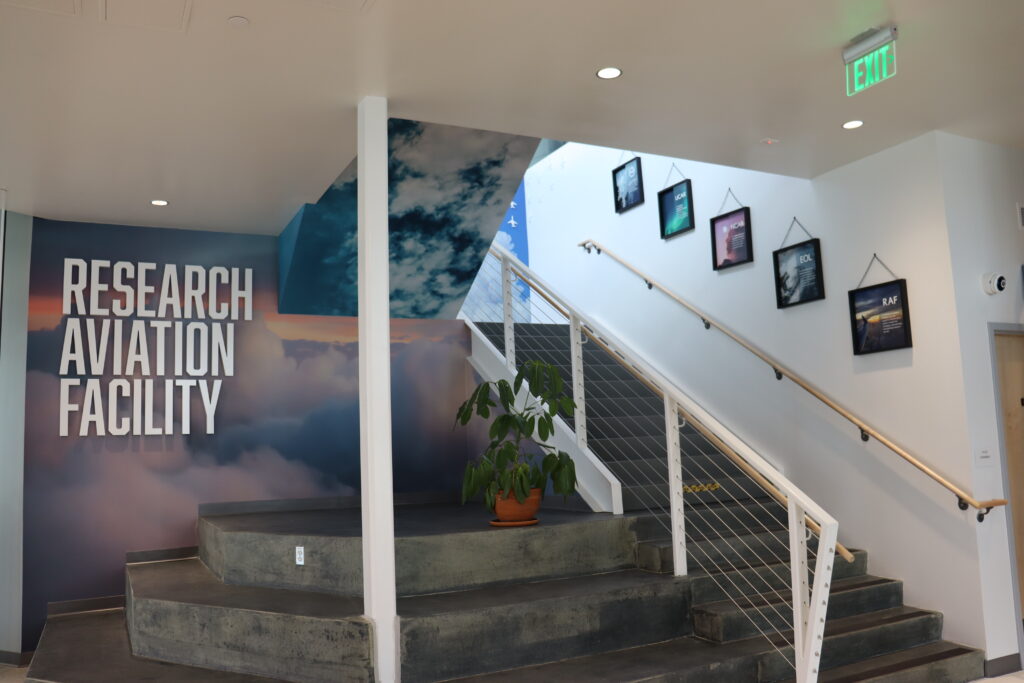
The new building serves as the nerve center for planning these campaigns. It has expanded lab space for calibrating scientific instruments as well as ample space for field campaign planning, briefings, logistics decisions and real-time remote participation in field projects.

Everette Joseph, NCAR director, said, “The observations from the field campaigns supported by RAF provide a wealth of valuable data, which we make freely available for scientists everywhere. It’s one of the most essential capabilities we provide the Earth system science community, and this new building will help us continue to support this important work for decades to come.”
Credit: UCAR
Credit: UCAR
Previous ArticleNOAA pilots climate resilience project to support smart agriculture in Hawaii
Next Article European wildfire carbon emissions highest for 15 years, finds CAMS

Read Similar Stories

Climate Measurement

Study identifies atmospheric trigger behind flash droughts in Puerto Rico

April 15, 20263 Mins Read
Satellites

AI tool uses weather satellite data to map ocean currents in near real time

April 14, 20263 Mins Read
Climate Measurement

New tool speeds up climate model evaluation

April 13, 20262 Mins Read
Latest News

Northumbria University secures £4m to study Earth’s radiation belts

April 16, 2026

AI model improves real-time prediction of wildfire spread

April 16, 2026

Study identifies atmospheric trigger behind flash droughts in Puerto Rico

April 15, 2026

Receive breaking stories and features in your inbox each week, for free


Enter your email address:


Supplier Spotlights
  • Reuniwatt
Getting in Touch
  • Contact Us / Advertise
  • Meet the Editors
  • Media Pack
  • Free Weekly E-Newsletter
Our Social Channels
  • Facebook
  • LinkedIn
© 2026 UKi Media & Events a division of UKIP Media & Events Ltd
  • Cookie Policy
  • Privacy Policy
  • Terms and Conditions
  • Notice and Takedown Policy

Type above and press Enter to search. Press Esc to cancel.