


Close Menu
Meteorological Technology International
  • News
    • A-E
      • Agriculture
      • Automated Weather Stations
      • Aviation
      • Climate Measurement
      • Data
      • Developing Countries
      • Digital Applications
      • Early Warning Systems
      • Extreme Weather
    • G-P
      • Hydrology
      • Lidar
      • Lightning Detection
      • New Appointments
      • Nowcasting
      • Numerical Weather Prediction
      • Polar Weather
    • R-S
      • Radar
      • Rainfall
      • Remote Sensing
      • Renewable Energy
      • Satellites
      • Solar
      • Space Weather
      • Supercomputers
    • T-Z
      • Training
      • Transport
      • Weather Instruments
      • Wind
      • World Meteorological Organization
      • Meteorological Technology World Expo
  • Features
  • Online Magazines
    • January 2026
    • April 2025
    • January 2025
    • September 2024
    • April 2024
    • Archive Issues
    • Subscribe Free!
  • Opinion
  • Videos
  • Supplier Spotlight
  • Expo
LinkedIn X (Twitter) Facebook
  • Sign-up for Free Weekly E-Newsletter
  • Meet the Editors
  • Contact Us
  • Media Pack
LinkedIn Facebook
Subscribe
Meteorological Technology International
  • News
      • Agriculture
      • Automated Weather Stations
      • Aviation
      • Climate Measurement
      • Data
      • Developing Countries
      • Digital Applications
      • Early Warning Systems
      • Extreme Weather
      • Hydrology
      • Lidar
      • Lightning Detection
      • New Appointments
      • Nowcasting
      • Numerical Weather Prediction
      • Polar Weather
      • Radar
      • Rainfall
      • Remote Sensing
      • Renewable Energy
      • Satellites
      • Solar
      • Space Weather
      • Supercomputers
      • Training
      • Transport
      • Weather Instruments
      • Wind
      • World Meteorological Organization
      • Meteorological Technology World Expo
  • Features
  • Online Magazines
    1. April 2026
    2. January 2026
    3. September 2025
    4. April 2025
    5. January 2025
    6. September 2024
    7. April 2024
    8. January 2024
    9. Archive Issues
    10. Subscribe Free!
    Featured
    May 5, 2026

    In this Issue – April 2026

    By Web TeamMay 5, 2026
    Recent

    In this Issue – April 2026

    May 5, 2026

    In this Issue – January 2026

    November 27, 2025

    In this Issue – September 2025

    August 11, 2025
  • Opinion
  • Videos
  • Supplier Spotlight
  • Expo
Facebook LinkedIn
Subscribe
Meteorological Technology International
Oceans

NIWA’s new cutting-edge ocean research vessel Kaharoa II arrives in Wellington

Elizabeth BakerBy Elizabeth BakerSeptember 4, 20243 Mins Read
Share LinkedIn Facebook Twitter Email
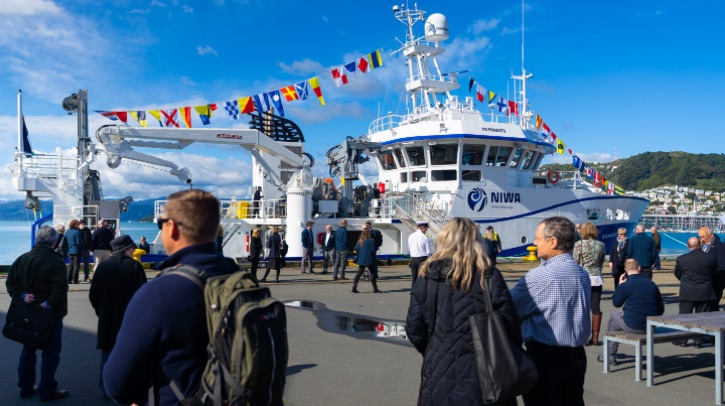
NIWA’s brand-new research vessel, Kaharoa II, has been officially christened by Minister Judith Collins. The new vessel’s maiden voyage deployed ocean monitoring floats across the Atlantic and in a comprehensive pattern across the western Pacific down to New Zealand.
Credit: Luke McPake / NIWA
Share
LinkedIn Facebook Twitter Email

NIWA’s brand-new research vessel, Kaharoa II, has been officially christened by Minister Judith Collins. The new vessel’s maiden voyage deployed ocean monitoring floats across the Atlantic and in a comprehensive pattern across the western Pacific down to New Zealand.

Ocean observation

The vessel arrived in Wellington after spending 83 days sailing from Astilleros Armon shipyard in northern Spain, where it was built. Kaharoa IIwas designed by Norwegian naval architects Skipsteknisk and has been equipped with the latest technologies. According to NIWA, it is quieter under the water, causing less disturbance to the environment. It is 8m longer and is said to be more comfortable than its predecessor, with increased laboratory and deck space that can accommodate six crew members and up to nine scientists.

Dr Richard O’Driscoll, chief scientist of fisheries at NIWA, said it will transform NIWA’s work. “Kaharoa II is a next-generation research vessel that will allow us to do more great science. It also has 35 days’ endurance, with a 6,500 nautical mile range, meaning we will be able to go further for longer, from inshore studies to the deep oceans,” he said.

Kaharoa II will deploy and maintain the New Zealand Tsunami detection network, maintain long-term fisheries surveys, and continue NIWA’s contribution to the international Argo program, which deploys floats throughout the world’s oceans to measure water conditions for marine and atmospheric research. Kaharoa II replaces its predecessorKaharoa, which is more than 40 years old and nearing the end of its working life. Kaharoa has already deployed about one-quarter of all the Argo floats globally – more than any other vessel – and Kaharoa II will continue this legacy.

Fleet integration

Kaharoa II joins NIWA’s research vessel fleet, including the deepwater, ice-strengthened Tangaroa, and the nearshore catamaran Ikatere, giving the nation full coverage of New Zealand’s marine realm and much farther afield.

John Morgan, chief executive at NIWA, said Kaharoa II will help meet New Zealand’s fisheries, oceanography and maritime research needs: “As an island nation, we have a strong cultural, environmental and economic connection to the ocean, with NIWA’s work playing a key role in our understanding and management of it. This new vessel represents a significant investment in essential New Zealand science capability and underpins our strengths in ocean science. It will support cost-effective, safe and more environmentally friendly research of the highest quality.”

Rob Christie, manager of marine resources at NIWA and director of the project, said, “Overseeing the construction of a new research vessel is a rare privilege. The trick is to have an extensive support network, a knowledgeable team, and governance who understand the complexity, risks and end goal. We had all three. The designers at Skipsteknisk took great pride in their work and, with the Armon shipyard, have given us a next-generation vessel that has exceeded our expectations.”

During her christening speech, Minister Judith Collins said, “This highly sophisticated, significantly enhanced and cost-effective research vessel will transform New Zealand’s marine research capabilities.”

In related news, NIWA (National Institute of Water and Atmospheric Research) recently purchased a NZ$20m (US$12m) supercomputer to enable high-resolution weather and climate forecasting 24/7, using data from weather stations around the world. Click here to read the full story.

Previous ArticleTata Power partners with Tomorrow.io for enhanced weather forecasting in India
Next Article Three weeks until the world’s biggest meteorological expo!

Read Similar Stories

Radar

EWR Radar Systems wins US Air Force contract for portable Doppler radar support

April 20, 20262 Mins Read
Climate Measurement

China inaugurates 27th national climate observatory in Hebei

April 9, 20262 Mins Read
Solar

Mauna Loa Solar Observatory reopens to support Artemis II mission

April 8, 20262 Mins Read
Latest News

In this Issue – April 2026

May 5, 2026

AI models lag behind traditional systems in predicting extreme weather

May 5, 2026

Researchers investigate links between air pollution, extreme weather and climate

May 1, 2026

Receive breaking stories and features in your inbox each week, for free


Enter your email address:


Supplier Spotlights
  • REMTECH
Getting in Touch
  • Contact Us / Advertise
  • Meet the Editors
  • Media Pack
  • Free Weekly E-Newsletter
Our Social Channels
  • Facebook
  • LinkedIn
© 2026 UKi Media & Events a division of UKIP Media & Events Ltd
  • Cookie Policy
  • Privacy Policy
  • Terms and Conditions
  • Notice and Takedown Policy

Type above and press Enter to search. Press Esc to cancel.