


Close Menu
Meteorological Technology International
  • News
    • A-E
      • Agriculture
      • Automated Weather Stations
      • Aviation
      • Climate Measurement
      • Data
      • Developing Countries
      • Digital Applications
      • Early Warning Systems
      • Extreme Weather
    • G-P
      • Hydrology
      • Lidar
      • Lightning Detection
      • New Appointments
      • Nowcasting
      • Numerical Weather Prediction
      • Polar Weather
    • R-S
      • Radar
      • Rainfall
      • Remote Sensing
      • Renewable Energy
      • Satellites
      • Solar
      • Space Weather
      • Supercomputers
    • T-Z
      • Training
      • Transport
      • Weather Instruments
      • Wind
      • World Meteorological Organization
      • Meteorological Technology World Expo
  • Features
  • Online Magazines
    • January 2026
    • April 2025
    • January 2025
    • September 2024
    • April 2024
    • Archive Issues
    • Subscribe Free!
  • Opinion
  • Videos
  • Supplier Spotlight
  • Expo
LinkedIn X (Twitter) Facebook
  • Sign-up for Free Weekly E-Newsletter
  • Meet the Editors
  • Contact Us
  • Media Pack
LinkedIn Facebook
Subscribe
Meteorological Technology International
  • News
      • Agriculture
      • Automated Weather Stations
      • Aviation
      • Climate Measurement
      • Data
      • Developing Countries
      • Digital Applications
      • Early Warning Systems
      • Extreme Weather
      • Hydrology
      • Lidar
      • Lightning Detection
      • New Appointments
      • Nowcasting
      • Numerical Weather Prediction
      • Polar Weather
      • Radar
      • Rainfall
      • Remote Sensing
      • Renewable Energy
      • Satellites
      • Solar
      • Space Weather
      • Supercomputers
      • Training
      • Transport
      • Weather Instruments
      • Wind
      • World Meteorological Organization
      • Meteorological Technology World Expo
  • Features
  • Online Magazines
    1. January 2026
    2. September 2025
    3. April 2025
    4. January 2025
    5. September 2024
    6. April 2024
    7. January 2024
    8. September 2023
    9. April 2023
    10. Archive Issues
    11. Subscribe Free!
    Featured
    November 27, 2025

    In this Issue – January 2026

    By Hazel KingNovember 27, 2025
    Recent

    In this Issue – January 2026

    November 27, 2025

    In this Issue – September 2025

    August 11, 2025

    In this Issue – April 2025

    April 15, 2025
  • Opinion
  • Videos
  • Supplier Spotlight
  • Expo
Facebook LinkedIn
Subscribe
Meteorological Technology International
News

Team awarded NSF grant to teach virtual explorers about Arctic climate change

Helen NormanBy Helen NormanJuly 21, 20212 Mins Read
Share LinkedIn Facebook Twitter Email
Arctic
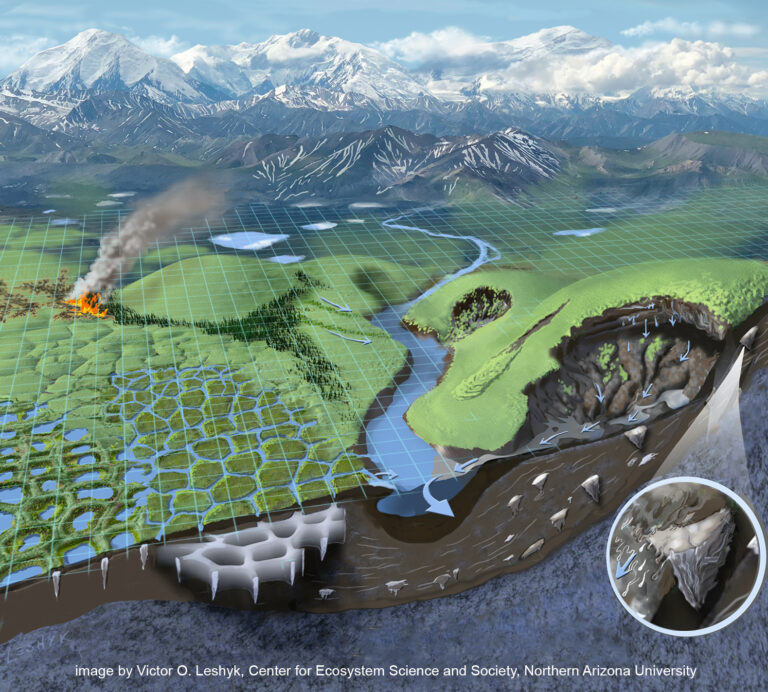
Polar Explorer is a web-based immersive environment where undergraduate students can explore polar environments in the Arctic. Image: Victor O Leshyk, Center for Ecosystem Science and Society, Northern Arizona University
Share
LinkedIn Facebook Twitter Email

Scientists at Arizona State University, Northern Arizona University, the Arizona Geological Survey at the University of Arizona, and the National Snow and Ice Data Center at the University of Colorado Boulder have been awarded almost US$2m from the National Science Foundation in the US to develop a virtual reality teaching tool called Polar Explorer.

In the web-based tool, undergraduate students will explore polar environments in the Arctic to learn about permafrost from their laptops, desktops or mobile devices.

“The real-time transformation of the Arctic affects everyone, but most of us can’t travel there to witness these changes,” said Deborah Huntzinger, project principal investigator from Northern Arizona University. “Polar Explorer will take students deep into thawing permafrost and to the edge of Arctic shorelines to learn about how the region is changing in an immersive, accessible way.”

The team is zeroing in on the Arctic because climate warming is altering this region rapidly in ways that affect climate, infrastructure and public health around the globe.

Over the past three decades, the Arctic has warmed at twice the rate of the rest of the world and permafrost has started to thaw. Thawing permafrost releases enormous amounts of previously frozen greenhouse gases to the atmosphere, accelerating the pace of climate change.

These impacts make it important for the general public to understand how the Arctic is changing and why these changes have significant consequences for people around the world. But the remoteness and inaccessibility of the Arctic makes teaching students about permafrost and its consequences challenging.

Polar Explorer will create an adaptive learning environment built around a series of immersive virtual field trips (iVFTs), an approach pioneered by ASU’s Center for Education Through Exploration. Students will be able to visit scientifically accurate landscapes and interact with them as if they were physically there.

For example, to examine the connections between carbon and permafrost, students will travel (virtually) to the Carbon in Permafrost Heating Experimental Research site in Healy, Alaska, where Northern Arizona University researcher Ted Schuur has been studying permafrost for over a decade.

“Polar Explorer will put students in the field, so they are not just reading about the dramatic changes we observe in the Arctic, but experiencing them,” said Kevin Schaefer, a research scientist at the National Snow and Ice Data Center.

Previous ArticleNASA study finds tropical forests’ ability to absorb carbon dioxide is waning
Next Article NOAA announces creation of new Climate Council to enhance delivery of climate science

Read Similar Stories

Climate Measurement

Windracers ULTRA drones to be deployed in Greenland on glacier surveying mission

March 12, 20263 Mins Read
Climate Measurement

Unmanned Antarctica atmospheric observation experiment advances in China

February 10, 20262 Mins Read
Climate Measurement

Robotic Argo float sends back first ocean transect beneath East Antarctic ice shelf

December 11, 20252 Mins Read
Latest News

Researchers investigate links between air pollution, extreme weather and climate

May 1, 2026

China expands MAZU early warning system for developing countries

April 30, 2026

Météo-France begins construction of France’s tallest weather radar tower in Sembadel

April 29, 2026

Receive breaking stories and features in your inbox each week, for free


Enter your email address:


Supplier Spotlights
  • EUMETSAT
Getting in Touch
  • Contact Us / Advertise
  • Meet the Editors
  • Media Pack
  • Free Weekly E-Newsletter
Our Social Channels
  • Facebook
  • LinkedIn
© 2026 UKi Media & Events a division of UKIP Media & Events Ltd
  • Cookie Policy
  • Privacy Policy
  • Terms and Conditions
  • Notice and Takedown Policy

Type above and press Enter to search. Press Esc to cancel.