


Close Menu
Meteorological Technology International
  • News
    • A-E
      • Agriculture
      • Automated Weather Stations
      • Aviation
      • Climate Measurement
      • Data
      • Developing Countries
      • Digital Applications
      • Early Warning Systems
      • Extreme Weather
    • G-P
      • Hydrology
      • Lidar
      • Lightning Detection
      • New Appointments
      • Nowcasting
      • Numerical Weather Prediction
      • Polar Weather
    • R-S
      • Radar
      • Rainfall
      • Remote Sensing
      • Renewable Energy
      • Satellites
      • Solar
      • Space Weather
      • Supercomputers
    • T-Z
      • Training
      • Transport
      • Weather Instruments
      • Wind
      • World Meteorological Organization
      • Meteorological Technology World Expo
  • Features
  • Online Magazines
    • January 2026
    • April 2025
    • January 2025
    • September 2024
    • April 2024
    • Archive Issues
    • Subscribe Free!
  • Opinion
  • Videos
  • Supplier Spotlight
  • Expo
LinkedIn X (Twitter) Facebook
  • Sign-up for Free Weekly E-Newsletter
  • Meet the Editors
  • Contact Us
  • Media Pack
LinkedIn Facebook
Subscribe
Meteorological Technology International
  • News
      • Agriculture
      • Automated Weather Stations
      • Aviation
      • Climate Measurement
      • Data
      • Developing Countries
      • Digital Applications
      • Early Warning Systems
      • Extreme Weather
      • Hydrology
      • Lidar
      • Lightning Detection
      • New Appointments
      • Nowcasting
      • Numerical Weather Prediction
      • Polar Weather
      • Radar
      • Rainfall
      • Remote Sensing
      • Renewable Energy
      • Satellites
      • Solar
      • Space Weather
      • Supercomputers
      • Training
      • Transport
      • Weather Instruments
      • Wind
      • World Meteorological Organization
      • Meteorological Technology World Expo
  • Features
  • Online Magazines
    1. April 2026
    2. January 2026
    3. September 2025
    4. April 2025
    5. January 2025
    6. September 2024
    7. April 2024
    8. January 2024
    9. Archive Issues
    10. Subscribe Free!
    Featured
    May 5, 2026

    In this Issue – April 2026

    By Web TeamMay 5, 2026
    Recent

    In this Issue – April 2026

    May 5, 2026

    In this Issue – January 2026

    November 27, 2025

    In this Issue – September 2025

    August 11, 2025
  • Opinion
  • Videos
  • Supplier Spotlight
  • Expo
Facebook LinkedIn
Subscribe
Meteorological Technology International
News

Warmer Atlantic waters are reducing sea ice regrowth in the Arctic Ocean in the winter

Helen NormanBy Helen NormanMay 28, 20212 Mins Read
Share LinkedIn Facebook Twitter Email
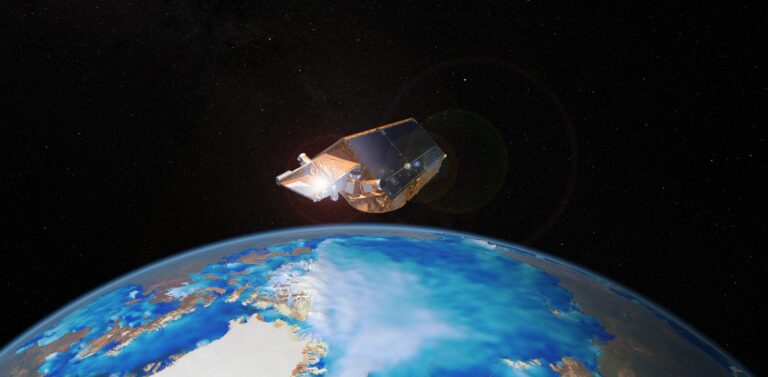
The ESA's CryoSat is key to measuring sea-ice thickness. Image: European Space Agency
Share
LinkedIn Facebook Twitter Email

Germany’s AWI Helmholtz Centre for Polar and Marine Research has released new findings from a study on sea ice in the Arctic Ocean, which has revealed how the intrusion of warmer Atlantic waters is reducing ice regrowth in the winter.

Previous research suggested that sea ice can partly recover in the winter months following a strong summer melt because thin ice grows faster than thick ice. However, the findings indicate that heat from the ocean is overpowering this stabilizing effect, reducing the volume of sea ice that can regrow in the winter.

The scientists used satellite data from the European Space Agency’s (ESA) Climate Change Initiative to calculate changes in the volume of Arctic sea ice between 2002 and 2019.

They mapped regional changes in sea-ice volume owing to drift and calculated how much ice grows because of freezing each month. They also used model simulations to explore the causes of change, which corroborated their findings.

Dr Robert Ricker, from the AWI Helmholtz Centre for Polar and Marine Research, said, “Over the last decades we observed the tendency that the less ice you have at the beginning of the freezing season, the more it grows in the winter season. However, what we’ve found now is that in the Barents Sea and Kara Sea regions, this stabilising effect is being overpowered by ocean heat and warmer temperatures that are reducing the ice growth in winter.” This new process is called Atlantification.

The scientists used ice-thickness data from the ESA’s CryoSat mission – Europe’s first spacecraft dedicated to the study of ice. The scientists combined this information with data from the ESA Soil Moisture and Ocean Salinity (SMOS) satellite.

As well as being used for forecasts, this combined data also revealed that the volume of sea ice in the 2020-21 winter season was at its lowest since these sea-ice data products began in 2010.

Arctic sea-ice volume 2010–19:

Video: AWI/ESA geoGraphics

Previous ArticleWMO releases new global annual to decadal climate update
Next Article RV Polarstern sets sail for Arctic to explore deep-sea ecosystem

Read Similar Stories

Climate Measurement

Windracers ULTRA drones to be deployed in Greenland on glacier surveying mission

March 12, 20263 Mins Read
Climate Measurement

Unmanned Antarctica atmospheric observation experiment advances in China

February 10, 20262 Mins Read
Climate Measurement

Robotic Argo float sends back first ocean transect beneath East Antarctic ice shelf

December 11, 20252 Mins Read
Latest News

University of Vermont launches first station in statewide weather monitoring network

May 8, 2026

G7 countries pledge additional funding for CREWS early warning initiative

May 7, 2026

Wildfires can create ‘burn scar heat islands’ that alter weather patterns, study finds

May 6, 2026

Receive breaking stories and features in your inbox each week, for free


Enter your email address:


Supplier Spotlights
  • EUMETSAT
Getting in Touch
  • Contact Us / Advertise
  • Meet the Editors
  • Media Pack
  • Free Weekly E-Newsletter
Our Social Channels
  • Facebook
  • LinkedIn
© 2026 UKi Media & Events a division of UKIP Media & Events Ltd
  • Cookie Policy
  • Privacy Policy
  • Terms and Conditions
  • Notice and Takedown Policy

Type above and press Enter to search. Press Esc to cancel.