


Close Menu
Meteorological Technology International
  • News
    • A-E
      • Agriculture
      • Automated Weather Stations
      • Aviation
      • Climate Measurement
      • Data
      • Developing Countries
      • Digital Applications
      • Early Warning Systems
      • Extreme Weather
    • G-P
      • Hydrology
      • Lidar
      • Lightning Detection
      • New Appointments
      • Nowcasting
      • Numerical Weather Prediction
      • Polar Weather
    • R-S
      • Radar
      • Rainfall
      • Remote Sensing
      • Renewable Energy
      • Satellites
      • Solar
      • Space Weather
      • Supercomputers
    • T-Z
      • Training
      • Transport
      • Weather Instruments
      • Wind
      • World Meteorological Organization
      • Meteorological Technology World Expo
  • Features
  • Online Magazines
    • January 2026
    • April 2025
    • January 2025
    • September 2024
    • April 2024
    • Archive Issues
    • Subscribe Free!
  • Opinion
  • Videos
  • Supplier Spotlight
  • Expo
LinkedIn X (Twitter) Facebook
  • Sign-up for Free Weekly E-Newsletter
  • Meet the Editors
  • Contact Us
  • Media Pack
LinkedIn Facebook
Subscribe
Meteorological Technology International
  • News
      • Agriculture
      • Automated Weather Stations
      • Aviation
      • Climate Measurement
      • Data
      • Developing Countries
      • Digital Applications
      • Early Warning Systems
      • Extreme Weather
      • Hydrology
      • Lidar
      • Lightning Detection
      • New Appointments
      • Nowcasting
      • Numerical Weather Prediction
      • Polar Weather
      • Radar
      • Rainfall
      • Remote Sensing
      • Renewable Energy
      • Satellites
      • Solar
      • Space Weather
      • Supercomputers
      • Training
      • Transport
      • Weather Instruments
      • Wind
      • World Meteorological Organization
      • Meteorological Technology World Expo
  • Features
  • Online Magazines
    1. January 2026
    2. September 2025
    3. April 2025
    4. January 2025
    5. September 2024
    6. April 2024
    7. January 2024
    8. September 2023
    9. April 2023
    10. Archive Issues
    11. Subscribe Free!
    Featured
    November 27, 2025

    In this Issue – January 2026

    By Hazel KingNovember 27, 2025
    Recent

    In this Issue – January 2026

    November 27, 2025

    In this Issue – September 2025

    August 11, 2025

    In this Issue – April 2025

    April 15, 2025
  • Opinion
  • Videos
  • Supplier Spotlight
  • Expo
Facebook LinkedIn
Subscribe
Meteorological Technology International
Rainfall

Research discovers that Congo rainforest produces its own rain during spring season

Dan SymondsBy Dan SymondsSeptember 2, 20213 Mins Read
Share LinkedIn Facebook Twitter Email
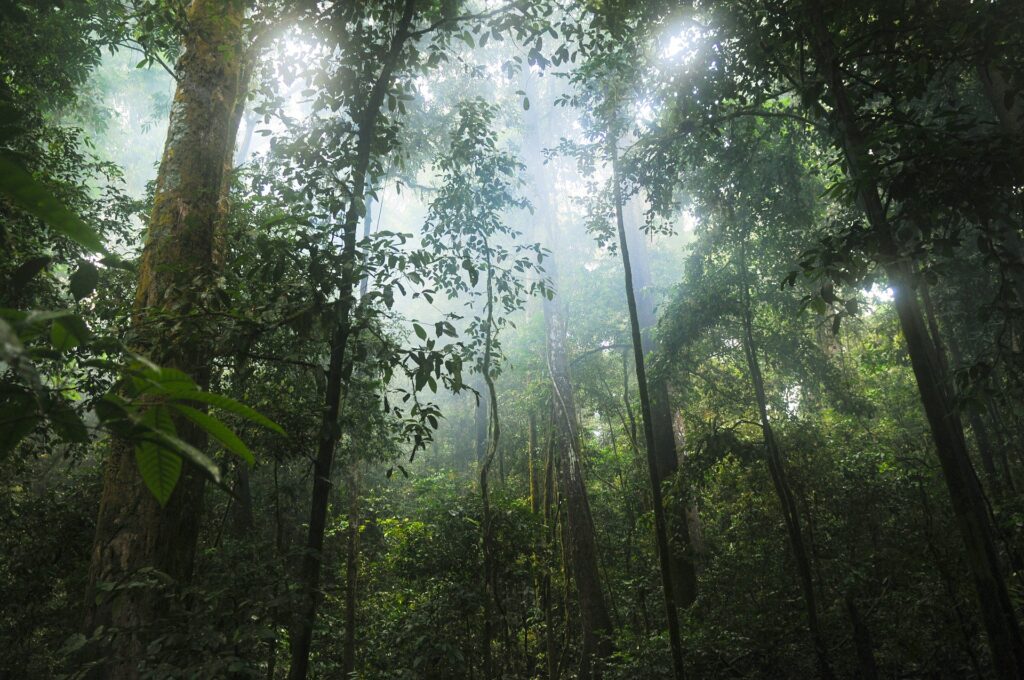
Evapotranspiration was found to account for 80% of the moisture during the early spring rainy season - credit: Pixabay
Share
LinkedIn Facebook Twitter Email

A new study has discovered that moisture leaving the dense canopy of the Congo rainforest is the largest source of water vapor during the spring rainy season.

Home to the world’s second-largest rainforest, the 500-million-acre Congo basin has been slowly drying out for the last four decades. Although it is generally believed that the rainy season requires moisture to be transported from the ocean, research published in the American Geophysical Union Journal of Geophysical Research: Biogeosciences found evapotranspiration to be the largest source of water vapor for the spring period.

Rong Fu, a climate scientist at the University of California-Los Angeles and co-author of the study, said, “Generally, people think that the onset of the rainy season requires moisture transport from the ocean. But this study suggests that in the spring rainy season, most of the moisture is coming from plants.”

The findings have implications for land-use changes and sustainable agriculture in the Congo rainforest, where deforestation is a concern. Recent, rapid land-use changes could threaten that moisture source, which local communities rely on.

The Congo is the world’s second-largest ‘terrestrial water center’, behind the Amazon. It is thought that changes to the Congo could influence not only regional water cycling but also global hydrology.

To find out how large a part transpiration plays during the spring season, researchers used remote sensing techniques that allowed them to track the isotopic composition of water vapor in the basin throughout the year. Moisture from the ocean and moisture from plants have different chemical signatures that satellites could detect.

Fu was particularly interested in finding out what controlled moisture during the Congo rainforest’s spring rainy season, which has been getting drier since the 1980s.

“To our surprise, evapotranspiration is even more important in the Congo than in the Amazon,” she said.

The team’s results showed that during the early rainy spring, over 80% of the moisture came from the plants – about 30% more than in the Amazon. In contrast, during the fall rainy season moisture from the oceans became more important than transpiration. However, between the two is the dry season, which relies on moisture stores from the wet season to keep the air moist. As dry seasons become longer and the rainy seasons less wet, the dry season could get drier.

“We need to study this link to predict what the reduction in evapotranspiration might be. Whether rainfall in the Congo will increase or decrease as a result of climate change is very uncertain,” Fu said.

Previous ArticleSnowstorms found to have the biggest impact on US solar farm production
Next Article AEM to improve hydrological and early warning systems throughout Bangladesh

Read Similar Stories

Climate Measurement

China completes Antarctic meteorological research mission with Xuelong icebreaker

April 21, 20262 Mins Read
Climate Measurement

Study identifies atmospheric trigger behind flash droughts in Puerto Rico

April 15, 20263 Mins Read
Satellites

AI tool uses weather satellite data to map ocean currents in near real time

April 14, 20263 Mins Read
Latest News

Extreme heat posing significant risks to ecosystems and agriculture, FAO-WMO report warns

April 22, 2026

Atmospheric G2 secures Japan weather forecasting license

April 21, 2026

China completes Antarctic meteorological research mission with Xuelong icebreaker

April 21, 2026

Receive breaking stories and features in your inbox each week, for free


Enter your email address:


Supplier Spotlights
  • Meteomatics AG
Getting in Touch
  • Contact Us / Advertise
  • Meet the Editors
  • Media Pack
  • Free Weekly E-Newsletter
Our Social Channels
  • Facebook
  • LinkedIn
© 2026 UKi Media & Events a division of UKIP Media & Events Ltd
  • Cookie Policy
  • Privacy Policy
  • Terms and Conditions
  • Notice and Takedown Policy

Type above and press Enter to search. Press Esc to cancel.