


Close Menu
Meteorological Technology International
  • News
    • A-E
      • Agriculture
      • Automated Weather Stations
      • Aviation
      • Climate Measurement
      • Data
      • Developing Countries
      • Digital Applications
      • Early Warning Systems
      • Extreme Weather
    • G-P
      • Hydrology
      • Lidar
      • Lightning Detection
      • New Appointments
      • Nowcasting
      • Numerical Weather Prediction
      • Polar Weather
    • R-S
      • Radar
      • Rainfall
      • Remote Sensing
      • Renewable Energy
      • Satellites
      • Solar
      • Space Weather
      • Supercomputers
    • T-Z
      • Training
      • Transport
      • Weather Instruments
      • Wind
      • World Meteorological Organization
      • Meteorological Technology World Expo
  • Features
  • Online Magazines
    • January 2026
    • April 2025
    • January 2025
    • September 2024
    • April 2024
    • Archive Issues
    • Subscribe Free!
  • Opinion
  • Videos
  • Supplier Spotlight
  • Expo
LinkedIn X (Twitter) Facebook
  • Sign-up for Free Weekly E-Newsletter
  • Meet the Editors
  • Contact Us
  • Media Pack
LinkedIn Facebook
Subscribe
Meteorological Technology International
  • News
      • Agriculture
      • Automated Weather Stations
      • Aviation
      • Climate Measurement
      • Data
      • Developing Countries
      • Digital Applications
      • Early Warning Systems
      • Extreme Weather
      • Hydrology
      • Lidar
      • Lightning Detection
      • New Appointments
      • Nowcasting
      • Numerical Weather Prediction
      • Polar Weather
      • Radar
      • Rainfall
      • Remote Sensing
      • Renewable Energy
      • Satellites
      • Solar
      • Space Weather
      • Supercomputers
      • Training
      • Transport
      • Weather Instruments
      • Wind
      • World Meteorological Organization
      • Meteorological Technology World Expo
  • Features
  • Online Magazines
    1. April 2026
    2. January 2026
    3. September 2025
    4. April 2025
    5. January 2025
    6. September 2024
    7. April 2024
    8. January 2024
    9. Archive Issues
    10. Subscribe Free!
    Featured
    May 5, 2026

    In this Issue – April 2026

    By Web TeamMay 5, 2026
    Recent

    In this Issue – April 2026

    May 5, 2026

    In this Issue – January 2026

    November 27, 2025

    In this Issue – September 2025

    August 11, 2025
  • Opinion
  • Videos
  • Supplier Spotlight
  • Expo
Facebook LinkedIn
Subscribe
Meteorological Technology International
Satellites

China begins trial operations for Fengyun-3E and Fengyun-4B meteorological satellites

Dan SymondsBy Dan SymondsJune 7, 20222 Mins Read
Share LinkedIn Facebook Twitter Email
Credit: Pixabay
Share
LinkedIn Facebook Twitter Email

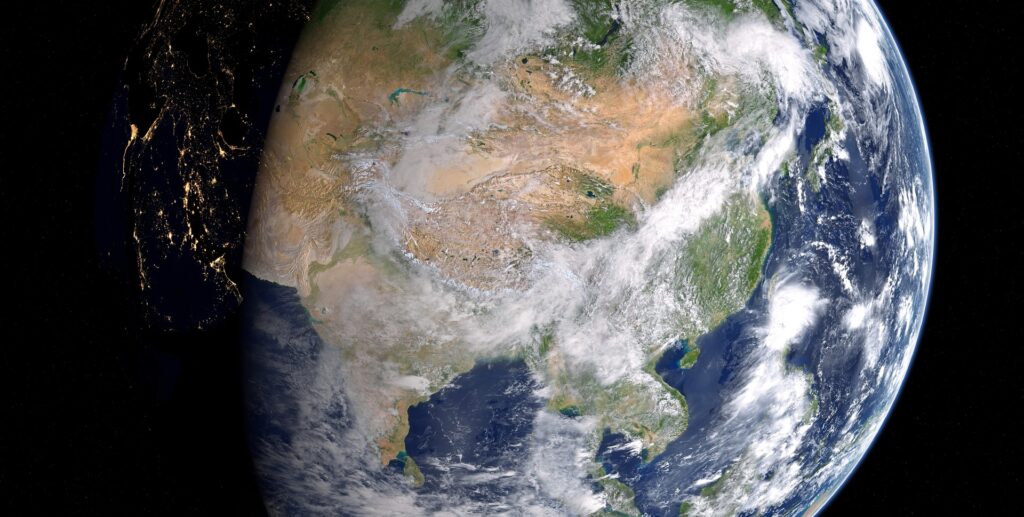
The China Meteorological Administration (CMA) has begun trial operations of its meteorological satellites Fengyun-3E and Fengyun-4B, launched on July 5, 2021, and June 3, 2021, respectively. The in-orbit test of both satellites was completed at the end of May 2022.

FY-3E will join FY-3C and FY-3D to provide global data coverage for numerical weather prediction (NWP) at six-hour intervals, and effectively ramp up global NWP accuracy and time efficiency. FY-3E has been equipped with several observation instruments and 11 payloads, including three new instruments and seven upgraded instruments.

FY-4B is the first operational satellite among China’s new generation of geostationary orbit meteorological satellites. FY-4B has updated payloads and improved performance based on FY-4A. FY-4B has added a few new functions such as the water vapor detection channels in the geostationary orbit radiation imager and improved the spectrum of some channels. FY-4B, together with FY-4A, will form a dual-satellite network, jointly conducting high-frequency monitoring of the atmosphere and clouds to obtain atmospheric vertical information from clear skies and thin cloud areas.

FY-3E has so far released three batches of satellite observation images including solar, atmospheric and earth observation. It has also played an important role in providing observation data on La Nina, glacier melts in Antarctica and Arctic, solar eruption, and typhoon monitoring.

FY-4B data has been applied during the in-orbit test. During the Beijing 2022 Olympic Winter Games, the quantitative products generated by FY-4B observation data, such as the high spatial and temporal resolution cloud images and snow cover products, supported meteorological services. FY-4B data has also been applied to monitor the Tonga volcano eruption.

Previous ArticleESA contracts Open Cosmos to help develop space weather satellite constellation
Next Article Atos to supply BullSequana XH2000 supercomputer for Finnish Meteorological Institute

Read Similar Stories

Satellites

SMILE mission launches to study Earth’s magnetic shield and space weather

May 20, 20263 Mins Read
Videos

VIDEO: Meteosat-12 imagery over Europe and Africa made available via YouTube streams

May 19, 20262 Mins Read
Extreme Weather

Wildfires can create ‘burn scar heat islands’ that alter weather patterns, study finds

May 6, 20263 Mins Read
Latest News

SMILE mission launches to study Earth’s magnetic shield and space weather

May 20, 2026

Cloud measurement campaign targets improved climate model accuracy

May 20, 2026

VIDEO: Meteosat-12 imagery over Europe and Africa made available via YouTube streams

May 19, 2026

Receive breaking stories and features in your inbox each week, for free


Enter your email address:


Supplier Spotlights
  • ROTRONIC AG
Getting in Touch
  • Contact Us / Advertise
  • Meet the Editors
  • Media Pack
  • Free Weekly E-Newsletter
Our Social Channels
  • Facebook
  • LinkedIn
© 2026 UKi Media & Events a division of UKIP Media & Events Ltd
  • Cookie Policy
  • Privacy Policy
  • Terms and Conditions
  • Notice and Takedown Policy

Type above and press Enter to search. Press Esc to cancel.