


Close Menu
Meteorological Technology International
  • News
    • A-E
      • Agriculture
      • Automated Weather Stations
      • Aviation
      • Climate Measurement
      • Data
      • Developing Countries
      • Digital Applications
      • Early Warning Systems
      • Extreme Weather
    • G-P
      • Hydrology
      • Lidar
      • Lightning Detection
      • New Appointments
      • Nowcasting
      • Numerical Weather Prediction
      • Polar Weather
    • R-S
      • Radar
      • Rainfall
      • Remote Sensing
      • Renewable Energy
      • Satellites
      • Solar
      • Space Weather
      • Supercomputers
    • T-Z
      • Training
      • Transport
      • Weather Instruments
      • Wind
      • World Meteorological Organization
      • Meteorological Technology World Expo
  • Features
  • Online Magazines
    • January 2026
    • April 2025
    • January 2025
    • September 2024
    • April 2024
    • Archive Issues
    • Subscribe Free!
  • Opinion
  • Videos
  • Supplier Spotlight
  • Expo
LinkedIn X (Twitter) Facebook
  • Sign-up for Free Weekly E-Newsletter
  • Meet the Editors
  • Contact Us
  • Media Pack
LinkedIn Facebook
Subscribe
Meteorological Technology International
  • News
      • Agriculture
      • Automated Weather Stations
      • Aviation
      • Climate Measurement
      • Data
      • Developing Countries
      • Digital Applications
      • Early Warning Systems
      • Extreme Weather
      • Hydrology
      • Lidar
      • Lightning Detection
      • New Appointments
      • Nowcasting
      • Numerical Weather Prediction
      • Polar Weather
      • Radar
      • Rainfall
      • Remote Sensing
      • Renewable Energy
      • Satellites
      • Solar
      • Space Weather
      • Supercomputers
      • Training
      • Transport
      • Weather Instruments
      • Wind
      • World Meteorological Organization
      • Meteorological Technology World Expo
  • Features
  • Online Magazines
    1. January 2026
    2. September 2025
    3. April 2025
    4. January 2025
    5. September 2024
    6. April 2024
    7. January 2024
    8. September 2023
    9. April 2023
    10. Archive Issues
    11. Subscribe Free!
    Featured
    November 27, 2025

    In this Issue – January 2026

    By Hazel KingNovember 27, 2025
    Recent

    In this Issue – January 2026

    November 27, 2025

    In this Issue – September 2025

    August 11, 2025

    In this Issue – April 2025

    April 15, 2025
  • Opinion
  • Videos
  • Supplier Spotlight
  • Expo
Facebook LinkedIn
Subscribe
Meteorological Technology International
Satellites

NOAA’s GOES-18 next-gen satellite becomes GOES-West

Dan SymondsBy Dan SymondsJanuary 5, 20232 Mins Read
Share LinkedIn Facebook Twitter Email
Photo credit: NOAA
Share
LinkedIn Facebook Twitter Email

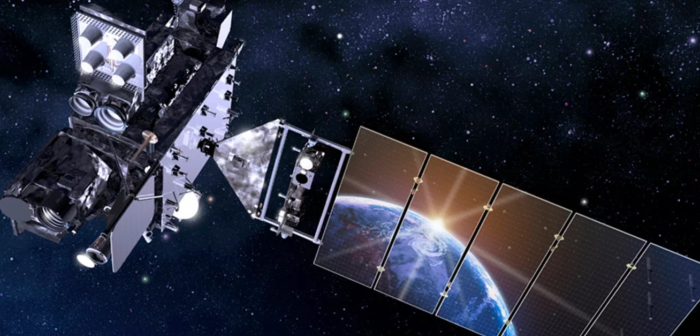
NOAA’s GOES-18 satellite has entered service as GOES-West following months of post-launch testing of the instrumentation, systems and data.

Launched on March 1, 2022, GOES-18 replaces GOES-17 as GOES-West, located 35,785km above the equator over the Pacific Ocean. GOES-17 will become an on-orbit standby.

In its new role, GOES-18 will serve as NOAA’s primary geostationary satellite for detecting and monitoring Pacific hurricanes, atmospheric rivers, coastal fog, wildfires, volcanic eruptions and other environmental phenomena that affect the western contiguous United States, Alaska, Hawaii, Mexico and Central America.

The satellite delivers high-resolution visible and infrared imagery, atmospheric measurements and real-time mapping of lightning activity. It is ideally located to monitor the northeastern Pacific Ocean, where many weather systems that affect the continental US originate. GOES-18 also watches the sun and detects approaching space weather hazards.

GOES-18 joins GOES-16 (GOES-East) in operational service. Together the two satellites watch over more than half the globe, from the west coast of Africa to New Zealand and from near the Arctic Circle to the Antarctic Circle. Their data assists weather forecasters, emergency managers, first responders, the aviation and shipping industries, and more.

Although GOES-18 has just officially entered operational service, the satellite has been assisting NOAA National Weather Service forecasters for months. Usually, GOES satellites complete post-launch testing in a location over the central US, but GOES-18’s early successes allowed NOAA to move it to its future operational location early. GOES-18 began sending imagery from its new location in June.

Now that GOES-18 is operating as GOES-West, GOES-17 will be moved to a central location between GOES-East and GOES-West to serve as a backup for the operational constellation.

The GOES-R Series Program is a four-satellite mission that includes GOES-R (GOES-16, launched in 2016), GOES-S (GOES-17, launched in 2018), GOES-T (GOES-18) and GOES-U, which is scheduled to launch in 2024. The program is a collaborative effort between NOAA and NASA.

GOES-R Series satellites are planned to operate into the 2030s. NOAA and NASA have already begun work on the next-generation geostationary mission called Geostationary Extended Observations (GeoXO). The US Department of Commerce formally approved the GeoXO Program on December 14, 2022.

Previous ArticleEUMETSAT takes control of MTG-I1 satellite
Next Article Met agencies record warm start to the year as records tumble across Europe

Read Similar Stories

Space Weather

Northumbria University secures £4m to study Earth’s radiation belts

April 16, 20262 Mins Read
Extreme Weather

AI model improves real-time prediction of wildfire spread

April 16, 20263 Mins Read
Satellites

AI tool uses weather satellite data to map ocean currents in near real time

April 14, 20263 Mins Read
Latest News

Atmospheric G2 secures Japan weather forecasting license

April 21, 2026

China completes Antarctic meteorological research mission with Xuelong icebreaker

April 21, 2026

EWR Radar Systems wins US Air Force contract for portable Doppler radar support

April 20, 2026

Receive breaking stories and features in your inbox each week, for free


Enter your email address:


Supplier Spotlights
  • Meteomatics AG
Getting in Touch
  • Contact Us / Advertise
  • Meet the Editors
  • Media Pack
  • Free Weekly E-Newsletter
Our Social Channels
  • Facebook
  • LinkedIn
© 2026 UKi Media & Events a division of UKIP Media & Events Ltd
  • Cookie Policy
  • Privacy Policy
  • Terms and Conditions
  • Notice and Takedown Policy

Type above and press Enter to search. Press Esc to cancel.