


Close Menu
Meteorological Technology International
  • News
    • A-E
      • Agriculture
      • Automated Weather Stations
      • Aviation
      • Climate Measurement
      • Data
      • Developing Countries
      • Digital Applications
      • Early Warning Systems
      • Extreme Weather
    • G-P
      • Hydrology
      • Lidar
      • Lightning Detection
      • New Appointments
      • Nowcasting
      • Numerical Weather Prediction
      • Polar Weather
    • R-S
      • Radar
      • Rainfall
      • Remote Sensing
      • Renewable Energy
      • Satellites
      • Solar
      • Space Weather
      • Supercomputers
    • T-Z
      • Training
      • Transport
      • Weather Instruments
      • Wind
      • World Meteorological Organization
      • Meteorological Technology World Expo
  • Features
  • Online Magazines
    • January 2026
    • April 2025
    • January 2025
    • September 2024
    • April 2024
    • Archive Issues
    • Subscribe Free!
  • Opinion
  • Videos
  • Supplier Spotlight
  • Expo
LinkedIn X (Twitter) Facebook
  • Sign-up for Free Weekly E-Newsletter
  • Meet the Editors
  • Contact Us
  • Media Pack
LinkedIn Facebook
Subscribe
Meteorological Technology International
  • News
      • Agriculture
      • Automated Weather Stations
      • Aviation
      • Climate Measurement
      • Data
      • Developing Countries
      • Digital Applications
      • Early Warning Systems
      • Extreme Weather
      • Hydrology
      • Lidar
      • Lightning Detection
      • New Appointments
      • Nowcasting
      • Numerical Weather Prediction
      • Polar Weather
      • Radar
      • Rainfall
      • Remote Sensing
      • Renewable Energy
      • Satellites
      • Solar
      • Space Weather
      • Supercomputers
      • Training
      • Transport
      • Weather Instruments
      • Wind
      • World Meteorological Organization
      • Meteorological Technology World Expo
  • Features
  • Online Magazines
    1. January 2026
    2. September 2025
    3. April 2025
    4. January 2025
    5. September 2024
    6. April 2024
    7. January 2024
    8. September 2023
    9. April 2023
    10. Archive Issues
    11. Subscribe Free!
    Featured
    November 27, 2025

    In this Issue – January 2026

    By Hazel KingNovember 27, 2025
    Recent

    In this Issue – January 2026

    November 27, 2025

    In this Issue – September 2025

    August 11, 2025

    In this Issue – April 2025

    April 15, 2025
  • Opinion
  • Videos
  • Supplier Spotlight
  • Expo
Facebook LinkedIn
Subscribe
Meteorological Technology International
Satellites

NOAA’s JPSS-2 polar satellite completes thermal vacuum testing

Dan SymondsBy Dan SymondsJune 17, 20222 Mins Read
Share LinkedIn Facebook Twitter Email
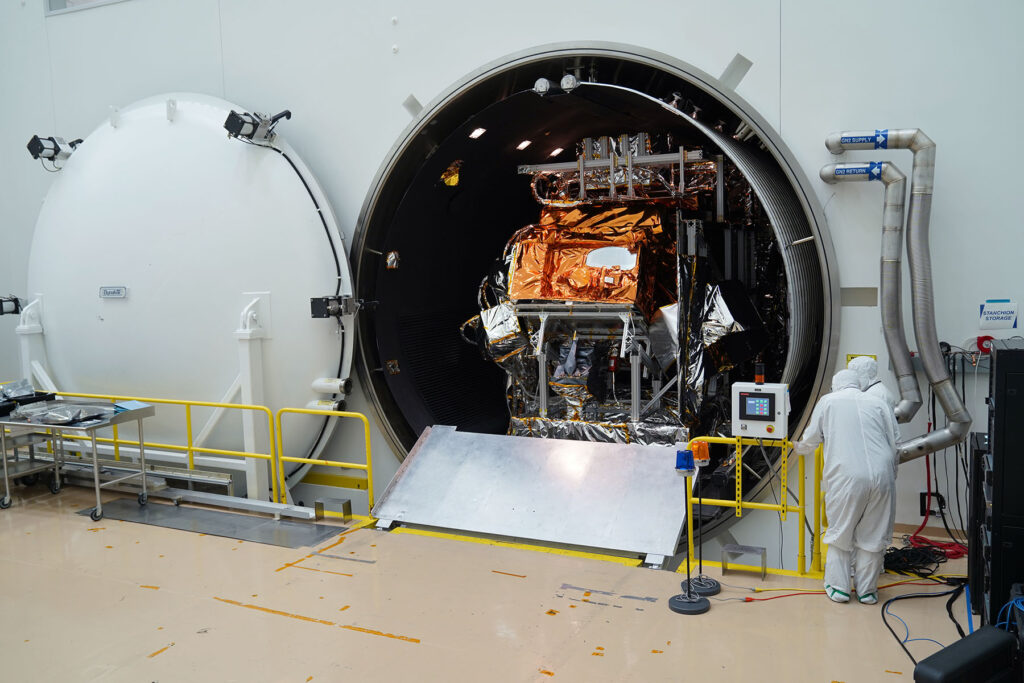
The JPSS-2 satellite enters the chamber for its thermal vacuum test at the Northrop Grumman facility in Gilbert, Arizona - credit: Northrop Grumman
Share
LinkedIn Facebook Twitter Email

The US National Oceanic and Atmospheric Administration’s (NOAA) Joint Polar Satellite System-2 (JPSS-2) satellite has completed its thermal vacuum testing, bringing it a step closer to launch.

The test demonstrates that the spacecraft and all its instruments will perform successfully when exposed to the harsh environments of space.

Andre Dress, JPSS flight project manager at NASA’s Goddard Space Flight Center in Greenbelt, Maryland, said, “I can absolutely say with 100% certainty that the observatory is working great. All the instruments are performing great, and we’re going to meet all our requirements – and then some.”

JPSS-2, the third satellite in the Joint Polar Satellite System series, is slated to launch on November 1, 2022, from the Vandenberg Space Force Base in California and will be renamed NOAA-21 after reaching orbit.

JPSS-2 will scan the globe as it orbits from the North to the South poles, crossing the equator 14 times a day. From 512 miles above Earth, it will observe atmospheric conditions such as temperature and moisture, along with extreme weather, including hurricanes, floods, wildfires and drought. Once in orbit, it will continue the work of its predecessors NOAA-20 and the NOAA-NASA Suomi National Polar-orbiting Partnership (Suomi-NPP).

The thermal vacuum test simulates the vacuum of space and the harsh temperature extremes the satellite will experience while in Earth’s orbit.

Chris Brann, deputy project manager for the JPSS flight project at Goddard, said, “The satellite has to keep itself warm enough in a cold state and cool when it’s in a hot state, and still provide the science performance as it’s going through the temperature transitions. If it works at the two extremes of hot and cold, it will work in between.”

To read more about the project and instrumentation, click here.

Previous ArticleKeel-laying ceremony held for NOAA’s latest oceanographic research vessel
Next Article Melting of Greenland’s peripheral glaciers increases by 50% since turn of century

Read Similar Stories

Space Weather

Northumbria University secures £4m to study Earth’s radiation belts

April 16, 20262 Mins Read
Extreme Weather

AI model improves real-time prediction of wildfire spread

April 16, 20263 Mins Read
Satellites

AI tool uses weather satellite data to map ocean currents in near real time

April 14, 20263 Mins Read
Latest News

Extreme heat posing significant risks to ecosystems and agriculture, FAO-WMO report warns

April 22, 2026

Atmospheric G2 secures Japan weather forecasting license

April 21, 2026

China completes Antarctic meteorological research mission with Xuelong icebreaker

April 21, 2026

Receive breaking stories and features in your inbox each week, for free


Enter your email address:


Supplier Spotlights
  • Nel Hydrogen
Getting in Touch
  • Contact Us / Advertise
  • Meet the Editors
  • Media Pack
  • Free Weekly E-Newsletter
Our Social Channels
  • Facebook
  • LinkedIn
© 2026 UKi Media & Events a division of UKIP Media & Events Ltd
  • Cookie Policy
  • Privacy Policy
  • Terms and Conditions
  • Notice and Takedown Policy

Type above and press Enter to search. Press Esc to cancel.