


Close Menu
Meteorological Technology International
  • News
    • A-E
      • Agriculture
      • Automated Weather Stations
      • Aviation
      • Climate Measurement
      • Data
      • Developing Countries
      • Digital Applications
      • Early Warning Systems
      • Extreme Weather
    • G-P
      • Hydrology
      • Lidar
      • Lightning Detection
      • New Appointments
      • Nowcasting
      • Numerical Weather Prediction
      • Polar Weather
    • R-S
      • Radar
      • Rainfall
      • Remote Sensing
      • Renewable Energy
      • Satellites
      • Solar
      • Space Weather
      • Supercomputers
    • T-Z
      • Training
      • Transport
      • Weather Instruments
      • Wind
      • World Meteorological Organization
      • Meteorological Technology World Expo
  • Features
  • Online Magazines
    • January 2026
    • April 2025
    • January 2025
    • September 2024
    • April 2024
    • Archive Issues
    • Subscribe Free!
  • Opinion
  • Videos
  • Supplier Spotlight
  • Expo
LinkedIn X (Twitter) Facebook
  • Sign-up for Free Weekly E-Newsletter
  • Meet the Editors
  • Contact Us
  • Media Pack
LinkedIn Facebook
Subscribe
Meteorological Technology International
  • News
      • Agriculture
      • Automated Weather Stations
      • Aviation
      • Climate Measurement
      • Data
      • Developing Countries
      • Digital Applications
      • Early Warning Systems
      • Extreme Weather
      • Hydrology
      • Lidar
      • Lightning Detection
      • New Appointments
      • Nowcasting
      • Numerical Weather Prediction
      • Polar Weather
      • Radar
      • Rainfall
      • Remote Sensing
      • Renewable Energy
      • Satellites
      • Solar
      • Space Weather
      • Supercomputers
      • Training
      • Transport
      • Weather Instruments
      • Wind
      • World Meteorological Organization
      • Meteorological Technology World Expo
  • Features
  • Online Magazines
    1. January 2026
    2. September 2025
    3. April 2025
    4. January 2025
    5. September 2024
    6. April 2024
    7. January 2024
    8. September 2023
    9. April 2023
    10. Archive Issues
    11. Subscribe Free!
    Featured
    November 27, 2025

    In this Issue – January 2026

    By Hazel KingNovember 27, 2025
    Recent

    In this Issue – January 2026

    November 27, 2025

    In this Issue – September 2025

    August 11, 2025

    In this Issue – April 2025

    April 15, 2025
  • Opinion
  • Videos
  • Supplier Spotlight
  • Expo
Facebook LinkedIn
Subscribe
Meteorological Technology International
Polar Weather

Melting of Greenland’s peripheral glaciers increases by 50% since turn of century

Dan SymondsBy Dan SymondsJune 17, 20223 Mins Read
Share LinkedIn Facebook Twitter Email
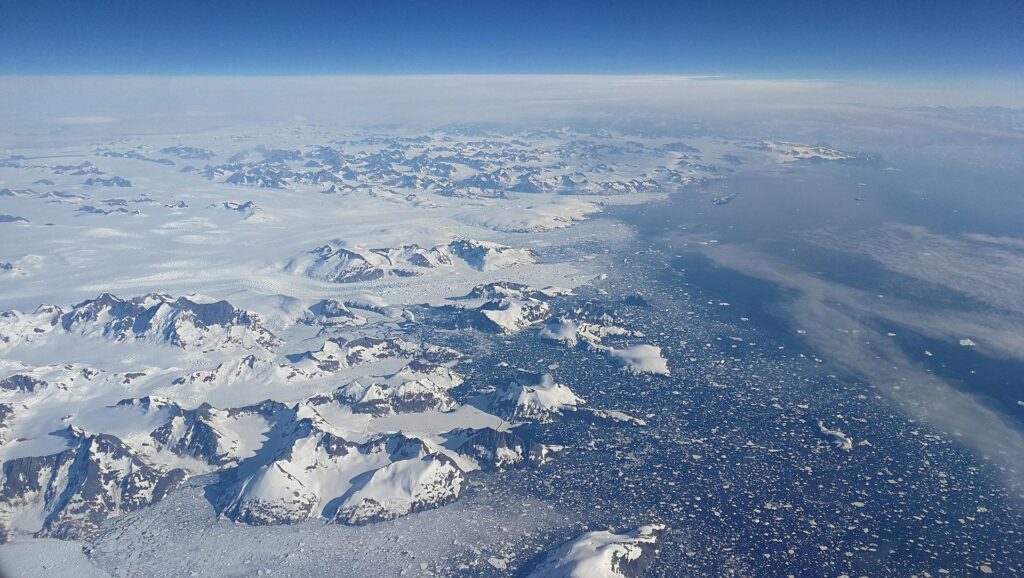
Aerial image of Greenland coast - credit: Makri27/Pixabay
Share
LinkedIn Facebook Twitter Email

Greenland’s small glaciers are melting more rapidly as the Arctic warms, with a 50% increase in melting observed over the past two decades.

The new study focused on “peripheral” glaciers, which are glaciers with areas smaller than 0.05km2   and do not receive ice flow or accumulation from the Greenland Ice Sheet.

There are around 20,300 peripheral glaciers in Greenland, and while they make up only around 4% of Greenland’s ice-covered areas, they contribute as much as 11% of the total loss of ice from Greenland’s ice-covered areas. This outsize melt rate means an outsize contribution to sea level rise.

The study found that melting of peripheral glaciers has increased by more than 50% over the past two decades, as recorded by altimetry data from ICESat and ICESat-2. On average, 42.3 gigatons of ice melted per year from October 2018 to December 2021. In comparison, 27.2 gigatons melted annually from February 2003 to October 2009.

Peripheral glaciers now lose four times as much mass annually as in 2003, the new study shows.

Shfaqat Abbas Khan, lead author of the study and a climate scientist at the National Space Institute at the Technical University of Denmark, said, “The loss of ice from these small glaciers occurs because they are more sensitive to ongoing temperature changes and therefore melt faster than we see in many other places in the Arctic. We can see that there is a marked increase in the melting of the glaciers in northern Greenland. This shows that the ice masses in Greenland are very unstable and that they make a considerable contribution to the global sea level rise.”

Global warming is causing significant melting overall in Greenland’s ice sheet and glaciers, but the location and rate of melt is uneven. That makes quantifying ice loss on even small glaciers critical to understand how much fresh water is flowing off the island.

William Colgan, study co-author and a glaciologist at the National Geological Survey of Denmark and Greenland, said, “Many studies have documented the state of the Greenland Ice Sheet over the past decade. But even though the loss of ice from peripheral glaciers is such a large part of Greenland’s total ice loss, there are very few studies documenting the health of these peripheral glaciers.”

Low ice loss rates, such as are found in the high mountains in East Greenland that receive heavy snowfall, are offset by the intense melting of the peripheral glaciers in North Greenland. Although the isolated glaciers are not part of the Greenland Ice Sheet, which most Greenland-driven sea level rise research focuses on, it is important to include them in the total melt budget from the Arctic to calculate exactly how much the region contributes to sea level rise.

To view the study published in the AGU journal Geophysical Research Letters, click here.

Previous ArticleNOAA’s JPSS-2 polar satellite completes thermal vacuum testing
Next Article BoM to upgrade Halls Creek weather radar

Read Similar Stories

Climate Measurement

China completes Antarctic meteorological research mission with Xuelong icebreaker

April 21, 20262 Mins Read
Space Weather

Northumbria University secures £4m to study Earth’s radiation belts

April 16, 20262 Mins Read
Extreme Weather

AI model improves real-time prediction of wildfire spread

April 16, 20263 Mins Read
Latest News

Extreme heat posing significant risks to ecosystems and agriculture, FAO-WMO report warns

April 22, 2026

Atmospheric G2 secures Japan weather forecasting license

April 21, 2026

China completes Antarctic meteorological research mission with Xuelong icebreaker

April 21, 2026

Receive breaking stories and features in your inbox each week, for free


Enter your email address:


Supplier Spotlights
  • Adolf Thies GmbH & Co. KG
Getting in Touch
  • Contact Us / Advertise
  • Meet the Editors
  • Media Pack
  • Free Weekly E-Newsletter
Our Social Channels
  • Facebook
  • LinkedIn
© 2026 UKi Media & Events a division of UKIP Media & Events Ltd
  • Cookie Policy
  • Privacy Policy
  • Terms and Conditions
  • Notice and Takedown Policy

Type above and press Enter to search. Press Esc to cancel.