


Close Menu
Meteorological Technology International
  • News
    • A-E
      • Agriculture
      • Automated Weather Stations
      • Aviation
      • Climate Measurement
      • Data
      • Developing Countries
      • Digital Applications
      • Early Warning Systems
      • Extreme Weather
    • G-P
      • Hydrology
      • Lidar
      • Lightning Detection
      • New Appointments
      • Nowcasting
      • Numerical Weather Prediction
      • Polar Weather
    • R-S
      • Radar
      • Rainfall
      • Remote Sensing
      • Renewable Energy
      • Satellites
      • Solar
      • Space Weather
      • Supercomputers
    • T-Z
      • Training
      • Transport
      • Weather Instruments
      • Wind
      • World Meteorological Organization
      • Meteorological Technology World Expo
  • Features
  • Online Magazines
    • January 2026
    • April 2025
    • January 2025
    • September 2024
    • April 2024
    • Archive Issues
    • Subscribe Free!
  • Opinion
  • Videos
  • Supplier Spotlight
  • Expo
LinkedIn X (Twitter) Facebook
  • Sign-up for Free Weekly E-Newsletter
  • Meet the Editors
  • Contact Us
  • Media Pack
LinkedIn Facebook
Subscribe
Meteorological Technology International
  • News
      • Agriculture
      • Automated Weather Stations
      • Aviation
      • Climate Measurement
      • Data
      • Developing Countries
      • Digital Applications
      • Early Warning Systems
      • Extreme Weather
      • Hydrology
      • Lidar
      • Lightning Detection
      • New Appointments
      • Nowcasting
      • Numerical Weather Prediction
      • Polar Weather
      • Radar
      • Rainfall
      • Remote Sensing
      • Renewable Energy
      • Satellites
      • Solar
      • Space Weather
      • Supercomputers
      • Training
      • Transport
      • Weather Instruments
      • Wind
      • World Meteorological Organization
      • Meteorological Technology World Expo
  • Features
  • Online Magazines
    1. January 2026
    2. September 2025
    3. April 2025
    4. January 2025
    5. September 2024
    6. April 2024
    7. January 2024
    8. September 2023
    9. April 2023
    10. Archive Issues
    11. Subscribe Free!
    Featured
    November 27, 2025

    In this Issue – January 2026

    By Hazel KingNovember 27, 2025
    Recent

    In this Issue – January 2026

    November 27, 2025

    In this Issue – September 2025

    August 11, 2025

    In this Issue – April 2025

    April 15, 2025
  • Opinion
  • Videos
  • Supplier Spotlight
  • Expo
Facebook LinkedIn
Subscribe
Meteorological Technology International
Satellites

NOAA’s NOAA-21 satellite becomes operational

Elizabeth BakerBy Elizabeth BakerNovember 14, 20232 Mins Read
Share LinkedIn Facebook Twitter Email
Credit: NOAA
Share
LinkedIn Facebook Twitter Email

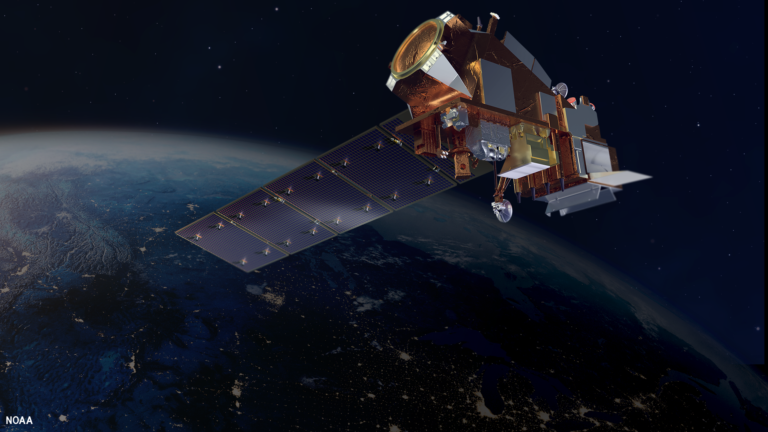
The latest satellite in NOAA’s Joint Polar Satellite System, NOAA-21, has become operational.

The satellite joins its predecessors, Suomi NPP and NOAA-20, each circling the globe 14 times a day, providing a continuous data stream to improve the accuracy of NOAA’s three- to seven-day forecasts. This includes observations of extreme weather events and monitoring climate change.

The satellite launched in November 2022 as JPSS-2 was renamed NOAA-21 when it reached orbit. NOAA-21 now gives NOAA three spacecraft operating the most sophisticated technology the agency has ever flown in a polar orbit, capturing precise observations of the world’s atmosphere, land and waters.

Michael C Morgan, assistant secretary of commerce for environmental observation and prediction at NOAA, said, “NOAA-21 will help generate improved, reliable forecasts that can save lives, protect property and provide communities and decision makers with the critical time needed to prepare for dangerous weather events.”

NOAA-21 provides NOAA’s National Weather Service with global data for the numerical weather prediction models used to develop timely and accurate US weather forecasts. In addition, high-resolution imagery from the satellite’s Visible Infrared Imaging Radiometer Suite (VIIRS) will enable NOAA-21 to detect fog, Arctic sea ice, volcanic eruptions and wildfires.

This advanced modeling information and imagery, shared with international and governmental partners, will help businesses, emergency preparedness and response communities and individuals make the best decisions possible in the face of weather-related hazards.

Ken Graham, director of NOAA’s National Weather Service, commented, “We rely on global temperature and moisture observations, which NOAA-21 provides, to develop our three- to seven-day weather forecasts. Emergency managers also use those forecasts to pre-position resources before a storm hits.”

Steve Volz, director of NOAA’s satellite and information service, added, “Along with our international partner EUMETSAT, which provides similar observations as NOAA-21, but from a different orbit, we have a formidable team of satellites feeding data into the models.”

JPSS satellites are designed to operate for seven years, with the potential for several more years of operation. The JPSS mission will deliver critical data and information for at least the next two decades to support a weather-ready nation.

NOAA funds and manages the JPSS Program, operations and data products. On behalf of NOAA, NASA develops and builds the instruments and spacecraft, and launches the satellites. NASA developed the ground system, which NOAA operates and maintains.

For more key satellite updates from the meteorological technology industry, click here.

Previous ArticleFEATURE: University of Washington offers expert opinions on El Niño, weather and ocean temperatures
Next Article Extreme weather in the UK: why Arctic climate change cannot stay “out of sight, out of mind”

Read Similar Stories

Early Warning Systems

China expands MAZU early warning system for developing countries

April 30, 20262 Mins Read
Space Weather

Northumbria University secures £4m to study Earth’s radiation belts

April 16, 20262 Mins Read
Extreme Weather

AI model improves real-time prediction of wildfire spread

April 16, 20263 Mins Read
Latest News

China expands MAZU early warning system for developing countries

April 30, 2026

Météo-France begins construction of France’s tallest weather radar tower in Sembadel

April 29, 2026

ForecastWatch expands with launch of new independent platform for weather forecast verification

April 28, 2026

Receive breaking stories and features in your inbox each week, for free


Enter your email address:


Supplier Spotlights
  • Synoptic Data PBC
Getting in Touch
  • Contact Us / Advertise
  • Meet the Editors
  • Media Pack
  • Free Weekly E-Newsletter
Our Social Channels
  • Facebook
  • LinkedIn
© 2026 UKi Media & Events a division of UKIP Media & Events Ltd
  • Cookie Policy
  • Privacy Policy
  • Terms and Conditions
  • Notice and Takedown Policy

Type above and press Enter to search. Press Esc to cancel.