


Close Menu
Meteorological Technology International
  • News
    • A-E
      • Agriculture
      • Automated Weather Stations
      • Aviation
      • Climate Measurement
      • Data
      • Developing Countries
      • Digital Applications
      • Early Warning Systems
      • Extreme Weather
    • G-P
      • Hydrology
      • Lidar
      • Lightning Detection
      • New Appointments
      • Nowcasting
      • Numerical Weather Prediction
      • Polar Weather
    • R-S
      • Radar
      • Rainfall
      • Remote Sensing
      • Renewable Energy
      • Satellites
      • Solar
      • Space Weather
      • Supercomputers
    • T-Z
      • Training
      • Transport
      • Weather Instruments
      • Wind
      • World Meteorological Organization
      • Meteorological Technology World Expo
  • Features
  • Online Magazines
    • January 2026
    • April 2025
    • January 2025
    • September 2024
    • April 2024
    • Archive Issues
    • Subscribe Free!
  • Opinion
  • Videos
  • Supplier Spotlight
  • Expo
LinkedIn X (Twitter) Facebook
  • Sign-up for Free Weekly E-Newsletter
  • Meet the Editors
  • Contact Us
  • Media Pack
LinkedIn Facebook
Subscribe
Meteorological Technology International
  • News
      • Agriculture
      • Automated Weather Stations
      • Aviation
      • Climate Measurement
      • Data
      • Developing Countries
      • Digital Applications
      • Early Warning Systems
      • Extreme Weather
      • Hydrology
      • Lidar
      • Lightning Detection
      • New Appointments
      • Nowcasting
      • Numerical Weather Prediction
      • Polar Weather
      • Radar
      • Rainfall
      • Remote Sensing
      • Renewable Energy
      • Satellites
      • Solar
      • Space Weather
      • Supercomputers
      • Training
      • Transport
      • Weather Instruments
      • Wind
      • World Meteorological Organization
      • Meteorological Technology World Expo
  • Features
  • Online Magazines
    1. April 2026
    2. January 2026
    3. September 2025
    4. April 2025
    5. January 2025
    6. September 2024
    7. April 2024
    8. January 2024
    9. Archive Issues
    10. Subscribe Free!
    Featured
    May 5, 2026

    In this Issue – April 2026

    By Web TeamMay 5, 2026
    Recent

    In this Issue – April 2026

    May 5, 2026

    In this Issue – January 2026

    November 27, 2025

    In this Issue – September 2025

    August 11, 2025
  • Opinion
  • Videos
  • Supplier Spotlight
  • Expo
Facebook LinkedIn
Subscribe
Meteorological Technology International
Space Weather

Lockheed Martin begins installation of solar coronagraph on NOAA GOES-U satellite

Dan SymondsBy Dan SymondsFebruary 7, 20222 Mins Read
Share LinkedIn Facebook Twitter Email
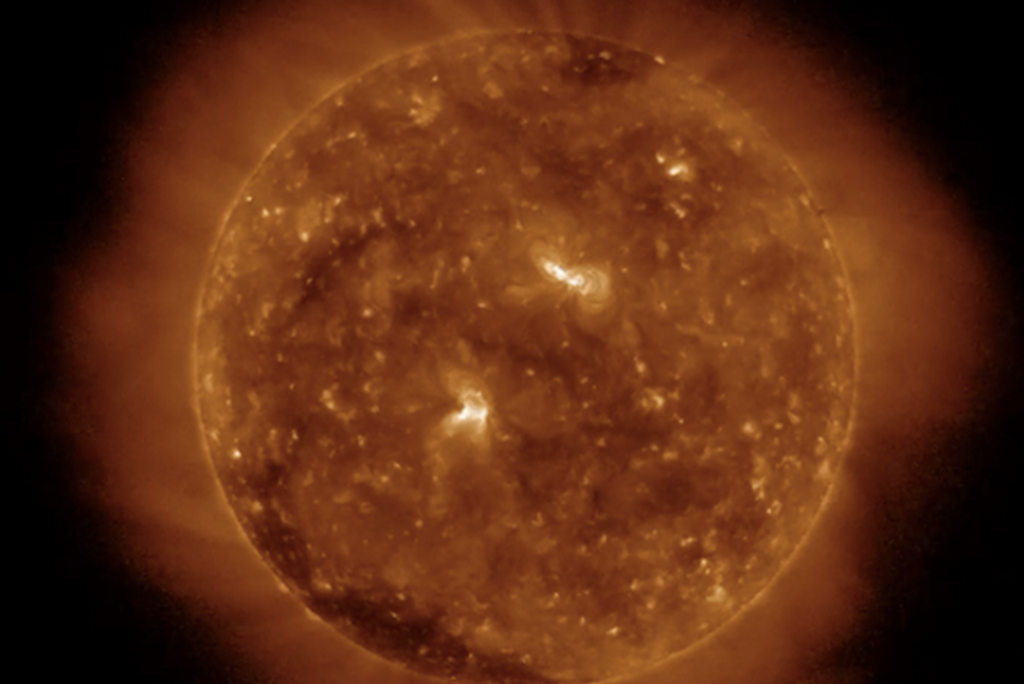
CCOR-1 will help detect and characterize coronal mass ejections (CMEs) - credit: NOAA
Share
LinkedIn Facebook Twitter Email

A newly developed space weather instrument has passed all checks and is ready to be installed on the US National Oceanic and Atmospheric Administration’s (NOAA) GOES-U satellite, which is scheduled to launch in 2024.

The Compact Coronagraph (CCOR-1) instrument was shipped to Lockheed Martin in Waterton, Colorado after passing its ‘pre-ship review’ last month. The team at Lockheed Martin will now begin to install this instrument on the GOES-U spacecraft. The CCOR-1 will be NOAA’s first-ever solar coronagraph.

As part of NOAA’s Space Weather Follow-On Program, CCOR-1 was developed at the US Naval Research Laboratory in Washington DC, and will reside on GOES-U’s Solar Pointing Platform, along with other space weather monitoring sensors. These include the Solar Ultraviolet Imager (SUVI) and Extreme Ultraviolet and X-ray Irradiance Sensors (EXIS).

CCOR-1 will monitor the outer layer of the sun’s atmosphere, known as the solar corona, and will help detect and characterize coronal mass ejections (CMEs). These large eruptions from the sun hurl massive clouds of magnetized plasma far into space and are the primary cause of geomagnetic storms, which can cause widespread damage to power grids, satellites, and communication and navigation systems on Earth.

The critical space weather information collected by CCOR-1 will ensure continuity of critical CME imagery to enable the National Weather Service Space Weather Prediction Center to issue warnings one to four days before the advent of damaging geomagnetic storm conditions.

Previous ArticleMOSAiC teams publish key findings from landmark Arctic expedition
Next Article Germany’s DWD installs 50 automated weather stations on Maersk shipping vessels

Read Similar Stories

Satellites

SMILE mission launches to study Earth’s magnetic shield and space weather

May 20, 20263 Mins Read
Videos

VIDEO: Meteosat-12 imagery over Europe and Africa made available via YouTube streams

May 19, 20262 Mins Read
Extreme Weather

Wildfires can create ‘burn scar heat islands’ that alter weather patterns, study finds

May 6, 20263 Mins Read
Latest News

R.M. Young Company reengineers SNOdar snow-depth sensor

May 21, 2026

SMILE mission launches to study Earth’s magnetic shield and space weather

May 20, 2026

Cloud measurement campaign targets improved climate model accuracy

May 20, 2026

Receive breaking stories and features in your inbox each week, for free


Enter your email address:


Supplier Spotlights
  • Sommer GmbH
Getting in Touch
  • Contact Us / Advertise
  • Meet the Editors
  • Media Pack
  • Free Weekly E-Newsletter
Our Social Channels
  • Facebook
  • LinkedIn
© 2026 UKi Media & Events a division of UKIP Media & Events Ltd
  • Cookie Policy
  • Privacy Policy
  • Terms and Conditions
  • Notice and Takedown Policy

Type above and press Enter to search. Press Esc to cancel.