


Close Menu
Meteorological Technology International
  • News
    • A-E
      • Agriculture
      • Automated Weather Stations
      • Aviation
      • Climate Measurement
      • Data
      • Developing Countries
      • Digital Applications
      • Early Warning Systems
      • Extreme Weather
    • G-P
      • Hydrology
      • Lidar
      • Lightning Detection
      • New Appointments
      • Nowcasting
      • Numerical Weather Prediction
      • Polar Weather
    • R-S
      • Radar
      • Rainfall
      • Remote Sensing
      • Renewable Energy
      • Satellites
      • Solar
      • Space Weather
      • Supercomputers
    • T-Z
      • Training
      • Transport
      • Weather Instruments
      • Wind
      • World Meteorological Organization
      • Meteorological Technology World Expo
  • Features
  • Online Magazines
    • January 2026
    • April 2025
    • January 2025
    • September 2024
    • April 2024
    • Archive Issues
    • Subscribe Free!
  • Opinion
  • Videos
  • Supplier Spotlight
  • Expo
LinkedIn X (Twitter) Facebook
  • Sign-up for Free Weekly E-Newsletter
  • Meet the Editors
  • Contact Us
  • Media Pack
LinkedIn Facebook
Subscribe
Meteorological Technology International
  • News
      • Agriculture
      • Automated Weather Stations
      • Aviation
      • Climate Measurement
      • Data
      • Developing Countries
      • Digital Applications
      • Early Warning Systems
      • Extreme Weather
      • Hydrology
      • Lidar
      • Lightning Detection
      • New Appointments
      • Nowcasting
      • Numerical Weather Prediction
      • Polar Weather
      • Radar
      • Rainfall
      • Remote Sensing
      • Renewable Energy
      • Satellites
      • Solar
      • Space Weather
      • Supercomputers
      • Training
      • Transport
      • Weather Instruments
      • Wind
      • World Meteorological Organization
      • Meteorological Technology World Expo
  • Features
  • Online Magazines
    1. January 2026
    2. September 2025
    3. April 2025
    4. January 2025
    5. September 2024
    6. April 2024
    7. January 2024
    8. September 2023
    9. April 2023
    10. Archive Issues
    11. Subscribe Free!
    Featured
    November 27, 2025

    In this Issue – January 2026

    By Hazel KingNovember 27, 2025
    Recent

    In this Issue – January 2026

    November 27, 2025

    In this Issue – September 2025

    August 11, 2025

    In this Issue – April 2025

    April 15, 2025
  • Opinion
  • Videos
  • Supplier Spotlight
  • Expo
Facebook LinkedIn
Subscribe
Meteorological Technology International
News

Study finds ocean currents modulate oxygen content at the equator

Helen NormanBy Helen NormanApril 20, 20213 Mins Read
Share LinkedIn Facebook Twitter Email
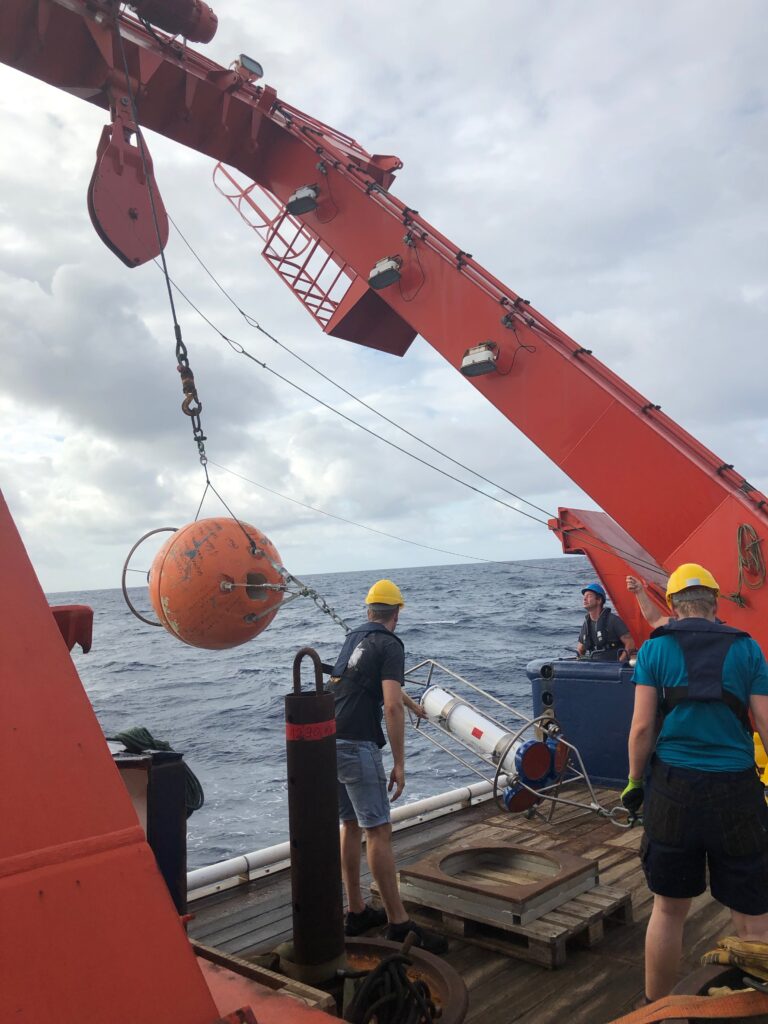
Launch of a mooring in the tropical Atlantic. Image: P Brandt, GEOMAR
Share
LinkedIn Facebook Twitter Email

A study led by the GEOMAR Helmholtz Centre for Ocean Research Kiel has used long-term observations to investigate the complex interplay between fluctuations in the equatorial current system and variations in oxygen content in the oceans.

The study found that during the past 15 years the intensification of upper-ocean currents resulted in an increasing oxygen content in the equatorial region.

As a result of global warming, the oxygen content in the oceans has decreased globally by about 2% in the past 60 years. However, these regions are characterized by a complex system of ocean currents. At the equator, one of the strongest currents, the Equatorial Undercurrent (EUC), transports water masses eastwards across the Atlantic. The water transport by the EUC is more than 60 times larger than that of the Amazon river.

For many years, scientists at GEOMAR have been investigating in cooperation with the international PIRATA program fluctuations of this current with fixed observation platforms called moorings. Based on the data obtained from these moorings, they were able to prove that the EUC has strengthened by more than 20% between 2008 and 2018. The intensification of this major ocean current is associated with increasing oxygen concentrations in the equatorial Atlantic and an increase in the oxygen-rich layer near the surface.

“At first, this statement sounds encouraging, but it does not describe the entire complexity of the system,” explained project leader and first author Prof Dr Peter Brandt from GEOMAR. “We found that the strengthening of the EUC is mainly caused by a strengthening of the trade winds in the western tropical North Atlantic.”

The analysis of a 60-year data set has shown that the recent oxygen increase in the upper equatorial Atlantic is associated with a multidecadal variability characterized by low oxygen concentrations in the 1990s and early 2000s and high concentrations in the 1960s and 1970s.

“In this respect, our results do not contradict the global trend, but indicate that the observed current intensification likely will switch back into a phase of weaker currents associated with enhanced oxygen reduction. It shows the need for long-term observations in order to be able to separate natural fluctuations of the climate system from trends such as oxygen depletion caused by climate warming,” added Brandt.

These investigations are also based partly on a ship expedition carried out along the equator at the end of 2019 with the German research vessel METEOR. This expedition included a physical, chemical, biogeochemical and biological measurement program that supports the development of climate-based predictions for marine ecosystems as part of the EU-funded TRIATLAS project.

While another expedition with RV METEOR along the equator had to be cancelled due to the Covid-19 pandemic, several long-term moorings in the tropical Atlantic, including the one at the equator, will now be recovered and redeployed during an additional expedition with RV SONNE in June-August 2021.

Read the full report here.

Previous ArticleCMCC Foundation study uses reanalysis model to reduce landslide false alarms in Italy
Next Article How water under the Greenland ice sheet drives the flow velocities of glaciers

Read Similar Stories

Climate Measurement

Windracers ULTRA drones to be deployed in Greenland on glacier surveying mission

March 12, 20263 Mins Read
Early Warning Systems

Water cycle instability drove global water-related disasters in 2025

January 20, 20263 Mins Read
Oceans

Oceans absorb record heat, driving extreme weather, according to international study led by Chinese Academy of Sciences

January 12, 20262 Mins Read
Latest News

Extreme heat posing significant risks to ecosystems and agriculture, FAO-WMO report warns

April 22, 2026

Atmospheric G2 secures Japan weather forecasting license

April 21, 2026

China completes Antarctic meteorological research mission with Xuelong icebreaker

April 21, 2026

Receive breaking stories and features in your inbox each week, for free


Enter your email address:


Supplier Spotlights
  • EUMETSAT
Getting in Touch
  • Contact Us / Advertise
  • Meet the Editors
  • Media Pack
  • Free Weekly E-Newsletter
Our Social Channels
  • Facebook
  • LinkedIn
© 2026 UKi Media & Events a division of UKIP Media & Events Ltd
  • Cookie Policy
  • Privacy Policy
  • Terms and Conditions
  • Notice and Takedown Policy

Type above and press Enter to search. Press Esc to cancel.